Learn · December 4, 2025
Lead Conversion Optimization: Supercharge Your 2025 Results
Boost sales! Discover top strategies for lead conversion optimization, leveraging nurturing, AI, and data-driven personalization.
By The Catalyst Editorial Team Operator education · 11 min read · Updated July 24, 2026

Why Lead Conversion Optimization Matters for Home Service Business Growth
Lead conversion optimization is the process of improving the percentage of website visitors who become customers. For home service businesses, generating leads is only the first step; the real goal is converting them into paying customers efficiently.
Quick Answer: Key Components of Lead Conversion Optimization
- Data-Driven Insights: Use analytics to track visitor behavior and identify conversion bottlenecks.
- Personalization: Tailor content to specific customer segments.
- Optimized Landing Pages: Create focused pages with clear value propositions and strong calls-to-action.
- Lead Nurturing: Build relationships with timely, relevant communication.
- A/B Testing: Experiment with page elements to find what drives the highest conversion rates.
- Automation & AI: Use technology to score leads, route them, and deliver personalized follow-ups.
The data is clear: effective lead nurturing can generate significantly more qualified conversions. However, since only 1 in 25 website visitors are ready to buy immediately, most leads require strategic nurturing.
The impact is significant. A site with 10,000 monthly visitors and a 1% conversion rate generates 100 leads. Increasing that rate to just 2% doubles your leads and customers. This makes conversion optimization one of the most efficient growth strategies for your home service business.
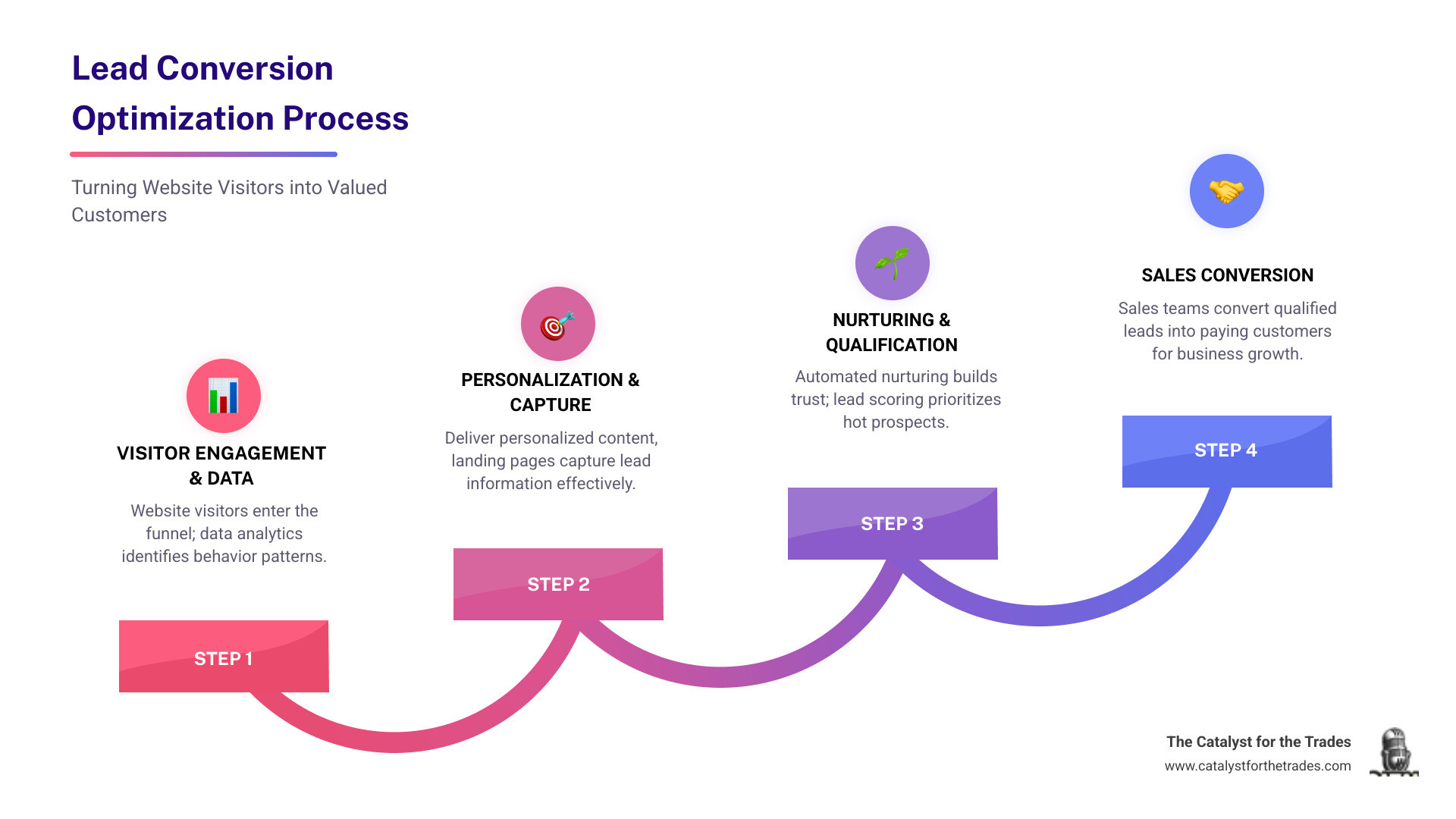
Key terms for lead conversion optimization:
The Foundation: Aligning Lead Nurturing with CRO
The partnership between lead nurturing and Conversion Rate Optimization (CRO) is critical for changing your home service business. When these two strategies are synchronized, you convert more leads into loyal customers.
Lead nurturing builds relationships over time by providing value and staying top-of-mind. CRO focuses on making every touchpoint on your website as effective as possible, removing friction and clarifying your message. Companies that excel at this combination generate more sales-qualified leads. This synergy creates a helpful customer journey that builds trust while optimizing every step toward a purchase.
Understanding the Synergy Between Nurturing and CRO
Lead nurturing is the long game of building trust through consistent, valuable communication. You educate prospects and position your business as the expert. CRO is about driving action in the moment by removing barriers and making each interaction compelling.
When you combine data-driven insights from CRO with your nurturing strategy, you create personalized experiences that resonate. For example, analytics might show that mobile visitors abandon a specific form field. You can use this insight to simplify the form in your nurturing campaigns. The result is an optimized customer journey that guides prospects from browsing to buying, building genuine relationships that lead to repeat business and referrals.
Essential Elements of a Successful Lead Conversion Process
A successful lead conversion optimization process is a complete system with several key stages:
- Lead Capture: Gathering contact information through frictionless forms, “Book Service” buttons, or chat.
- Lead Qualification: Distinguishing between a Marketing Qualified Lead (MQL)—someone engaged with your content—and a Sales Qualified Lead (SQL)—someone ready for a sales conversation. This prevents your sales team from wasting time on leads that aren’t ready.
- Lead Distribution: Speed is critical. Systems must route qualified leads to the right person immediately.
- Nurturing Sequence: Since most visitors aren’t ready to buy, this sequence uses educational emails, helpful tips, and case studies to guide them.
- Sales Conversion: With proper nurturing and qualification, this step becomes a continuation of an existing conversation, not a cold call.
- Post-Sale Follow-Up: Following up after service, checking in seasonally, and asking for feedback builds loyalty and generates referrals.
Overcoming Common Alignment Challenges
Aligning lead nurturing and CRO can be challenging, but the obstacles are solvable.
- Silos between marketing and sales: The fix is a shared CRM system where both teams can see the full lead journey and results. Regular meetings to align on goals and messaging are also essential.
- Scaling personalization: At scale, generic communication is ineffective. The solution is smart automation and segmentation. Use CRM data to create audience segments and deliver dynamic content that feels personal, even when automated.
- Resource limitations: Home service businesses often have lean teams. Start small by focusing on high-impact changes, like testing your main call-to-action or optimizing your most-visited landing pages. Consider outside expertise for specialized tasks to accelerate results.
- Inconsistent messaging: Conflicting messages across ads, landing pages, and sales conversations erode trust. Audit your entire customer journey to ensure your promises and key messages are consistent everywhere.
Data-Driven & Personalized Strategies for Lead Conversion Optimization
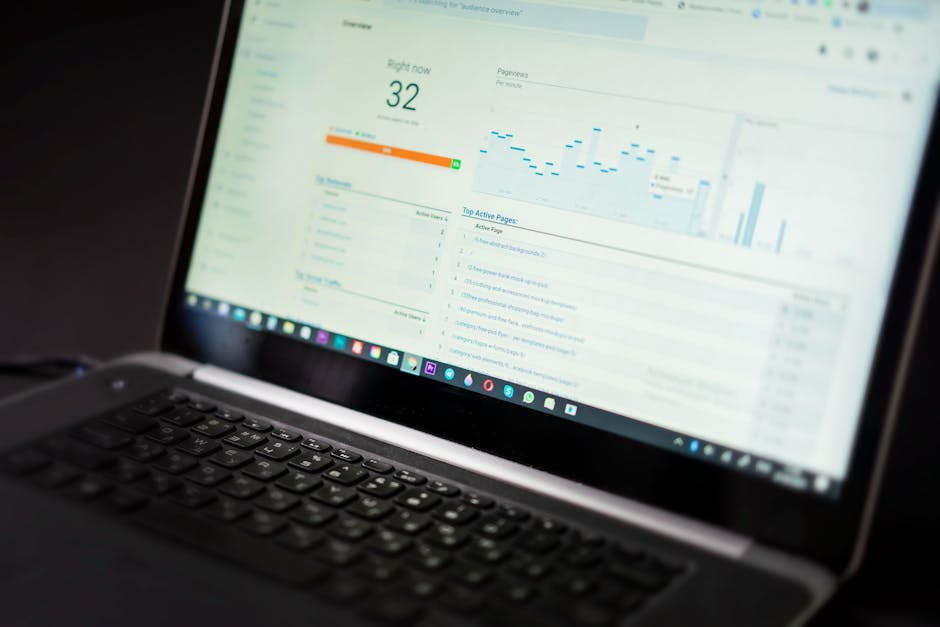
Lead conversion optimization becomes powerful when you move from guesswork to data-driven decisions. By understanding audience behavior, you can create custom experiences that dramatically improve conversion rates.
Leveraging Data and Analytics for Smarter Decisions
Every click and form submission tells a story. We use analytics tools to turn this data into actionable improvements. Data-driven decision-making removes guesswork by tracking where visitors come from, what pages they view, and where they drop off. A high drop-off rate on a specific page is a clear signal to focus optimization efforts there.
Heatmaps and scroll maps provide visual insights, showing where users click and how far they scroll. This can reveal if key elements, like your main call-to-action (CTA), are being missed. However, none of this works without proper analytics configuration. We ensure your setup accurately measures the metrics that matter for your goals, such as conversion rates and sales cycle duration.
The Power of Personalization in Driving Conversions
Personalization is no longer optional; it’s essential. 72% of customers only engage with personalized messaging, and many buyers find it appealing. Your customers expect relevant, custom experiences.
Audience segmentation is the starting point. We group your audience based on behavior, demographics, and interests, allowing you to speak directly to each person’s situation. Dynamic content takes this further, adapting your website with different headlines or offers for first-time visitors versus returning customers.
The impact is significant: personalized calls to action convert far better than generic ones. Instead of a bland “Submit” button, we use CTAs like “Schedule My HVAC Assessment.” This thoughtful nurturing keeps your business top-of-mind and guides leads toward booking your services.
Crafting High-Converting Landing Pages
Your landing pages are designed for one job: converting visitors into leads. Well-designed landing pages can achieve strong conversion rates.
Key principles include:
- Message Match: The content on your landing page must match the ad that brought the visitor there. This builds immediate trust.
- Single Conversion Goal: A landing page should have one clear purpose, such as filling out a form, to eliminate distractions.
- Clear Value Proposition: Your unique benefit should be bold, benefit-focused, and immediately visible.
- Minimalist Design & Visual Hierarchy: Guide the visitor’s eye to the most important elements (like the CTA) and remove anything that doesn’t support the conversion goal.
- Mobile-First Design & Page Speed: Your pages must load quickly and work flawlessly on mobile. A 3-second load time can increase bounce rates by 32%, and every extra second can drop conversions by 12%. We optimize images, code, and hosting to ensure your pages are fast.
Refining Your Approach with A/B Testing
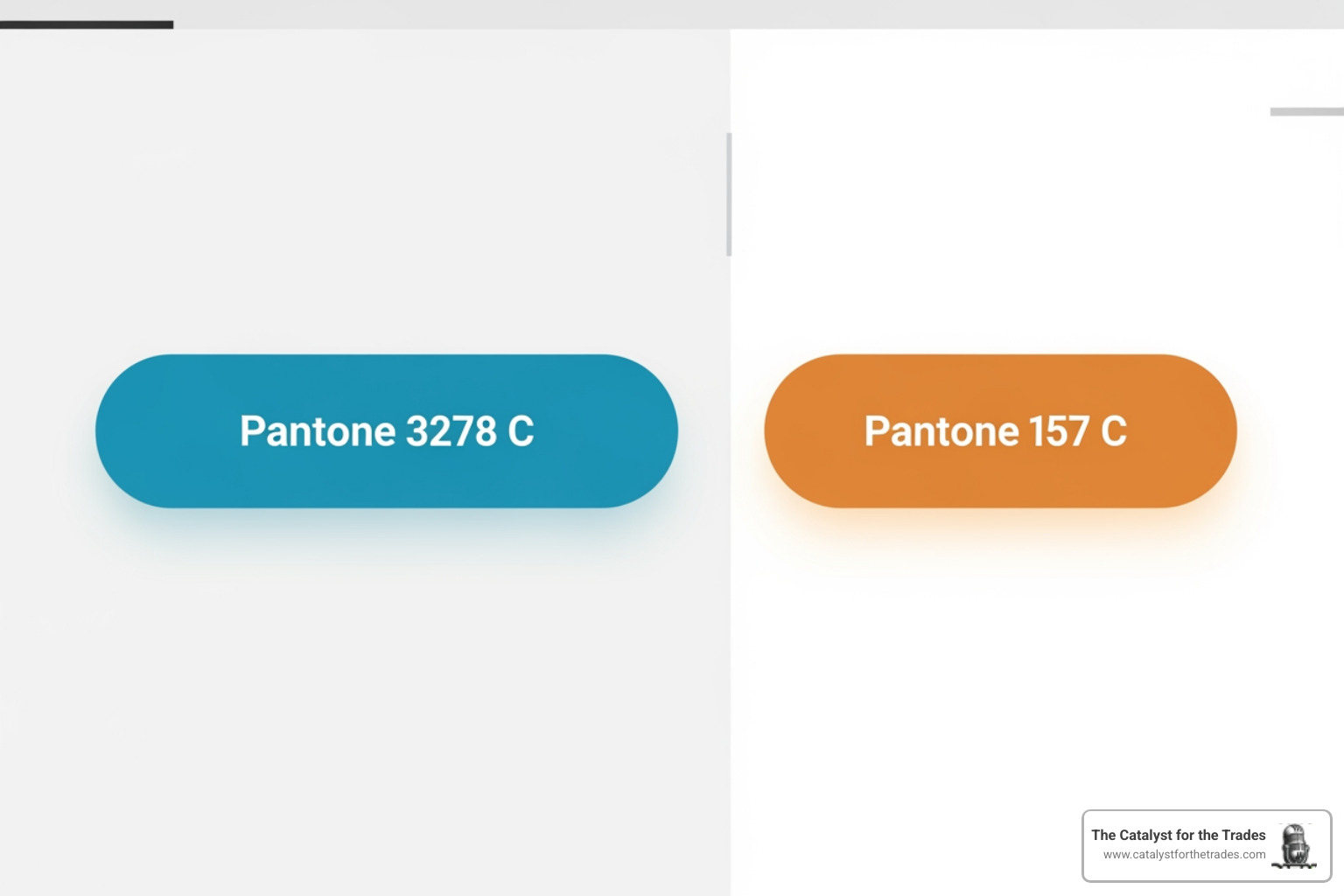
A/B testing sharpens your competitive edge by letting data decide what works best. You can test copy, offers, images, and layouts to find what resonates with your audience.
We start with a clear hypothesis, such as “Changing the CTA button color from blue to orange will increase submissions.” Even small changes can have a huge impact. For example, improving CTA copy or removing unnecessary form fields can significantly increase submissions. We run tests systematically, implement winners, and continuously improve your site’s performance.
Advanced Tactics: Automation, AI, and Follow-Up
Once you’ve mastered the fundamentals, it’s time to amplify your lead conversion optimization with advanced tactics that leverage technology and strategy.
Automating Lead Nurturing with AI to Improve Conversion
Manually nurturing every lead is inefficient. Surprisingly, only 25% of marketing and sales professionals use automation software for lead conversion, creating a major opportunity for businesses that adopt these tools.
AI-powered workflows automate email sequences and content delivery based on lead behavior. For example, if a homeowner visits your HVAC repair page multiple times, an automated system can instantly send a personalized follow-up. Predictive lead scoring uses AI to analyze data and assign each lead a score, allowing your sales team to focus on the prospects most likely to convert.
AI chatbots engage visitors 24/7, answering questions and qualifying leads even after hours. This timely communication is crucial, as delays reduce the likelihood of conversion. Platforms with robust marketing automation make these strategies accessible for any team.
Implementing Effective Lead Scoring and Follow-Up
Not all leads are equal. Lead scoring is a system for ranking prospects based on their value to your business, helping you prioritize your efforts.
We evaluate leads based on several dimensions:
- Demographics: Location, property type, etc.
- Engagement: Website visits, email opens, and resource downloads.
- Behavior: Pages visited (e.g., pricing page), form submissions.
- BANT: Budget, Authority to decide, Need for your service, and Timeline.
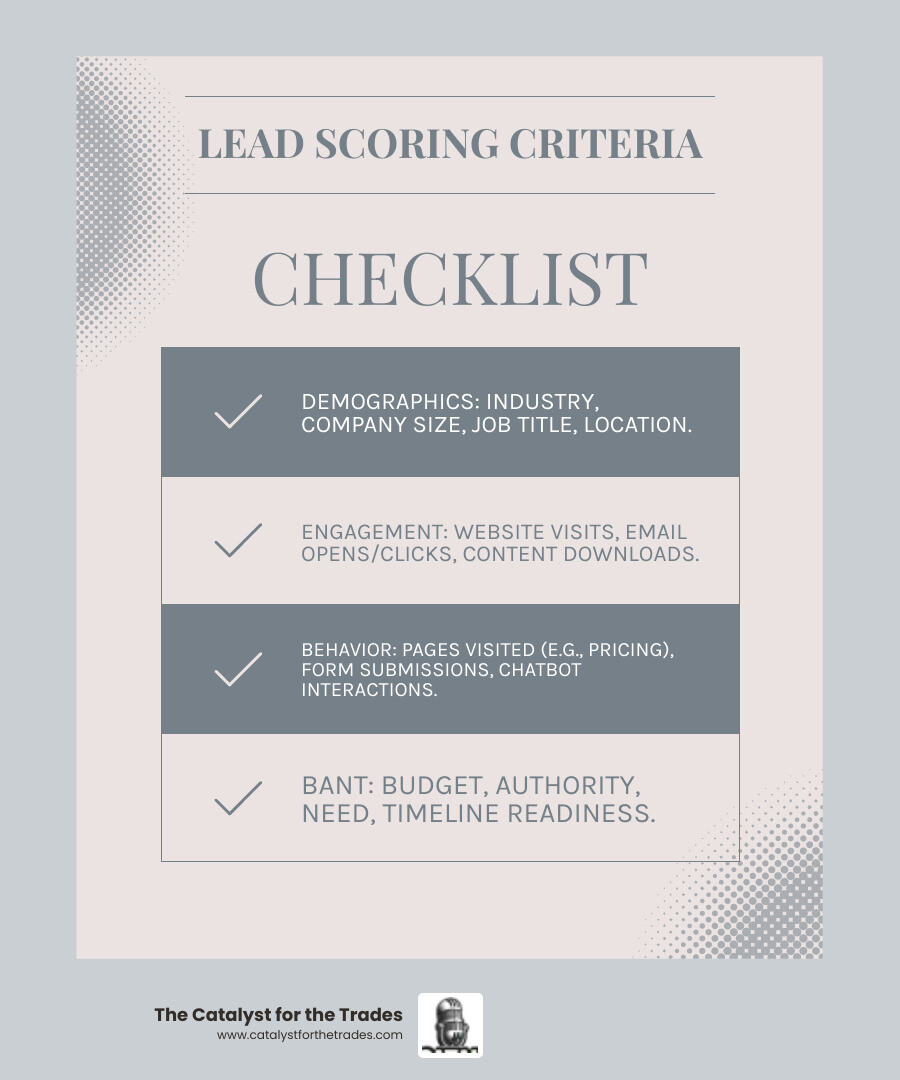
Once leads are scored, strategic follow-up is key. We map out touchpoints across different communication channels (email, phone, social media) to maintain contact without being intrusive. For B2B leads, professional networking platforms can be powerful channels. When contacting leads through a phone call, the approach should be helpful, not pushy. A quality CRM system ties this all together, automating tasks and ensuring no lead falls through the cracks.
Using Social Proof and Urgency to Boost Your Lead Conversion Optimization
People trust other people more than they trust ads. This makes social proof a powerful tool for lead conversion optimization.
- Testimonials and Reviews: These can increase conversion rates. Display specific, detailed testimonials prominently, as 72% of customers trust businesses with positive reviews.
- Case Studies: Provide in-depth accounts of how you solved real problems for customers, which is effective for complex or expensive services.
- Trust Badges: Displaying certifications and security badges builds credibility and reduces anxiety.
Creating a genuine sense of urgency encourages action. This isn’t about fake scarcity but highlighting real deadlines or limited availability. Messaging like “Limited-time seasonal tune-ups!” or “Only a few emergency slots left today!” creates a gentle FOMO (Fear Of Missing Out) that motivates prospects to act sooner. When done authentically, urgency feels helpful, not pushy.
Frequently Asked Questions about Lead Conversion
Here are answers to common questions home service business owners have about lead conversion optimization.
What is a good lead conversion rate for a home service business?
There is no single magic number. A “good” rate depends on your specific trade, traffic sources, and even seasonality.
While recent benchmarks report average conversion rates of around 2–3% across industries, it’s best to establish your own baseline. Your current conversion rate is your starting point for improvement. Factors like traffic channel (referrals convert higher than paid ads) and seasonality (peak summer AC demand) will always influence your numbers.
Improving a 1% conversion rate to just 2% doubles your leads. Focus on your own growth trajectory rather than just industry averages.
How do you calculate lead conversion rate?
Calculating your lead conversion rate is straightforward. Here’s the formula:
(Total Converted Leads / Total Leads) × 100
- Total Leads: Everyone who entered your sales funnel in a specific period (e.g., filled out a form, called your office).
- Total Converted Leads: Those who took the desired action.
You must define what a “conversion” means for your goals. Are you tracking inquiries that become booked appointments, or booked appointments that become completed jobs? We recommend tracking different conversion points throughout the customer journey (e.g., visitor-to-inquiry, inquiry-to-appointment) to identify where to focus your optimization efforts.
What are the biggest mistakes to avoid in lead conversion optimization?
Several common pitfalls can hurt your conversion rates. Avoid these mistakes:
- Ignoring Mobile Users: A huge portion of your customers search on their phones, often in urgent situations. A non-mobile-friendly site turns them away.
- Slow Page Speed: A slow website will cause potential customers to leave. Users are 32% more likely to bounce if a page takes three seconds to load, with each extra second dropping conversions by 12%.
- Unclear Calls-to-Action (CTAs): Vague buttons like “Submit” are ineffective. Use clear, action-oriented text like “Get Your Service Scheduled.”
- Long Forms: Asking for too much information creates friction. 27% of users will abandon a form that is too long. Stick to the essentials.
- Lack of Follow-Up: Leads go cold quickly. A systematic follow-up process is crucial to convert the interest you’ve generated.
- Inconsistent Messaging: If your ad promises one thing and your landing page says another, you destroy trust. Ensure your message is consistent from ad to landing page.
Conclusion
Your journey with lead conversion optimization is a continuous process of improvement. For home service businesses, this means constantly learning from customers, testing new approaches, and refining your processes to turn more visitors into loyal customers.
This guide covered aligning lead nurturing with CRO, using data-driven insights and personalization, crafting high-converting landing pages, and leveraging AI and automation. Each strategy is designed to remove friction and build trust.
Every percentage point increase in your conversion rate represents real growth for your business. By optimizing how you convert leads, you create better experiences for homeowners, build a more sustainable business, and make your marketing dollars work harder. The most successful businesses are those that commit to continuous improvement. They integrate technology with operational expertise to achieve long-term growth.
At The Catalyst for the Trades, we empower home service businesses to steer this landscape with confidence. We provide the insights, tools, and support you need to succeed.
Your leads are waiting. It’s time to ensure they not only find you but choose you.
Start supercharging your lead conversion today and transform your leads into lasting customer relationships.


