Learn · March 6, 2026
Top 10 Professional Education Workshops
Discover top executive development workshops in professional education. Boost leadership, skills, and career growth with proven programs and trends.
By The Catalyst Editorial Team Operator education · 7 min read · Updated July 24, 2026

Why Professional Education Matters for Home Services Leaders

Professional education is a systematic process that strengthens how business leaders obtain and retain the knowledge, skills, and attitudes needed to grow their companies and stay competitive. For home services business owners juggling recruitment challenges, technology adoption, and growth planning, the right executive development program can be the difference between stagnation and breakthrough.
Quick Answer: What is Professional Education?
Professional education includes:
- Graduate Certificates – Specialized credentials in 4-12 months (management, finance, operations)
- Executive Programs – Short-term intensive workshops focused on leadership, crisis management, and strategic decision-making
- Online Degrees – MBA or Master’s programs offering advanced business acumen
- Workshops & Coaching – Practical training in leadership, team building, and succession planning
- Continuing Education – Ongoing learning to maintain industry relevance and professional competence
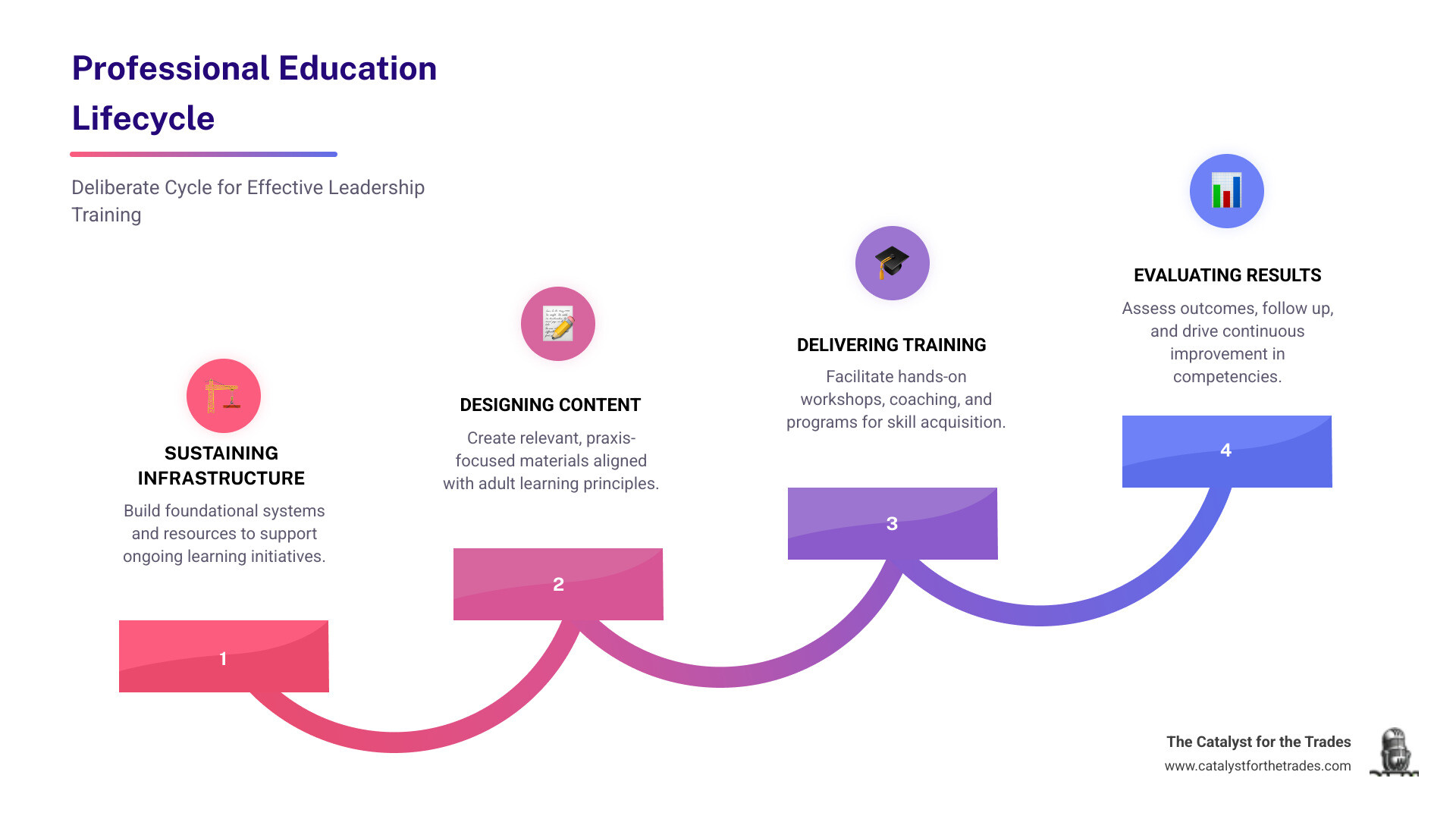
Unlike accidental learning, professional education follows a deliberate cycle: sustaining infrastructure, designing relevant content, delivering training, following up, and evaluating results. Research shows this intentional approach—rooted in adult learning principles like respect, safety, relevance, and practice opportunities—produces leaders who can immediately apply new skills to real-world challenges.
Basic professional education glossary:
Defining Professional Education and Its Core Formats
When we talk about professional education, we are referring to a formalized approach to specialized training. Unlike a general liberal arts degree, this type of learning is “praxis-focused,” meaning it prioritizes the practical application of theory.
The formats for these programs vary significantly based on your time commitment and goals:
| Format | Duration | Best For |
|---|---|---|
| Graduate Certificates | 4 – 12 Months | Upskilling in a specific niche (e.g., Marketing, Finance) |
| Executive Degrees | 1 – 2 Years | Comprehensive business mastery (Online MBA, MPH) |
| Short-term Workshops | 1 – 5 Days | Targeted problem-solving (Crisis Management, Sales) |
| Micro-credentials | Weeks | Resume boosting and niche technical skills |
Academic rigor is a hallmark of these programs. These programs are designed for immediate application; you can learn a management principle and implement it right away. The goal is the same: building subject matter expertise that drives results.
The Role of Professional Education in Executive Growth
For an executive, professional education is about more than just adding lines to a resume. It’s about establishing competency standards that lead to strong organizational health and long-term stability. When we invest in our education, we aren’t just learning content knowledge; we are accepting responsibility for the continued development of our industry.
Leadership entry programs are particularly vital for those transitioning into management. These programs often integrate core values to form leaders who view their work as a service to the community. By mastering decision-making tools and high-level strategy, you ensure your business doesn’t just survive but leads with clarity and consistency.
Top Executive Development Workshops for Leadership Growth
To truly scale, we must move from being “doers” to being “strategists.” Strategic leadership workshops focus on the high-level vision required to steer modern business complexities. These programs often use leadership development and management development frameworks to help owners step out of the daily grind.
Key areas covered in top-tier workshops include:
- Crisis Management: Learning how to steer a company through economic shifts or internal emergencies.
- Data Modeling & Analytics: Using your company’s numbers to predict seasonal trends and optimize operations.
- Decision-Making Tools: Frameworks that take the guesswork out of hiring, equipment purchasing, and expansion.
Building Subject Matter Expertise
In a world driven by rapid technological change, even traditional industries are becoming more data-driven. Executives attend workshops on automation, systems thinking, and operational excellence to understand how technology can improve customer experience. Financial analysis workshops can also help you understand the “why” behind your profit and loss statements, ensuring you have the clarity to invest in the right priorities for sustainable growth.
Innovative Methods Changing Professional Training
The way we learn has changed. We no longer have to sit in a classroom for eight hours. Modern professional education leverages adult learning principles, which acknowledge that experienced professionals learn best when the environment is safe, the content is relevant, and there are ample opportunities for practice.
Some of the most effective methods we see today include:
- Coaching: One-on-one sessions that provide direct feedback on your specific leadership style.
- Mentoring: Learning from those who have already successfully grown a home service business.
- Communities of Practice: Joining groups of like-minded owners to solve shared industry problems.
- Reflective Supervision: A method where leaders look back on their actions to improve future performance.
By focusing on continuous learning and skill development, we ensure that our leadership skills remain current.
The Impact of Technology and the Internet
The Internet has transformed professional education from a localized event into a global opportunity. Through webinars and distance learning, business owners can access world-class training from leading institutions.
Course management systems and online communities allow for an ongoing exchange of ideas. This digital change has made resources more accessible than ever. You can now listen to a podcast while driving between appointments or participate in a virtual workshop from your office. This flexibility is crucial for busy executives who cannot afford to take weeks off for traditional schooling.
Global Standards for Continuing Professional Development
In many fields, professional education isn’t just a choice—it’s a requirement. There is a clear distinction between Initial Professional Development (IPD) and Continuing Professional Development (CPD).
- IPD: This is the training you receive to reach autonomous competence in your field.
- CPD: This is the ongoing learning required to maintain and improve professional competence over time. It ensures that as technology, regulations, and customer expectations change, your knowledge stays current.
Investing in employee growth through these standards helps reduce turnover by showing your team a clear path for advancement.
Industry-Specific Requirements and Compliance
Different regions and professions have strict rules regarding ongoing education. While these are often associated with regulated roles, they are increasingly common across many industries to ensure safety and quality.
- Teachers: In Arkansas, teachers must complete 60 hours of PD annually. In Indiana, it’s 90 Continuing Renewal Units (CRUs), while Georgia requires 10 Professional Learning Units (PLUs).
- Licensed professionals: Many roles require ongoing learning to maintain registration with regulatory bodies.
For home service leaders, staying ahead of these trends helps you build a culture of learning while you focus on the executive-level skills needed to run the business.
Strategic Selection: Finding the Right Program for You
With so many options, how do you choose the right professional education path? It starts with assessing your stage as a leader.
- New Leaders: Look for self-paced courses and certificates that strengthen core business skills.
- Established Owners: Look for executive programs that build strategic clarity through high-level networking and practical insights.
When selecting a program, consider the outcomes you want from the time you invest. Ask yourself: Will this program help me solve a specific problem? Does it fit my schedule? Does it support long-term goals like building stronger systems and planning for the future?
Future Trends in Professional Education for Home Services Leaders
The future of home services lies at the intersection of technical excellence and leadership skills. We are seeing a massive shift toward leadership development that includes training in time management, people skills, and communication.
As workforce shortages continue and infrastructure ages, the next generation of industry leaders will be managing complex operations and leading teams at scale. Emerging technologies will require lifelong learners who are as comfortable with modern tools as they are with day-to-day operations.
Frequently Asked Questions about Professional Education
What distinguishes IPD from CPD?
Initial Professional Development (IPD) is the “starting line.” It’s the structured training that takes a learner to a level of autonomous competence where they can work without constant supervision. Continuing Professional Development (CPD) is the “marathon.” It’s the ongoing process of advancing knowledge and maintaining professional registration throughout your career. Think of IPD as getting your driver’s license and CPD as learning how to drive a new, high-tech electric vehicle years later.
Why is lifelong learning necessary for executives?
The world doesn’t stand still. Societal demands change, and technology moves at a breakneck pace. Lifelong learning prevents “professional obsolescence.” For an executive, staying self-motivated to develop new skills ensures that your business maintains high standards and remains relevant in a changing market. It’s about being proactive rather than reactive.
How do organizations benefit from professional development?
When a company prioritizes professional education, it aligns its team with its organizational goals. This leads to improved approaches to daily tasks, better talent retention (because employees feel valued), and a robust leadership pipeline. It fosters an environment of innovation where team members aren’t afraid to suggest new ways to improve the customer experience.
Conclusion
In the home services industry, your greatest asset isn’t your fleet of trucks or your inventory of parts—it’s your mind and the minds of your leadership team. Professional education is the fuel that keeps that asset performing at its peak. By embracing lifelong learning, you ensure your professional competence and industry relevance for decades to come.
Whether you are looking for a short-term workshop to fix a specific operational bottleneck or a long-term degree to master the art of business, the path to growth is paved with education.


