Learn · December 22, 2025
Recruitment Marketing: 5 Winning Strategies for 2025
Master recruitment marketing to attract top talent. Learn strategies for employer branding, candidate experience, and funnel optimization.
By The Catalyst Editorial Team Operator education · 10 min read · Updated July 24, 2026

Why Recruitment Marketing is Your Secret Weapon for Top Talent
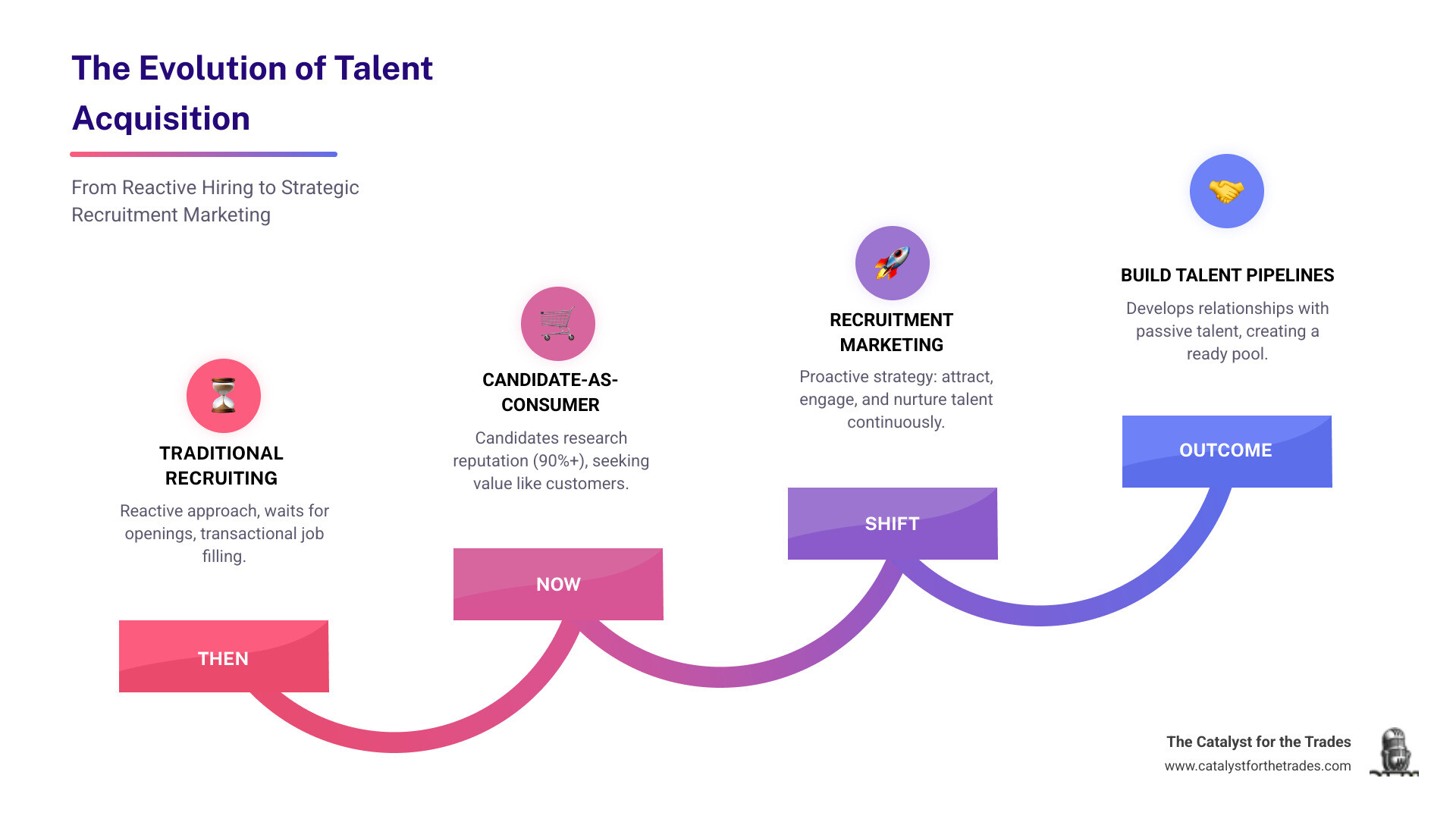
Recruitment marketing is the strategic use of marketing principles to attract, engage, and nurture potential candidates before they ever apply for a job. Unlike traditional recruiting, which is reactive, recruitment marketing is a proactive, data-informed approach that builds relationships with talent continuously. It uses content, social media, and employer brand storytelling to treat candidates like valued customers.
This matters because over 90% of candidates research a company’s reputation before accepting a job offer. They are shopping for employers, reading reviews, and evaluating your brand. If you only post jobs when you’re desperate, you’ve already lost the best candidates to competitors who have been building relationships for months.
The home services industry faces a brutal reality: 77% of organizations struggle to fill roles, and 72% of the U.S. labor market consists of passive talent who aren’t actively job hunting. The electricians, HVAC techs, and plumbers you need aren’t browsing job boards—they’re on social media, evaluating whether your company looks like a place they’d want to work.
Ready to build a talent pipeline that actually works? Learn how to create a comprehensive Talent Acquisition strategy, then find how to implement it with proven Candidate Experience tactics.
Simple guide to recruitment marketing terms:
Why Recruitment Marketing is a Non-Negotiable for Today’s Hiring
Relying on traditional recruiting methods means you’re fishing in an overfished pond. The best talent isn’t even there. The reality is that 72% of the U.S. labor market consists of passive talent—skilled electricians, HVAC techs, and plumbers who aren’t actively job hunting but might be open to a better opportunity. Traditional recruiting waits for them to apply; recruitment marketing goes out and finds them first.
By building a talent pipeline, you’re not scrambling when a position opens. You’re inviting people who already know and like your company to take the next step. Companies investing in robust recruitment marketing strategies see a 3x increase in candidate quality. Learn more about building this kind of strategic approach in our guide to Talent Acquisition.
Traditional Recruiting vs. Recruitment Marketing
The difference is a complete shift in mindset from reactive to proactive.
| Traditional Recruiting | Recruitment Marketing |
|---|---|
| Reactive: Responds to immediate job openings. | Proactive: Builds relationships and pipelines for future needs. |
| Short-term focus: Aims to fill specific roles quickly. | Long-term focus: Cultivates a sustainable talent pool. |
| Fills open seats: Transactional, focuses on current vacancies. | Builds talent pools: Relationship-focused, nurtures interest over time. |
| Transactional: Focuses on the application and hiring process. | Relationship-focused: Engages candidates across multiple touchpoints. |
| Job-centric: Highlights job requirements and duties. | Employer-brand-centric: Promotes company culture, values, and employee experience. |
| Often one-way communication: Company advertises, candidate applies. | Two-way communication: Engages with candidates through content and interactions. |
| Limited reach: Primarily targets active job seekers. | Broad reach: Attracts both active and passive candidates. |
The Symbiotic Relationship with Employer Branding
While related, Employer Branding and recruitment marketing are not the same.
Your employer brand is your reputation—the reality of working at your company. It’s your company mission, vision and values, culture, and what makes you a desirable employer.
Recruitment marketing is how you communicate that brand to the world. It’s the strategic promotion—through your career site, social media, and employee stories—that attracts talent.
A strong employer brand gives your marketing substance. Effective recruitment marketing ensures your great brand gets seen. They need each other. Reputation management on sites like Glassdoor is crucial, as over 90% of candidates research a company’s reputation before accepting an offer.
The 5 Core Components of a Winning Strategy
A successful recruitment marketing strategy isn’t random—it’s a blueprint for attracting the right people. With 86% of organizations prioritizing talent marketing, having a clear plan is critical for business success. Here are the five core components.

1. Define Your Employer Value Proposition (EVP)
Your EVP answers the critical question: “Why should I work for you?” It’s your unique promise to employees, encompassing culture, growth opportunities, and benefits—not just salary. Defining your EVP is the foundation of every message you send to potential hires.
2. Create Your Ideal Candidate Personas
Just as you have customer personas, you need candidate personas. Define your ideal hire: What are their skills, career goals, and motivations? What challenges do they face? Where do they spend their time online (Facebook, LinkedIn, TikTok)? This understanding allows you to move from a “spray-and-pray” approach to surgical precision in your marketing.
3. Choose Your Channels and Tactics
Once you know who you’re targeting, select the right channels to reach them.
- Career Site: Your central hub for culture, testimonials, and job listings.
- Social Media: Platforms like Facebook and LinkedIn to share your story and engage talent.
- Content Marketing: Blogs and videos that highlight employee experiences and company values.
- Employee Referral Program: A powerful source for quality hires, as referrals often fit the culture well.
- Email Marketing: Nurture a talent community with newsletters and company updates.
- Events: Career fairs and industry meetups for face-to-face connections.
- Job Boards: Still useful, especially when posts reflect strong employer branding.
4. Develop Compelling Content
Content brings your EVP to life. Move beyond dry job descriptions and create authentic materials that show what it’s like to work for you.
- Employee Testimonials: Let your team tell their own stories in short videos or quotes.
- Day-in-the-Life Videos: Give candidates a genuine peek into a typical workday.
- Blog Posts: Highlight company culture, employee success, or career insights.
- Behind-the-Scenes Photos: Showcase your team in action, celebrating milestones or community involvement.Every piece of content should reinforce your company mission, vision and values and speak to your ideal candidates.
5. Optimize the Candidate Journey
A great marketing effort can be wasted by a poor application process. Make the entire journey seamless.
- Ensure a mobile-friendly career site. Over 58% of job seekers use their phones to find jobs.
- Provide clear communication at every stage of the process.
- Reduce friction in the application. 60% of job seekers abandon applications that are too long or complex.A positive Candidate Experience turns everyone—hired or not—into a potential brand advocate.
Mastering the Recruitment Marketing Funnel
The recruitment marketing funnel guides candidates through three stages: Awareness, Consideration, and Application. Each stage requires different tactics to build trust and interest, meeting candidates where they are in their decision-making process.

Stage 1: Awareness – Getting on the Radar
At the top of the funnel, the goal is to get noticed by passive candidates. You’re not asking for an application yet; you’re planting the seed that your company is a great place to work.
- Social Media Campaigns: Share behind-the-scenes content and team wins to showcase your culture.
- SEO for Career Pages: Optimize your site to appear in searches like “plumbing jobs near me.”
- Content Marketing: Use blog posts and videos to tell your brand story and build recognition.
- Programmatic Job Ads: Use technology to automatically place job openings in front of qualified talent online.The goal is to be memorable, authentic, and visible where your future employees spend their time.
Stage 2: Consideration – Sparking Interest
Candidates in this stage are intrigued and paying attention. Your goal is to deepen the relationship and provide more detailed information.
- Targeted Email Campaigns: Send personalized content to people who have shown interest.
- Employee Testimonials & “Day-in-the-Life” Content: Offer an authentic look at what it’s like to work for you. This builds trust.
- Webinars and Virtual Events: Host Q&A sessions or virtual tours to offer a transparent look behind the curtain.
- Retargeting Ads: Use friendly reminders to keep your opportunities visible to those who have visited your career site.This is where you showcase your company culture in-depth and build a talent community of engaged potential applicants.
Stage 3: Application – Driving Action
At the bottom of the funnel, candidates are ready to act. Your job is to make it as easy as possible.
- Clear and Compelling Job Descriptions: Sell the opportunity and its impact, not just the duties.
- Simple Application Process: Ensure your application is mobile-friendly and can be completed in minutes. 60% of candidates abandon lengthy applications.
- Optimized Landing Pages: Create focused pages for specific roles to guide candidates toward applying.
- Strong Calls-to-Action: Use bold, clear “Apply Now” buttons.
- Text-to-Apply Options: Meet candidates where they are by offering modern, convenient application methods.Mastering this flow ensures a steady stream of great talent.
Measuring Success and Embracing Technology
Your recruitment marketing efforts must deliver measurable results. Tracking data allows you to prove value, make informed decisions, and refine your strategy. For a broader view, see our Talent Management Complete Guide and listen to How to Win in the Trades: Recruitment, AI, and Trust with Mike Disney.
Key Metrics for Your Recruitment Marketing ROI
Tracking these metrics helps you understand what’s working.
- Source of Hire: Which channels deliver your best candidates?
- Time-to-Fill: How long does it take to fill a position? A strong pipeline shortens this.
- Application Completion Rate: A low rate indicates friction in your application process.
- Quality of Hire: Are new hires performing well and staying long-term?
- Offer Acceptance Rate: How compelling is your offer and employer brand?
- Career Site Traffic & Engagement Rates: What content resonates with your audience?
The Impact of Technology in Modern Recruitment Marketing
Technology makes recruitment marketing more efficient and effective.

- Sourcing Technology: Helps identify and reach passive candidates on professional networks.
- Chatbots: Provide 24/7 engagement, answering candidate questions and guiding them through applications.
- Predictive Analytics: Use AI to forecast which candidates are most likely to succeed.
- Personalized Content Delivery: Tailor communications based on a candidate’s interests and funnel stage.
- AI Writing Tools: Help craft more inclusive and compelling job descriptions.
Embracing these tools allows you to scale your efforts and create more personalized candidate experiences. To learn more, listen to Mike Disney on Building Trust, Recruiting Top Talent, Winning in the Trades.
Frequently Asked Questions about Recruitment Marketing
Here are answers to common questions about getting started with recruitment marketing.
What skills are essential for a recruitment marketer?
A great recruitment marketer is a hybrid of a marketer and an HR professional. Key skills include:
- Storytelling & Content Creation: Crafting compelling narratives and creating engaging copy, videos, and graphics.
- Data Analysis: Interpreting metrics to understand what’s working and calculate ROI.
- Strategic Thinking: Aligning recruitment efforts with overall business goals.
- Social Media Savvy: Leveraging platforms like Facebook and LinkedIn to reach talent.
- Tech Proficiency: Using recruitment marketing platforms, CRMs, and AI tools.
- Creativity: Thinking outside the box to stand out in a crowded market.
How can a small business start with recruitment marketing?
You don’t need a huge budget to start. Focus on small, high-impact steps:
- Optimize your career page. Make it mobile-friendly and fill it with authentic employee stories.
- Create one or two candidate personas. Focus your efforts on your ideal hire.
- Pick one or two social media channels. Maintain a consistent presence where your candidates are.
- Launch an employee referral program. This is often the most cost-effective and high-quality source of candidates.
- Gather and share employee testimonials. Authentic stories are powerful and free.
What does the future of recruitment marketing look like?
The field is evolving quickly. Key trends include:
- Hyper-personalization: Using data to deliver customized content to individual candidates.
- Technology and Automation: AI-powered chatbots and predictive analytics will become standard, freeing up time for relationship-building.
- Video and Authentic Content: Short, real videos will continue to dominate as candidates seek genuine glimpses into company culture.
- Internal Mobility: Applying recruitment marketing principles to engage and retain current employees, promoting internal Employee Loyalty.
- Diversity and Inclusion Storytelling: Authentically showcasing a commitment to a diverse and inclusive workplace will be essential for attracting top talent.
Conclusion
Recruitment marketing is no longer an optional extra—it’s a necessity for any home service business that wants to build a winning team. The old method of posting a job and waiting is over.
The future of hiring is about building genuine relationships. By adopting a marketing mindset, you create a pipeline of talent that already knows and respects your brand. Instead of scrambling to fill roles, you’ll be positioned as the employer of choice in your market, competing on culture, values, and opportunity.
At The Catalyst for the Trades, we’re passionate about helping you build the team that will fuel your growth. Implementing these recruitment marketing strategies gives you the competitive edge to attract the skilled people you need.
Ready to transform your hiring? Explore more strategies to grow your home service business.


