Learn · December 16, 2025
SEO for Contractors: 1st Step to Explosive Growth
Master seo for contractors to dominate local searches. Get more leads, boost visibility, and outrank competitors. Grow your business!
By The Catalyst Editorial Team Operator education · 13 min read · Updated July 24, 2026

Why Every Contractor Needs SEO to Win More Jobs

SEO for contractors is the process of optimizing your website so that homeowners searching for your services—like “roof repair near me”—find you first on Google. When done right, it transforms your website from a digital brochure into a 24/7 lead generation machine.
Quick Answer: How to Implement Contractor SEO
- Optimize your Google Business Profile with complete NAP (Name, Address, Phone), service areas, photos, and active review collection.
- Target local, service-based keywords like “[your service] in [your city]” on your website.
- Create dedicated service pages for each type of work you do (e.g., kitchen remodels, bathroom renovations).
- Build local citations by listing your business consistently across Yelp, Angi, and other directories.
- Earn quality backlinks through local partnerships and community sponsorships.
- Track performance using Google Analytics and Search Console to measure traffic, rankings, and leads.
Here’s the reality: 97% of consumers search online for local services, and 93% of those searches start on a search engine. If your business isn’t on the first page of Google, you’re handing qualified leads to competitors.
The data backs this up. SEO leads have a 14.6% close rate, compared to just 1.7% for outbound marketing like print ads. That’s nearly nine times more effective. For contractors looking to build predictable revenue, SEO is foundational to staying competitive.
While you excel at your trade, mastering digital marketing is a different skillset. The good news is that SEO for contractors follows clear principles that deliver measurable results. This guide breaks down exactly what you need to do to dominate your local market.
Why SEO is Your Most Powerful Digital Tool
You’ve spent years perfecting your craft, but that expertise doesn’t matter if homeowners can’t find you. SEO for contractors places you exactly where your ideal customers are looking, at the moment they need your services.
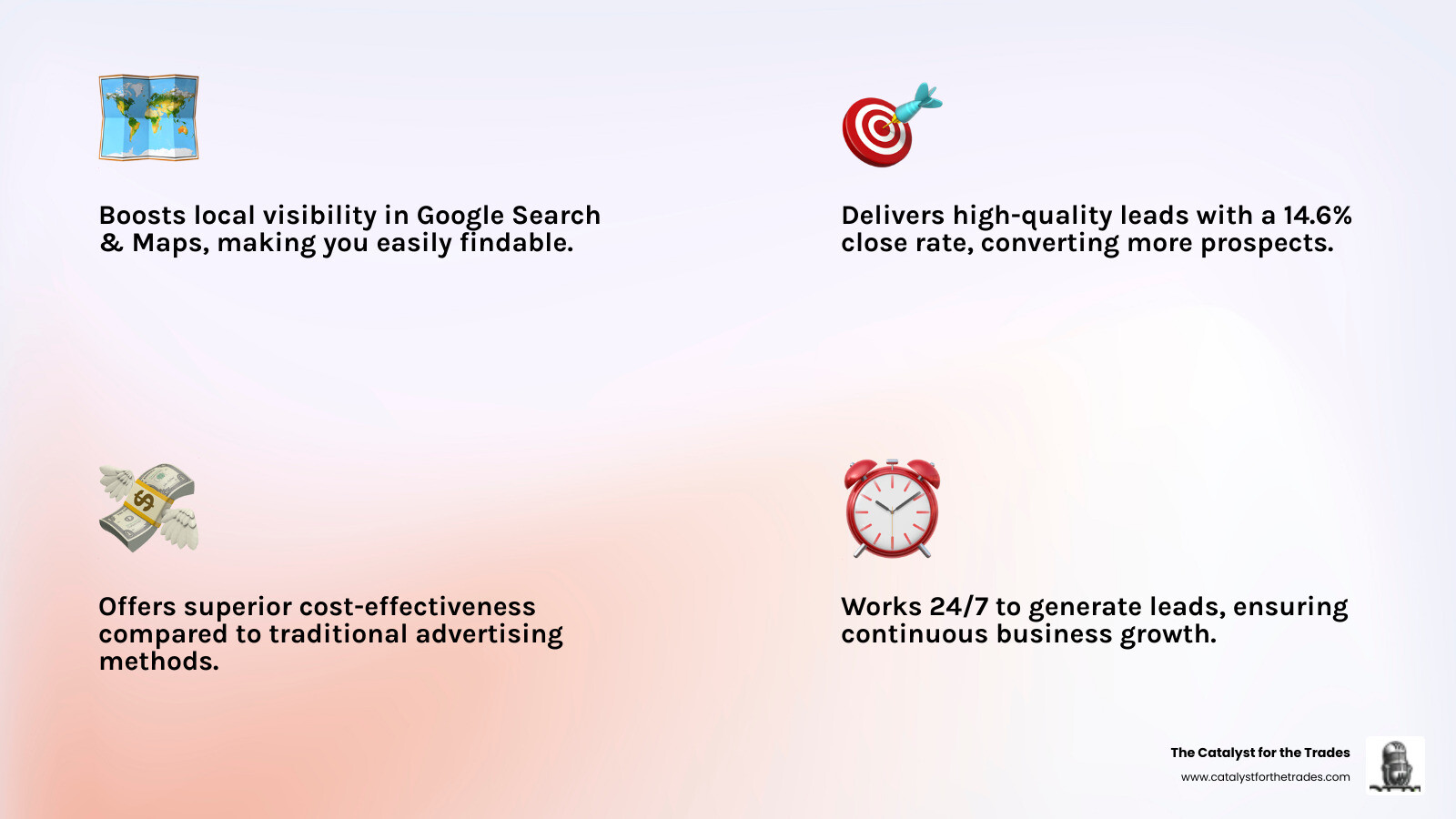
Increased Visibility: With 93% of online experiences starting with a search engine, appearing on the first page of Google is how modern contracting businesses thrive. If you’re not there, you’re invisible.
High-Quality Leads: SEO delivers customers with high intent. Someone searching for “emergency plumber in Phoenix” has a specific problem and is ready to hire. This is why SEO leads have a 14.6% close rate.
Cost-Effectiveness: Unlike paid ads where leads stop when you stop paying, SEO builds long-term equity. Strong rankings generate consistent leads without paying for each click, delivering a high return on investment.
Brand Awareness and Trust: Consistently appearing in top search results builds familiarity and credibility. When Google features your business, it sends a signal that you are legitimate and relevant, a trust factor that paid ads can’t replicate.
24/7 Promotion: Your website and online presence work around the clock. While you’re on a job site or at home, SEO is continuously bringing qualified leads to your business.
Competitive Advantage: SEO levels the playing field. A smaller contractor with a smart, focused SEO strategy can outrank larger competitors, dominating their local service area.
The Core Components of SEO
Understanding SEO for contractors means knowing its four core components:
On-Page SEO: This is everything on your website you control, including keywords, page structure, title tags, and image optimization. It makes it clear to search engines and visitors what your business does.
Off-Page SEO: This focuses on building your authority through external signals, primarily by earning backlinks (links from other reputable websites). These act as digital votes of confidence.
Technical SEO: This is the behind-the-scenes work ensuring your site is fast, mobile-friendly, secure (HTTPS), and easily crawlable by search engines. If Google can’t understand your site, your content won’t rank.
Local SEO: Critical for contractors, this component focuses on dominating your specific service area. It heavily involves your Google Business Profile, local directory listings, and customer reviews.
The Foundation: Mastering Local SEO to Dominate Your Service Area
When a homeowner needs help, they search for a contractor right now, in their neighborhood. This is why SEO for contractors begins with local visibility.

Your goal is to appear in the Map Pack—the top three local businesses shown on the map in Google search results. Getting featured here is like having a billboard that only appears to people actively looking for your services.
The foundation for this is your Google Business Profile (GBP). This free listing is your digital handshake with customers, showing your business name, phone number, hours, photos, and reviews. If you haven’t claimed and verified your profile, you are invisible to a huge portion of your customer base.
Optimizing Your Google Business Profile (GBP)
Your GBP is your digital storefront. To optimize it, you must:
- Complete Your Profile: Fill in every section: business description, services, photos, hours, and contact details. Google rewards thoroughness.
- Choose Specific Categories: Instead of “General Contractor,” use specific categories like “Kitchen Remodeling Contractor” or “Residential Roofing Contractor” to attract the right customers.
- List Your Services: Add a detailed list of every service you offer. This helps Google match you to specific searches like “bathroom tile installation.”
- Add Photos and Videos: Showcase your completed projects, your team, and your equipment. Visuals build trust and show the quality of your work.
- Use Google Posts: This underused feature lets you share updates, offers, and recent projects directly in your listing, keeping it fresh and engaging.
- Answer the Q&A Section: Proactively answer common questions like “Do you offer free estimates?” or “Are you licensed and insured?” to remove barriers for potential customers.
For a detailed walkthrough, check out this guide on setting up your GBP properly.
The Power of Reviews and Local Citations
Online reputation directly impacts your search visibility. Encouraging customer reviews should be part of your process. After a job, send a follow-up text or email with a direct link to your GBP review page. Google uses review count and rating as a ranking factor. Responding to all reviews—both positive and negative—shows you are engaged and care about customer experience.
Local citations are listings on directories like Yelp, Angi, and Bing Places for Business. They expand your digital footprint, but NAP consistency is critical. Your business Name, Address, and Phone number must be identical across every platform. Inconsistencies like “St.” vs. “Street” can confuse search engines and hurt your local rankings.
Building Your Digital Job Site: On-Page & Technical SEO for Contractors
With local SEO established, it’s time to optimize your website. Think of your site as a digital job site that needs to be organized and accessible for both customers and search engines.

A well-structured website with clear navigation and a positive user experience is essential. Visitors should immediately understand who you are, what you do, and how to contact you. Since over 70% of searches are on mobile, your site must be mobile-friendly. Furthermore, page speed is critical; if your site takes more than a few seconds to load, potential customers will leave.
Keyword Research: The Blueprint for Your SEO for Contractors
Keyword research is the blueprint for SEO for contractors, revealing what customers type into Google. Focus on keywords with commercial or transactional intent, like “best HVAC repair near me.”
- Local & Service-Based Keywords: Target location-specific terms like “plumber in Phoenix” and service-specific phrases like “water heater installation.”
- “Near Me” Searches: These high-intent searches have exploded in popularity and are gold for local contractors.
- Long-Tail Keywords: Longer, more specific phrases like “cost to replace furnace in Denver” attract users who are further along in the decision-making process.
Use tools like Google Keyword Planner or a free Semrush account to find relevant keywords and assess their search volume and competition.
Creating High-Value Content and Service Pages
Create content that answers customer questions and showcases your expertise.
- Dedicated Service Pages: Every service (e.g., kitchen remodels, bathroom renovations) needs its own page. This allows you to target specific keywords and provide in-depth information.
- Project Portfolio Galleries: Before-and-after photos and detailed project descriptions build trust and display the quality of your work.
- Blog Posts & Guides: Answering common questions with “how-to” guides or maintenance tips positions you as an expert. This attracts customers early in their research and keeps you top of mind.
- Case Studies: Detail a challenging project from problem to solution to demonstrate your problem-solving skills.
Essential On-Page and Technical Elements
Technical details can make or break your SEO success.
- Optimized Title Links: These are the headlines in search results. Craft them to be compelling and include relevant keywords, as per Google’s guidelines on title links.
- Compelling Meta Descriptions: These snippets appear under the title link. A well-written description increases click-through rates.
- Header Tags (H1, H2, H3): Use headers to structure content logically for readers and search engines, naturally including keywords.
- Image Optimization: Rename image files descriptively (e.g., “modern-kitchen-remodel-dallas.jpg”) and add descriptive alt text. Compress images to under 400KB to ensure fast page loads.
- Site Speed: Use Google’s PageSpeed Insights to identify and fix elements that slow down your site.
- Secure Website (HTTPS): A secure site with an SSL certificate is a trust signal for visitors and a known Google ranking factor.
Expanding Your Influence: Off-Page SEO and Authority Building
Your online reputation extends beyond your website. Google pays attention to what other sites say about you, which is the core of off-page SEO and a key part of SEO for contractors.
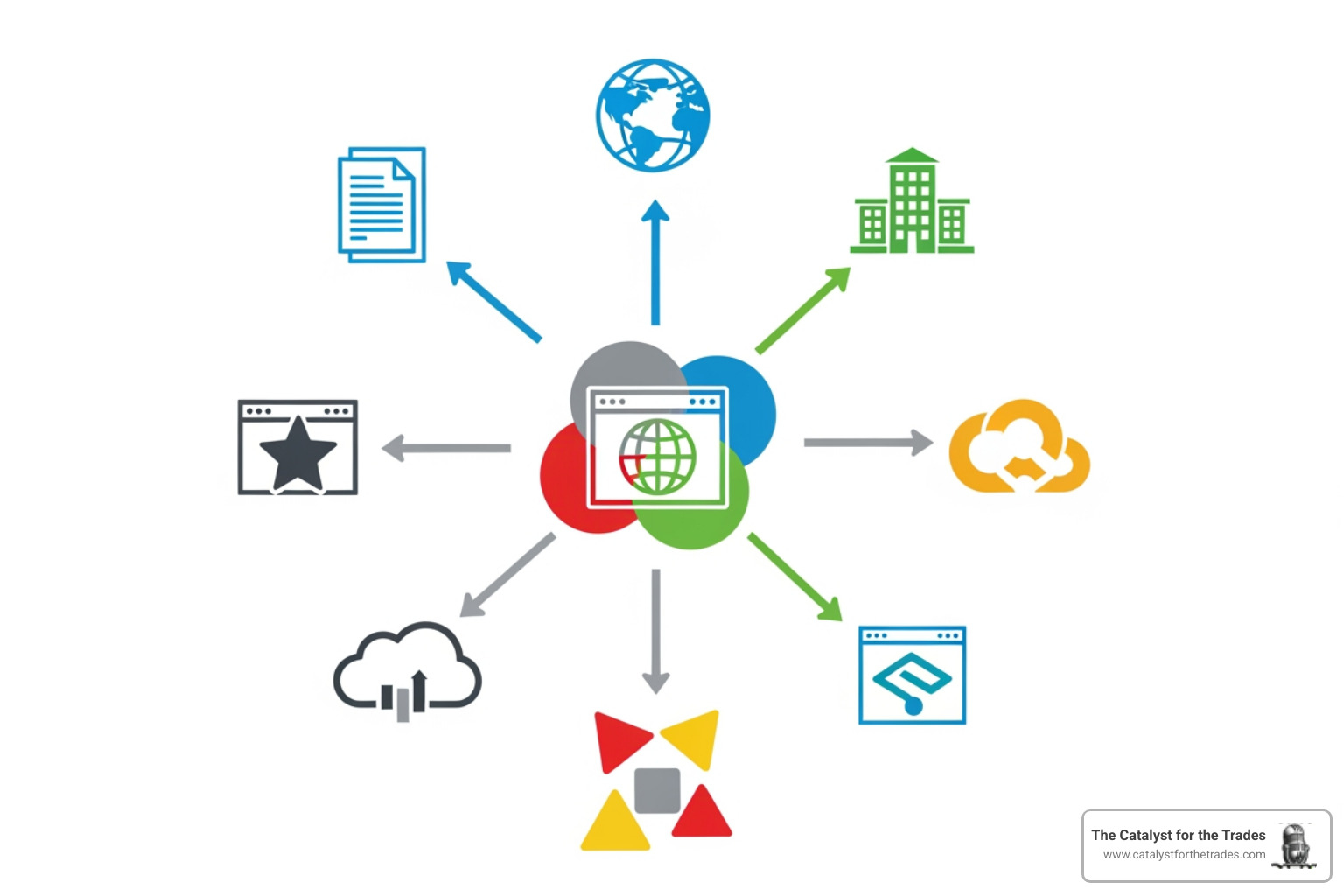
Link building is the process of earning backlinks—clickable links from other websites to yours. These act as digital referrals and are a strong Google ranking signal. Quality is more important than quantity; a link from the local chamber of commerce is more valuable than a random directory.
Here’s how to earn valuable backlinks and build authority:
Local Partnerships: Collaborate with complementary businesses like real estate agents, home inspectors, or interior designers who can refer you and link to your site.
Community Sponsorships: Sponsoring local events, sports teams, or charities often results in a backlink from the organization’s website, building goodwill and SEO value simultaneously.
Guest Blogging: Write helpful articles for local home improvement blogs or industry publications. In return, you’ll typically get a backlink in your author bio, establishing you as an expert.
Digital PR: Share stories about innovative projects, community service, or unique business practices with local news outlets and blogs. A media mention can provide a powerful, high-authority backlink.
Off-page SEO compounds over time. Each quality backlink you earn grows your authority, making it easier to rank higher and attract more organic traffic.
Measuring Success and Deciding Your Next Move
SEO for contractors is not a one-time task; it requires ongoing monitoring and adjustment. One of the first decisions is whether to handle it yourself or hire a professional.
DIY SEO: This offers lower upfront costs and full control. It’s a good option for new businesses with more time than money. However, it requires a significant time investment, has a steep learning curve, and you risk making mistakes without access to professional tools.
Hiring an Agency: This provides specialized expertise, professional tools, and faster execution, freeing you to focus on your contracting work. The tradeoff is a higher financial investment and the need to find a reputable agency that understands your industry.
Agencies are ideal for established businesses ready for growth, while DIY is suitable for those with limited budgets who enjoy digital marketing.
Key Metrics to Track
To know if your efforts are working, monitor these key metrics:
- Keyword Rankings: Track your position in search results for target keywords using tools like Semrush. Improvements indicate your strategy is working.
- Organic Traffic Growth: Use Google Analytics to measure the number of visitors finding your site from search engines. More traffic means more potential leads.
- Leads and Conversions: This is what truly matters. Track phone calls, form submissions, and online bookings to measure the direct impact on your bottom line.
Google Analytics provides a full picture of website visitor behavior, while Google Search Console shows how your site performs in Google search, including which keywords drive clicks.
Is Your SEO for Contractors Strategy Working?
Regularly review your data to understand what’s working. Are your target keywords driving traffic and leads? If a page isn’t performing, it may need better content, more backlinks, or technical improvements.
SEO is an iterative process. Use data to make continuous adjustments, such as creating more content on topics that generate the most leads. While calculating a precise ROI can be complex, you can attribute leads and jobs directly to your SEO efforts, providing clarity on your marketing investment.
Frequently Asked Questions about SEO for Contractors
Here are answers to the most common questions we hear from contractors about getting started with SEO.
How long does it take to see results from SEO?
SEO for contractors is a long-term strategy, not a quick fix. Be wary of anyone promising overnight results.
- Initial Results (3-6 Months): You can expect to see early progress, such as improved rankings for some keywords and a noticeable increase in website traffic.
- Significant Results (6-12 Months): Achieving consistent top rankings for competitive terms and a substantial flow of quality leads typically takes this long, or sometimes more in highly competitive markets.
This timeline is affected by factors like local competition, your budget, and the consistency of your strategy execution. The good news is that once you establish authority, it’s easier to maintain than it was to build.
Can SEO help me compete with larger contracting companies?
Yes. Local SEO is one of the best tools for smaller contractors to compete with larger companies.
Google prioritizes relevance, proximity, and reputation over company size. A well-optimized local contractor can outrank a national chain by leveraging several advantages:
- Hyper-Local Targeting: Focus on specific neighborhoods or suburbs to dominate micro-markets that larger companies overlook.
- Niche Service Focus: Target specific keywords for specialized services (e.g., historic home renovations) to attract high-value clients.
- Local Trust and Reviews: Build an authentic, trustworthy reputation through community engagement and positive customer reviews that large, impersonal companies struggle to replicate.
What is the single most important part of SEO for a local contractor?
If you focus on one thing, make it your Google Business Profile (GBP).
Your GBP is crucial because it’s the primary driver for appearing in the “Map Pack”—the prominent local business listings at the top of search results that get the most clicks. A fully optimized GBP provides:
- Local Search Visibility: It puts you on the map when customers search for contractors in your area.
- Customer Reviews: It’s the central hub for reviews, which Google uses as a key ranking factor and trust signal.
- Proximity Matching: It tells Google your exact location and service areas, helping you connect with nearby homeowners.
- Direct Lead Generation: It includes click-to-call buttons and website links, making it easy for potential clients to contact you immediately.
Optimizing your GBP is the single most impactful step you can take to boost your online presence.
Conclusion
You now have the blueprint for building your digital presence. SEO for contractors is about ensuring homeowners who need your services can find you online. It translates your real-world expertise into digital visibility, so a customer with a problem finds your number first.
We’ve covered how local SEO puts you on the map, how your website can generate leads 24/7, and why online reviews are critical. SEO is a continuous process that requires consistent attention, but the foundation you build keeps working for you, creating a sustainable source of business that doesn’t rely on expensive ads.
It takes patience—those 6 to 12 months for significant results are real. But so is the payoff: a steady stream of qualified leads who are actively looking for your services in your area.
Whether you tackle SEO yourself or bring in experts, the most important thing is to start. Claim your Google Business Profile, ask for reviews, and ensure your website clearly communicates what you do. Every step builds toward dominating your local market.
Your business deserves to be seen. SEO for contractors makes that happen. For more strategies on scaling your home service business, listen to The Catalyst for the Trades podcast, where we combine cutting-edge marketing insights with real-world industry experience.


