Learn · January 6, 2026
Ai chat systems: Future-Proof Trades 2025
Discover how AI chat systems revolutionize home services. Boost efficiency, enhance customer engagement & drive growth 24/7.
By The Catalyst Editorial Team Operator education · 15 min read · Updated July 24, 2026

Why AI Chat Systems Matter for Your Business Right Now
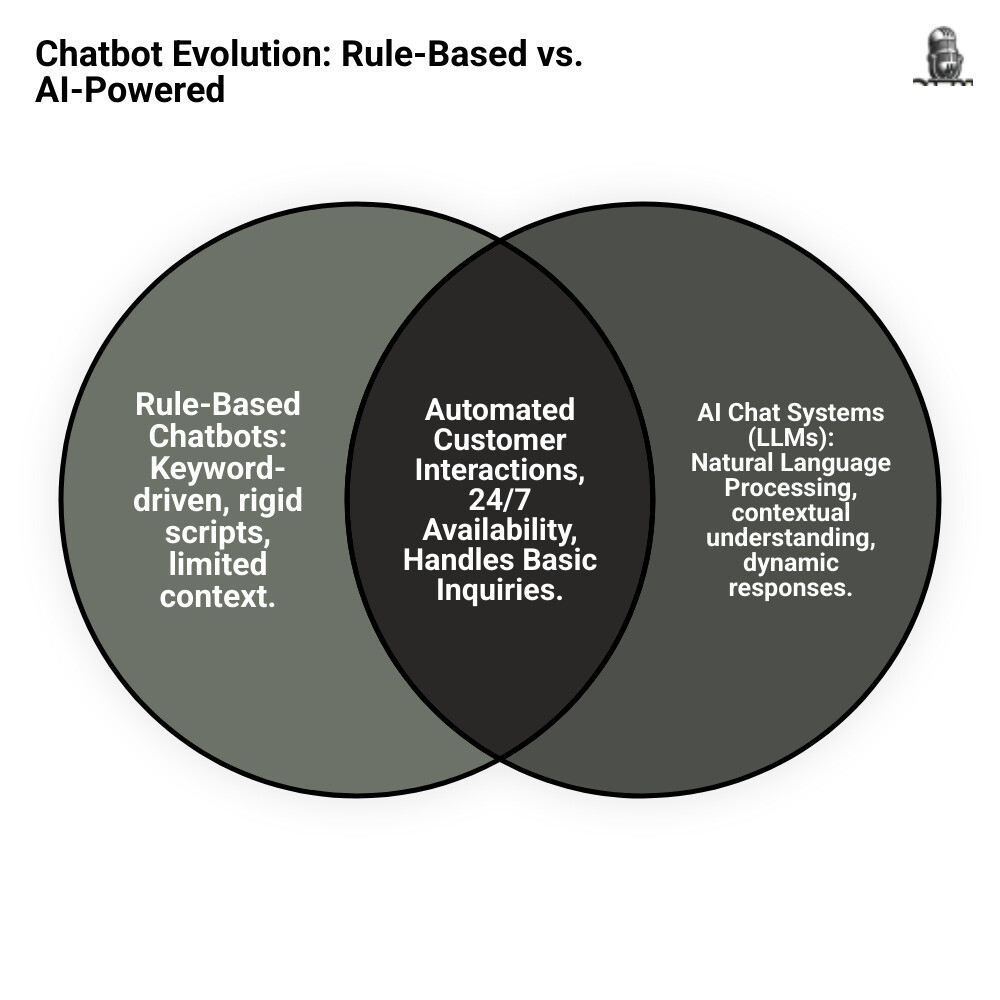
AI chat systems are software applications powered by artificial intelligence that can hold natural, human-like conversations with your customers through text or voice. For home service business owners, these systems automate customer interactions 24/7, handle appointment scheduling, answer common questions, and qualify leads—all without adding headcount. They use natural language processing to understand customer intent and generate relevant responses, much like a knowledgeable team member who never sleeps.
Quick Overview: What AI Chat Systems Do for Home Service Businesses
- Automate Support: Answer FAQs and troubleshoot basic issues instantly
- Capture Leads: Engage website visitors and qualify potential customers
- Schedule Appointments: Handle booking and reminders without staff involvement
- Scale Operations: Manage multiple conversations simultaneously
- Reduce Costs: Free up human agents for complex, high-value work
- Work 24/7: Never miss an inquiry, even after hours or on weekends
If you’re struggling to keep up with customer inquiries while trying to grow, AI chat systems offer a practical solution. They don’t replace your team; they give your people leverage to focus on work that requires human expertise.
The technology has matured rapidly. Modern AI chatbots are powered by large language models that understand context, remember conversation history, and integrate with business tools. Unlike the rigid chatbots of the past, today’s systems handle varied phrasing and complex questions, becoming essential for businesses that want to compete on responsiveness and customer experience.
For more context on how these tools fit into the broader change of home services, check out How AI, Voice, and Chat Are Changing the Home Service Game. When you’re ready to explore implementation, learn more about your AI strategy options.
Key terms for ai chat systems:
- automated customer service
- customer experience optimization
- customer relationship management
Understanding the Core of AI Chat Technology
At its heart, an AI chat system is built on sophisticated technology that allows computers to understand and generate human language.
First, there’s Natural Language Processing (NLP). Think of NLP as the AI’s ears and mouth. It gives machines the ability to read, understand, and derive meaning from human languages. When a customer types a question, NLP helps the system break down the sentence, identify keywords, and grasp the intent, even with unusual phrasing.
Then, we have Machine Learning. This is the brain behind the operation. Through machine learning, systems are trained on massive amounts of text data. This training allows them to identify patterns, learn grammar, understand context, and generate unique, relevant responses. The more data they process, the smarter they become.
The real stars of modern AI chat systems are Large Language Models (LLMs). This type of Generative AI can produce natural language text in response to a prompt. Unlike older, rule-based chatbots that picked from pre-written answers, LLMs can create new, human-like text on the fly. They don’t just recognize a question; they understand it and formulate a fresh, coherent reply.
To keep track of the conversation, LLMs use a context window—the chatbot’s short-term memory. It’s the amount of text (input and output) it can process at once. A larger context window means the AI can maintain coherence over longer discussions. Some advanced systems can handle context windows equivalent to thousands of pages, perfect for reviewing lengthy documents.
Finally, language is broken down into tokens. These are the basic units of text—words, parts of words, or punctuation—that LLMs process. When you type a sentence, the system tokenizes it, and the LLM predicts the most probable next token until a full response is generated.
So, how do AI chat systems work? When a user sends a message, the system:
- Receives the prompt: Your customer asks a question.
- Tokenizes the input: Breaks down the question into individual tokens.
- Processes with the LLM: The Large Language Model, using its vast training, predicts the most relevant tokens to form a response, considering the conversation history within its context window.
- Generates the response: The AI constructs a human-like answer.
- Optionally uses external tools: For up-to-date information, it might consult web search engines before replying.
This intricate dance of NLP, machine learning, LLMs, context, and tokens allows AI chat systems to provide responsive, intelligent interactions. If you’re curious about how these technologies are impacting our industry, dig into How AI, Voice, and Chat Are Changing the Home Service Game.
Core Capabilities of Modern AI chat systems
Modern AI chat systems are far more than just glorified FAQ bots. They boast a range of capabilities that can revolutionize how businesses operate.
Content Creation: Need a blog post about HVAC maintenance or a draft for a customer email? AI chat systems can generate various content types, from marketing copy to detailed service descriptions, adapting the tone and style to your brand’s voice.
Data Analysis: Feed a spreadsheet of service call data into an AI to identify trends in customer complaints or peak service times. These systems process vast datasets, summarize key information, and highlight insights that would take a human hours to uncover.
Coding Assistance: For the technically inclined, AI chat systems can be powerful coding partners. They can generate code snippets, debug existing code, and explain complex programming concepts in simple terms, speeding up development tasks.
Web Search Capabilities: Many advanced AI chat systems integrate with search engines, acting as intelligent “answer engines.” They can scour the live internet to give you the most up-to-date responses, complete with sources.
Image Generation: Some AI chat systems have multimodal capabilities, meaning they can create images from your text descriptions. This can be a fantastic tool for marketing, helping you visualize concepts for ad campaigns or social media.
Multimodal AI: This refers to an AI’s ability to process and generate different types of data simultaneously—text, images, and even voice. This means you could speak to a chatbot, show it a picture of a broken part, and receive a spoken response with troubleshooting steps.
Summarization: Got a lengthy service manual or a long customer interaction transcript? AI chat systems can quickly condense long documents or conversation histories into concise summaries, saving valuable time.
Interacting Effectively with AI
Getting the best results from AI chat systems is about clear communication, a practice we call prompt engineering. Think of it as being a good director for your AI actor.
Prompt Engineering: This is the art of crafting effective instructions (prompts) for AI chat systems to get the desired output. It’s about being precise, clear, and comprehensive.
Providing Context: The more background information you give, the better the AI can tailor its response. Instead of “Write a social media post,” try “Write a friendly, informative social media post for our plumbing business about the benefits of yearly water heater maintenance, targeting local homeowners.”
Asking Follow-Up Questions: If the initial response isn’t quite right, ask specific follow-up questions to refine it, such as “Can you make it shorter?” or “Please emphasize the cost savings aspect.”
Specifying Format: Guide the AI to produce the output structure you need. Request “a bulleted list,” “a five-paragraph email,” or “a table comparing two options.”
Iterating on Responses: Think of your interaction as a dialogue. You give a prompt, the AI responds, you provide feedback, and the AI refines its output. This iterative process is key to open uping the AI’s full potential.
Mastering these techniques will sharpen your AI skills. For more insights on leveraging AI for business strategies, explore Smart Decisions, Big Impact: Teasha Cable’s AI Strategies for Better Business.
Leveraging AI Chat Systems for Business Growth in the Trades
For home service businesses, AI chat systems are a powerful engine for tangible growth. The benefits extend across automation, scalability, and lead generation, fundamentally changing how we operate.
AI chat systems improve operational efficiency by offering 24/7 support, automating tasks, and processing large data sets in real-time. This means less manual work and faster, more accurate service. This automation frees up valuable human resources, allowing your skilled team to focus on complex problems and building stronger client relationships.
The ability to handle multiple conversations simultaneously without a dip in quality is a game-changer for scalability. An AI chat system can manage fluctuating customer inquiries effortlessly, ensuring consistent service delivery, even as your business grows.
Furthermore, these systems are excellent tools for lead generation. By proactively engaging website visitors, answering initial questions, and collecting contact information, they can nurture potential clients around the clock. They can even pre-qualify leads, so your sales team can focus their efforts effectively.
To truly future-proof your trades business, a strategic approach to AI is essential. Dive deeper with The AI Revolution in Home Services: How to Future-Proof Your Trades Business and consider crafting a solid Contractor AI Strategy.
Revolutionizing Customer Service
One of the most immediate areas where AI chat systems shine is customer service. Imagine a world where every customer inquiry is met with an immediate, helpful response.
- 24/7 Availability: AI chat systems provide continuous support for after-hours emergencies, like a burst pipe at 2 AM. This ensures no customer is left waiting, which significantly boosts satisfaction.
- Instant Responses: AI chatbots provide immediate answers to common questions, reducing wait times and improving the customer experience. This instant gratification is a huge win.
- Handling Multiple Conversations: Unlike human agents, AI chat systems can handle thousands of conversations simultaneously. This dramatically reduces call queues and ensures every customer gets attention when they need it.
- Appointment Scheduling: Integrated with your scheduling software, an AI chatbot can guide customers through booking, confirm appointments, and send reminders, automating a time-consuming task.
- Troubleshooting Common Issues: For repetitive inquiries like “Why is my AC making this noise?”, AI chat systems can provide step-by-step troubleshooting guides, resolving minor issues quickly and preventing unnecessary service calls.
AI chat systems transform your customer service into a competitive advantage. To see how AI is elevating the customer experience, explore our insights on AI Customer Service and learn from experts in How AI is Transforming Call Handling: Brad Scruggs on the Future of Home Service Communication.
Boosting Sales and Marketing Efforts
Beyond service, AI chat systems are powerful allies in growing your revenue. They can act as tireless sales and marketing assistants, working to attract and convert customers.
- Lead Qualification: An AI chatbot can engage website visitors with targeted questions to understand their needs (e.g., “Are you looking for repair or installation?”). This qualifies leads, identifies those with high intent, and passes them to your sales team, saving valuable time.
- Personalized Recommendations: Based on a customer’s inquiries, AI chat systems can suggest relevant services or products. For example, if a customer asks about furnace repair, the AI might recommend an annual maintenance plan.
- Proactive Engagement: AI chatbots can be configured to proactively initiate conversations with website visitors, offering assistance or highlighting special promotions to turn casual browsers into engaged prospects.
- Content Generation for Marketing: From crafting social media posts about seasonal HVAC tips to drafting email campaigns, AI chat systems can generate a wide range of marketing content, streamlining your efforts and ensuring a consistent brand voice.
These capabilities allow your sales and marketing teams to operate with greater efficiency. Learn more about how AI is revolutionizing the customer journey in AI Customer Acquisition, and hear from industry leaders in From Comedy to AI: How Sebastian Jimenez Is Revolutionizing Sales in the Trades.
Enhancing Operational and Data-Driven Decisions
AI chat systems can also streamline your internal operations and provide invaluable insights for strategic decision-making.
- Automating Repetitive Tasks: AI can automate internal administrative tasks like generating reports, compiling customer feedback, or assisting with inventory queries. This frees your team to focus on higher-value activities.
- Data Processing: AI chat systems can process enormous amounts of operational data in real-time, such as analyzing service call logs or technician schedules to identify bottlenecks or areas for improvement.
- Generating Reports: Instruct an AI chat system to generate comprehensive reports on customer interactions, service trends, or lead conversion rates. This provides quick, actionable insights without the manual grind.
- Gaining Business Insights: By analyzing the vast data flowing through your AI chat systems, you can uncover deeper business insights. For example, an AI might identify a recurring issue with specific equipment, prompting you to adjust service offerings or training.
Using these capabilities means your business can run smoother and make smarter choices. Explore how to leverage these tools for deeper understanding with AI Business Intelligence and learn about making informed choices with AI Decision-Making Tools.
Implementation and Key Considerations
Adopting AI chat systems is a journey. Successful implementation involves careful consideration of how these tools will fit into your existing operations, how they can be customized, and what ethical responsibilities come with using them.
Integrating AI chat systems with your current software ecosystem is crucial. Modern AI solutions are designed to connect with your Customer Relationship Management (CRM) system, scheduling software, and email platforms. For example, some AI systems are natively wired into productivity suites, allowing them to summarize emails or analyze data within your familiar applications. This interconnectedness prevents data silos and maximizes efficiency.
Customization is another key factor. The real power comes from tailoring AI chat systems to your specific business. This means training the AI on your company’s knowledge base, FAQs, service offerings, and unique brand voice. A customized AI chatbot feels like an extension of your team.
Scalability is inherent in the design of these systems. As your business grows, your AI chat system can effortlessly scale to meet demand without a proportional increase in human staff, providing a robust foundation for future expansion.
Finally, user experience design is paramount. For both customers and your team, the interface should be intuitive and easy to use. A smooth, frustration-free experience encourages adoption and ensures the AI adds value.
Choosing the Right AI chat systems for Your Trade Business
With a multitude of AI chat systems available, selecting the right one for your trades business requires aligning the tool with your specific needs and goals.
- Functionality: What do you need the AI to do? Is it for customer support, lead generation, internal task automation, or a combination? Look for systems with core capabilities that match your priorities.
- Integration Capabilities: Will the AI chat system integrate smoothly with your existing CRM, scheduling software, and other critical business tools? A system that works in harmony with your current tech stack will deliver far greater value.
- Ease of Use: Consider the learning curve for setup and daily operation. Many platforms offer no-code or low-code solutions, making implementation easier for businesses without dedicated IT teams.
- Customization Options: Can you train the AI on your specific business data, services, and brand voice? The ability to tailor the AI’s responses ensures it represents your company accurately.
- Security Protocols: This is non-negotiable. Ensure the provider has robust security measures, including data encryption, clear data handling policies, and compliance with relevant privacy regulations to protect customer information.
By carefully evaluating these factors, you can choose an AI chat system that truly improves your operations. To ensure your business is ready, take a look at Future-Proofing Contracting: Paul Redman on Tech, AI, and the New Customer Experience.
Ethical Use and Data Privacy
As we accept the power of AI chat systems, it’s crucial to steer the ethical landscape and prioritize data privacy. These are fundamental to building trust and maintaining your business’s reputation.
- Data Handling Practices: Know how your AI provider collects, stores, and uses data. Reputable providers encrypt personal information and won’t use private conversations to train their models by default. Always review their data policies.
- User Consent: Transparency is key. Always ensure you have explicit user consent for collecting and processing their data through AI chat systems, which is both a legal requirement and an ethical best practice.
- Misinformation Risks: AI chat systems can sometimes “hallucinate”—confidently generating plausible but incorrect information. This risk necessitates human oversight, especially for critical information. Always verify AI-generated content before sharing it with customers.
- AI Bias: AI chat systems learn from their training data. If that data contains biases, the AI can perpetuate them. Continuous monitoring and careful training data selection are necessary to mitigate AI bias.
- Ensuring Brand Safety: You want your AI chat system to reflect your brand’s values. Implementing guardrails and monitoring can prevent the AI from generating inappropriate or off-brand content, safeguarding your company’s image.
Navigating these considerations thoughtfully is part of being a responsible leader. For broader insights, refer to Navigating Industry Transformation: AI, Consumer Trends, and Strategic Business Models.
Frequently Asked Questions about AI Chat Systems
How can AI chatbots improve my home service business’s efficiency?
AI chat systems improve efficiency by automating customer inquiries, scheduling appointments, and handling repetitive tasks 24/7. This frees up your human team to focus on complex jobs and high-value client interactions, ultimately reducing operational overhead and speeding up response times. By handling the routine, AI ensures your skilled staff can dedicate their expertise where it truly matters.
Are AI chatbots difficult to integrate with my existing software?
Most modern AI chat systems are designed for seamless integration with popular business tools like CRMs, scheduling software, and email platforms. Many offer no-code or low-code solutions, allowing for straightforward setup without requiring deep technical expertise. Providers understand that compatibility is key, so they’ve made it easier than ever to connect these powerful tools to your existing workflows.
Can an AI chatbot truly understand my customers’ specific needs?
Yes, advanced AI chat systems use Natural Language Processing (NLP) to understand context, intent, and even sentiment in customer queries. By training them on your business’s specific data—such as past service call logs, common FAQs, and service descriptions—they can provide highly relevant, personalized, and accurate responses, making customers feel genuinely understood.
Conclusion
AI chat systems are at the forefront of change for the trades. These intelligent tools, powered by Large Language Models, are reshaping customer service, boosting sales, and driving smarter operational decisions. They offer unparalleled automation and scalability, ensuring your business can handle growth and unexpected demands.
The journey with AI is one of continuous learning. These systems are always evolving, becoming more intelligent and capable with every update. This continuous improvement means the strategic advantage they offer today will only grow.
For forward-thinking trades businesses, embracing these technologies isn’t just about keeping up; it’s about gaining a significant strategic advantage. By leveraging AI chat systems, you empower your team, delight your customers, and build a more resilient and efficient operation.
Here are our key takeaways for implementing AI in your business:
- Start with a Clear Goal: Identify specific pain points where AI can make the biggest impact.
- Prioritize Integration: Choose AI chat systems that seamlessly connect with your existing software.
- Customize and Train: Tailor the AI to your unique services, brand voice, and customer needs.
- Emphasize Ethics and Privacy: Implement robust data handling practices and ensure transparency with customers.
- Iterate and Optimize: Treat AI as an ongoing project, continuously refining prompts and monitoring performance.
The Catalyst for the Trades is dedicated to empowering home service businesses like yours with the knowledge and strategies to thrive in this new era. Don’t get left behind; become a leader in innovation.


