Learn · May 29, 2026
Top Training Programs for Trade Employees 2026
Discover top training programs for trade employees that turn rookies into masters with earn-while-you-learn apprenticeships and high earnings.
By The Catalyst Editorial Team Operator education · 9 min read · Updated July 24, 2026

Why Training Programs for Trade Employees Are the Smartest Investment You Can Make in 2026
Training programs for trade employees are structured pathways that combine hands-on fieldwork with technical instruction to turn entry-level workers into skilled, certified professionals. Here’s a quick look at the most common types:
- Registered Apprenticeships – U.S. Department of Labor-approved programs blending paid on-the-job training (typically 8,000+ hours) with classroom instruction
- Pre-Apprenticeship / Readiness Programs – Short-term (9-16 week) programs that prepare candidates for formal apprenticeship entry
- Employer-Sponsored Programs – Company-run training like the Trane Commercial HVAC Technician Apprenticeship, offering raises every six months and a nationally recognized credential
- Free Digital Platforms – On-demand, self-paced training covering trade basics, safety, and soft skills
- Stackable Credential Programs – Multi-year pathways where certifications build on each other, often earning participants up to 60 college credits
Right now, in May 2026, home services business owners are facing a pressure most didn’t anticipate when they started: the people doing the work are getting harder and harder to find. Baby boomers are retiring out of the trades faster than new workers are stepping in. High schools spent decades pointing every ambitious kid toward a four-year degree. The result? A widening skilled labor gap that’s slowing down growth, straining existing crews, and making it nearly impossible to scale.
The good news is that the solution is already proven. Structured training programs don’t just fill open roles — they build the kind of loyal, capable professionals who stick around, move up, and make your business more competitive. A fully-proficient worker who completes a construction apprenticeship earns an average of $60,000 per year, and apprenticeship participants earn approximately $300,000 more over their careers than those who skip formal training. That’s not just good for the employee — it’s a direct return on your investment as a business owner.
This guide breaks down exactly how these programs work, what they cost (spoiler: often nothing out of pocket), and how to use them to go from a team of rookies to a roster of trade masters.
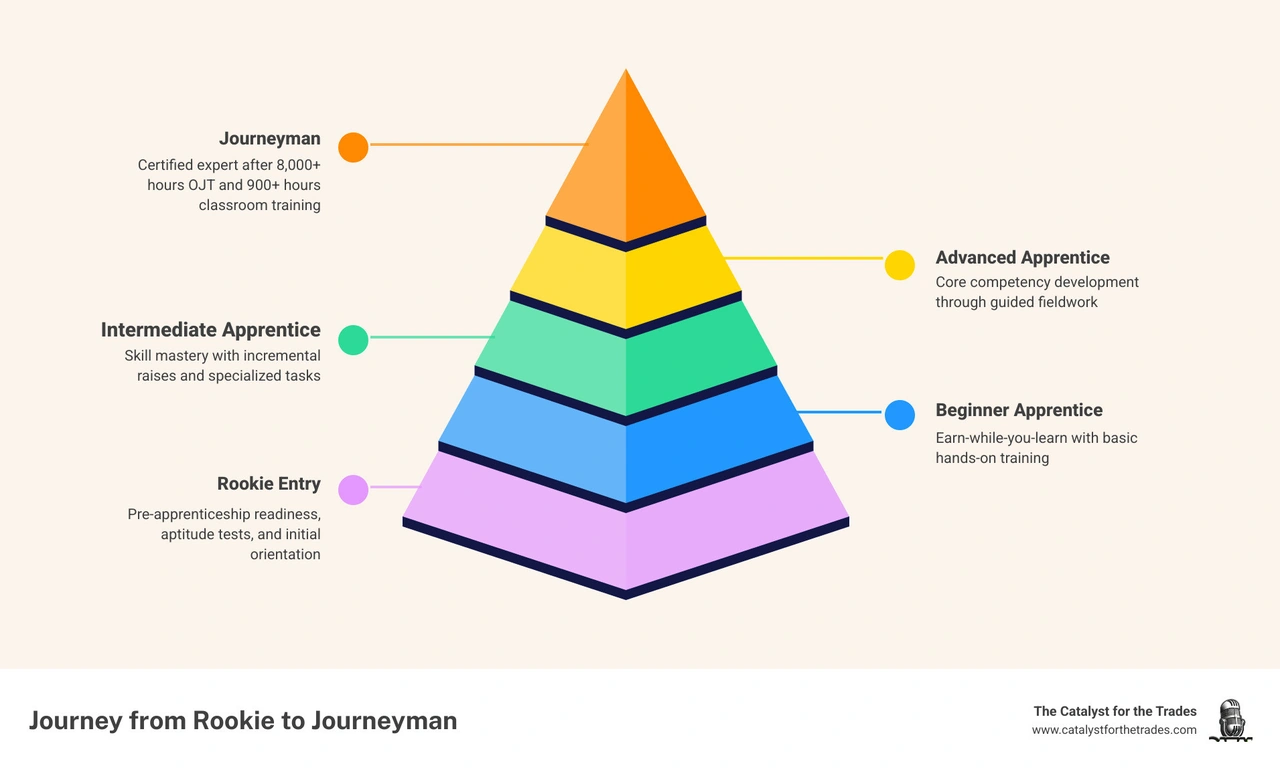
Know your training programs for trade employees terms:
Skilled Trades vs. Traditional Professional Career Paths
For a long time, the “traditional” success story involved four years of university, a mountain of student debt, and a desk job. But as we look at the landscape in May 2026, the script has flipped. Skilled trades offer a path defined by field hours and experience-based skills rather than purely theoretical study time.
One of the biggest advantages of trade training is rapid workforce entry. While a college student is still sitting in a lecture hall during their third year, a trade apprentice is already on the jobsite, earning a paycheck and contributing to real-world projects. This focus on practical application ensures that the Career Development of a trade professional is rooted in what actually works in the field.
Avoiding university debt is a massive motivator. Many training programs for trade employees are essentially debt-free. Instead of paying tuition, the employee is paid to learn. This “reboot” opportunity is increasingly popular for people in their 20s and 30s who find themselves dissatisfied with unfulfilling office roles and want to see the tangible results of their labor at the end of every day.
| Feature | Trade Training / Apprenticeship | Four-Year University Degree |
|---|---|---|
| Primary Focus | Hands-on field hours & hard skills | Classroom study & theory |
| Cost | Often free or paid-to-learn | High tuition & potential debt |
| Timeline | Immediate entry / Earn while learning | 4+ years before full-time earning |
| Credential | Nationally recognized Journey-level | Bachelor’s Degree |
| Career Path | Direct path to master/specialist | General entry-level roles |
The Structure of Training Programs for Trade Employees
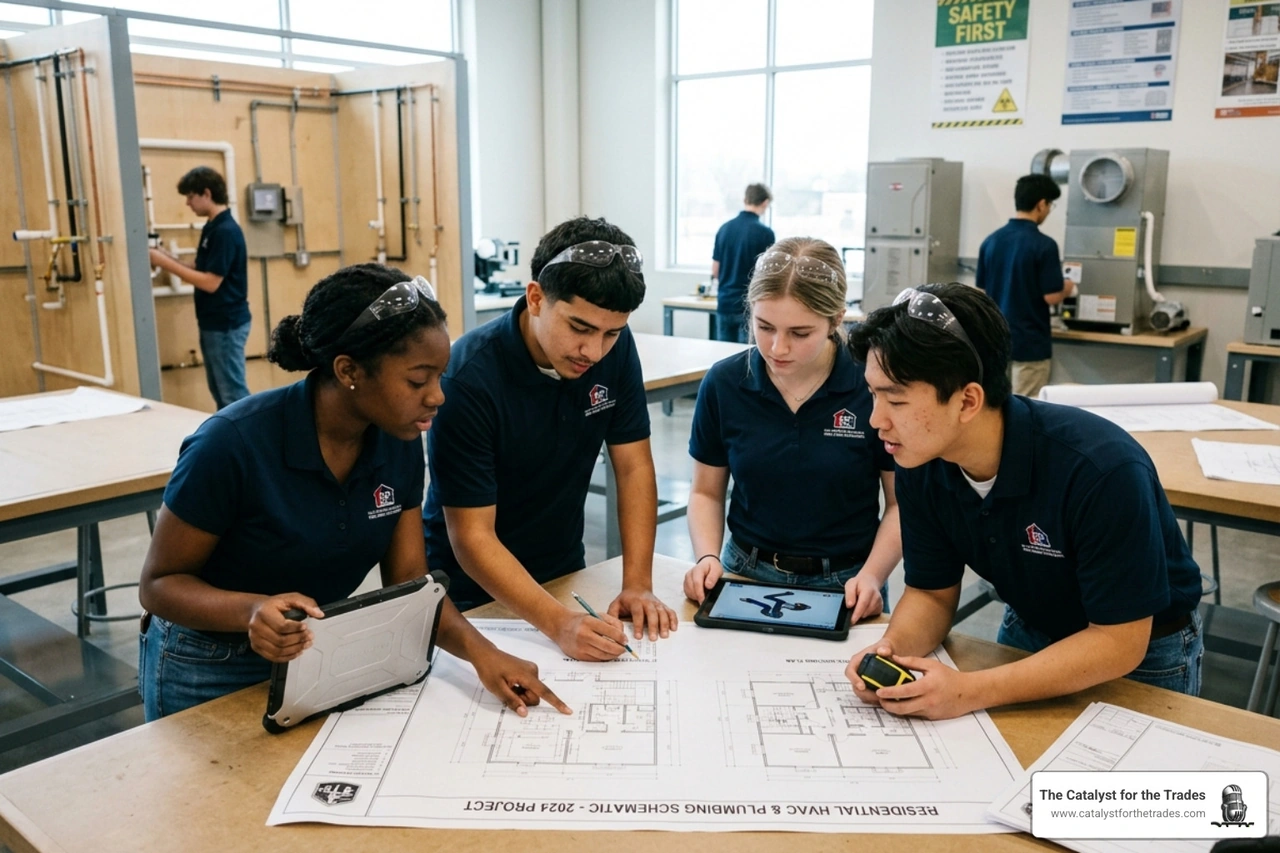
When we talk about high-quality training programs for trade employees, we aren’t just talking about “watching a guy work.” Modern programs are highly regulated and structured. The U.S. Department of Labor (DOL) plays a critical role here, registering and safeguarding apprenticeship programs to ensure they meet national industry standards.
A registered apprenticeship is the gold standard of Skill Development. These programs typically require a massive commitment: often 8,000 hours of on-the-job training (OJT) paired with roughly 900 to 1,200 hours of classroom theory. This isn’t just “busy work.” It leads to portable credentials—specifically a Journey-level certificate—that are recognized across the country.
The success of this structure is evident in the numbers. There is a staggering 90% retention rate for apprentices who complete their programs. For a business owner, this means the time you invest in training results in a long-term, highly loyal asset for your company.
The ‘Earn-While-You-Learn’ Model in Training Programs for Trade Employees
The “earn-while-you-learn” model is the engine that drives interest in the trades. Unlike traditional education where you pay for the privilege of learning, these programs provide a full-time wage from day one.
As the employee hits specific milestones in their training, they receive incremental raises. This skill-based progression means that as they become more valuable to your business, their compensation reflects that growth. Many programs are employer-sponsored, meaning the company covers the cost of technical instruction, viewing it as a necessary Professional Development expense to ensure the future of their workforce.
Eligibility and Readiness for Training Programs for Trade Employees
To enter these programs, most candidates need a high school diploma or GED. However, the barrier to entry isn’t just a piece of paper; it’s about having the right mindset. Many modern programs now use aptitude assessments to gauge a candidate’s mechanical reasoning and spatial awareness.
For those who aren’t quite ready for a full apprenticeship, Apprenticeship Readiness Programs (ARP) provide a vital bridge. These 9-to-16-week courses focus on:
- Digital Literacy: Navigating modern diagnostic tools and software.
- Physical Stamina: Preparing for the rigors of a physical jobsite.
- Work Readiness Training: Developing essential “soft skills” like teamwork, time management, and communication.
Financial Benefits and Long-Term Earning Potential
Let’s talk numbers, because the financial outlook for trade professionals in 2026 is exceptionally bright. The average starting wage for a fully-proficient worker who has completed a construction apprenticeship is approximately $60,000 per year. But that is just the baseline. Over the life of a career, apprenticeship participants earn about $300,000 more than those who enter the workforce without formal, registered training.
Beyond the paycheck, the benefits packages in the trades are often superior to entry-level corporate roles. Registered apprenticeships frequently provide healthcare coverage and retirement benefits starting from the very first day. As part of a strategy for Employee Growth, many employers also offer:
- Tool Allowances: Helping technicians build their own professional kits.
- Company Vehicles: Reducing the employee’s personal transportation costs.
- Continuing Education: Paying for advanced certifications and Leadership Training Contractors Guide to prepare them for management roles.
With the right training, hitting a six-figure income is a very realistic goal for master-level tradespeople, especially those who specialize in high-demand technical niches.
Diverse Industries and Finding the Right Fit
While many people immediately think of hammers and nails when they hear “trades,” the reality in 2026 is far more diverse. Training programs for trade employees now span high-tech sectors that look more like a sci-fi movie than a traditional construction site.
- Industrial Maintenance: Technicians keep the backbone of manufacturing—aerospace, defense, and food processing—running smoothly.
- Cybersecurity Integration: Modern electrical apprenticeships now include training on securing smart building networks.
- Precision Agriculture: Using mechatronics and sensors to manage large-scale farming operations.
- Smart Building Technology: Installing and programming energy management systems to optimize grid stability.
Finding the right fit often starts with interest alignment. If an employee enjoys woodworking, they might gravitate toward carpentry. If they like solving puzzles and working with tech, HVAC or electrical might be the path. We always recommend job shadowing as a first step. It allows a rookie to see the daily environment before committing to a multi-year program. For more on how to guide these new hires, check out our Mentorship In The Trades Complete Guide.
Specialized Resources and Career Advancement
We are seeing a major push to make the trades more inclusive and accessible. For military veterans, programs like “Helmets to Hardhats” provide a smooth transition from service to a civilian career, often allowing veterans to apply their military technical experience toward their apprenticeship hours.
There are also significant resources for underserved communities, including supportive services like childcare assistance and transportation resources. These aren’t just “nice-to-haves”—they are essential tools that remove the barriers preventing talented people from completing their training.
One of the most exciting developments is the rise of stackable credentials. This allows an employee to earn certifications that “stack” toward 60 college credits or more. This means an apprentice can eventually earn an Associate’s degree through partnership programs with community colleges while they work. This pathway is perfect for Management Development, turning a skilled technician into a future service manager or business owner.
Frequently Asked Questions about Trade Training
How long do typical trade training programs last?
Program durations generally range from three to five years. For example, a standard pipe trades or electrical apprenticeship usually requires 8,000 to 8,500 hours of on-the-job training alongside 900 to 1,200+ hours of technical classroom instruction. While it sounds like a long time, you are being paid a full-time wage for almost every hour of that commitment.
What are stackable credentials in the trades?
Stackable credentials are a series of certifications that build upon one another. Instead of one giant degree, you earn smaller, industry-recognized certificates as you master specific skills (like welding, safety, or advanced diagnostics). These certifications allow employees to earn advanced qualifications and college credits while progressing toward leadership roles, making the transition to management much smoother.
What is the role of the Department of Labor in apprenticeships?
The U.S. Department of Labor (and its state-level counterparts) acts as the regulatory body for registered apprenticeships. They safeguard apprentice welfare, ensure equality of access to programs, and register apprenticeships to guarantee they meet national industry standards. When you see a “Registered Apprenticeship,” it means the curriculum and safety standards have been vetted and approved at a federal or state level.
Conclusion
The landscape of the trades is changing. We are no longer in an era where “manual labor” is a fallback plan; it is a high-tech, high-paying, and highly respected career choice. By investing in training programs for trade employees, business owners aren’t just solving a hiring problem—they are engaging in workforce innovation.
At The Catalyst for the Trades, we believe that scaling your operations depends entirely on the quality of your people. Future-proofing your business means building a culture of continuous learning and professional excellence. When you turn a rookie into a trade master, you aren’t just building a career; you’re building the future of the industry.
Learn more about our mission and how we help home service businesses grow through better leadership and technology.


