Learn · March 24, 2026
Leadership Training for Contractors: Top 5 Secrets
Discover leadership training for contractors to boost retention, cut shortages, and lead crews effectively without burnout.
By The Catalyst Editorial Team Operator education · 7 min read · Updated July 24, 2026

The Construction Leadership Gap Nobody Talks About

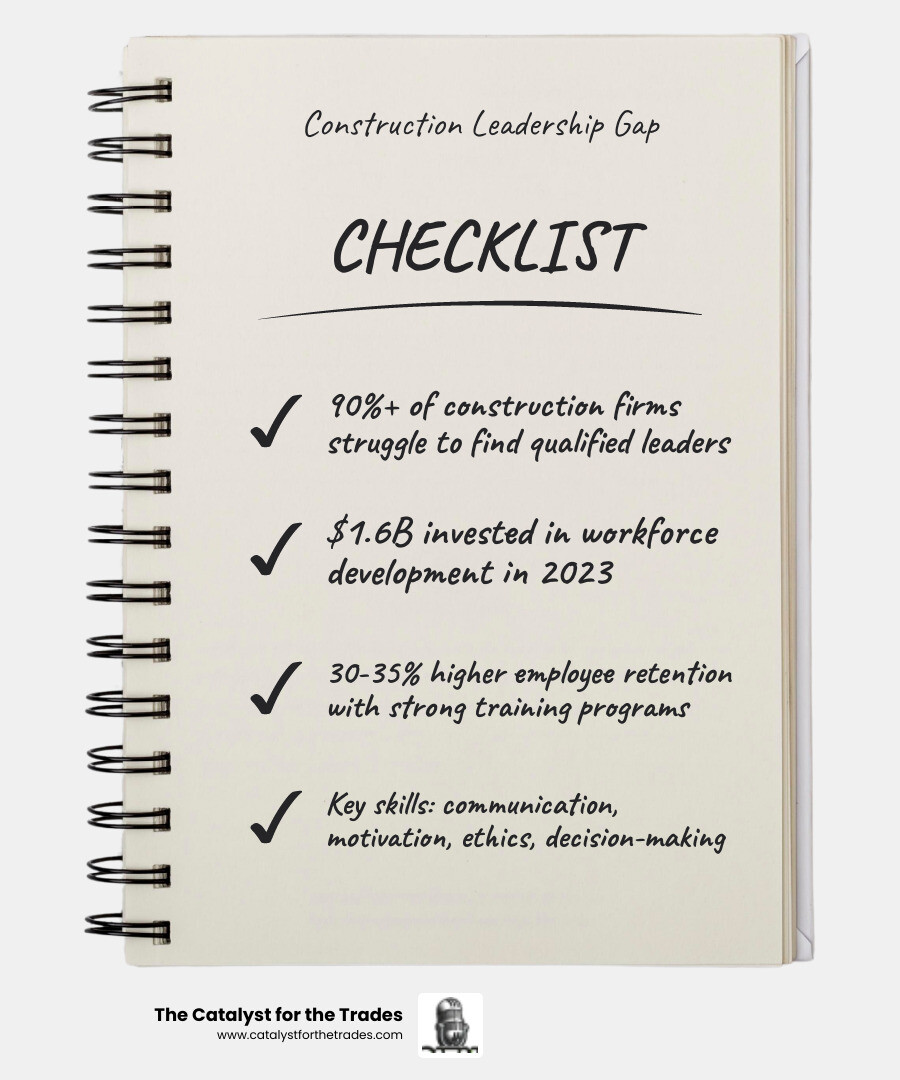
Leadership training for contractors is one of the most overlooked levers for growing a profitable, stable trades business — and the numbers back that up. Over 90% of construction firms still struggle to find qualified workers for supervisory and leadership roles, even as the industry invested $1.6 billion in workforce development in 2023. Baby boomers are retiring. Job sites are getting more complex. And the foremen and superintendents you’re counting on to hold everything together often got promoted because they were great with their hands — not because anyone taught them how to lead people.
The result? Crew conflicts, high turnover, missed deadlines, and owners who feel like they’re putting out fires every single day.
Here’s a quick look at what effective leadership training for contractors actually involves:
- Identify potential leaders from within your existing crew
- Build core skills like communication, motivation, and ethical decision-making
- Use proven frameworks such as DiSC assessments and Situational Leadership
- Leverage programs from industry organizations like AGC, ABC, UCON, and FMI
- Implement on-the-job development through mentoring, micro-learning, and regular one-on-ones
- Measure results through retention rates, crew performance, and project outcomes
The good news is that companies with strong training and leadership programs see 30–35% higher employee retention than those without. That’s not a small edge — that’s the difference between a business that scales and one that stalls.
This guide walks you through exactly how to build leaders from the ground up, without disrupting your job sites or breaking your budget.
Why Leadership Training for Contractors is Essential Today
In the current construction landscape, “winging it” when it comes to management is a recipe for burnout. We see it all the time: a great technician gets promoted to foreman, and suddenly they are expected to manage personalities, schedules, and budgets with zero preparation. This is why leadership training for contractors has moved from a “nice-to-have” to a survival requirement.
The industry is facing a massive demographic shift. As baby boomers retire, they take decades of institutional knowledge with them. When we don’t have a pipeline of trained leaders ready to step up, we lose more than just a pair of hands; we lose the “secret sauce” that makes our companies run. Furthermore, several studies on diversity in the workforce show that welcoming new leadership styles and diverse perspectives can significantly spur innovation and increase profits.
According to research by global management consulting firm McKinsey & Company, the traits most valuable for future challenges include intellectual stimulation, inspiration, and participative decision-making. These aren’t just corporate buzzwords; they are the tools that help a superintendent keep a crew motivated during a heatwave or a project manager navigate a supply chain nightmare. By investing in these skills, you aren’t just making people “nicer”—you are building a more resilient, profitable machine.
Core Skills and Advanced Frameworks for Field Leaders
What does a leader actually do on a job site? It’s rarely about turning a wrench. It’s about communication and conflict resolution. If two crew members are at each other’s throats, productivity stops. If a foreman can’t explain a task clearly, rework goes up. Leadership training for contractors focuses on turning technical experts into people experts.
Key skills include:
- Role Modeling: Leading by example in time management and safety.
- Participative Decision-Making: Involving the crew in problem-solving to increase “buy-in.”
- Ethical Decision-Making: Navigating the gray areas of contracts and site safety with integrity.
- Motivation: Understanding what makes each individual tick so they give 100% every day.
By mastering contractor leadership, your field leaders stop being “bosses” and start being the glue that holds the project together.
Advanced Leadership Training for Contractors: DiSC and Lean Principles
For those ready to go beyond the basics, advanced leadership training for contractors introduces scientific frameworks.
DiSC Assessments are a game-changer. They help leaders understand their own communication style and—more importantly—how to “flex” that style to reach others. If you have a high-D (Dominant) foreman trying to motivate a high-S (Steady) apprentice, they might be accidentally intimidating them. DiSC provides the roadmap to fix that.
Lean Construction and the Last Planner Method are also vital. These principles focus on waste reduction and workflow reliability. Instead of just pushing harder, Lean leaders look for ways to remove the obstacles that slow the crew down. Pair this with Earned Value Analysis for financial forecasting, and your leaders will be able to tell you exactly how a project is performing against the budget in real-time, not three weeks after the job is done.
Practical Strategies to Nurture Internal Talent
You don’t always need to hire an outside executive to find your next leader. Often, they are already on your payroll. The trick is knowing how to spot them and give them a path.
| Strategy | Internal Mentorship | External Workshops |
|---|---|---|
| Cost | Low (Time investment) | Moderate to High |
| Context | Highly specific to your company | Broad industry best practices |
| Speed | Ongoing, daily growth | Intensive, short-term bursts |
| Best For | Cultural alignment & core values | New skills & fresh perspectives |
We recommend a blend of both. Start with regular one-on-ones to identify who has a “leader’s attitude.” Look for the person who suggests process improvements or naturally helps out the newer guys. This is the foundation of management development.
Once identified, lean on your seasoned employees. These veterans have a wealth of knowledge on safety, financial responsibility, and “how we do things here.” By pairing a high-potential “young gun” with a seasoned pro, you ensure your organizational leadership stays strong for the next generation.
Implementing Practical Leadership Training for Contractors on the Job
The biggest complaint we hear is: “I don’t have time to send my foreman to a three-day seminar.” We get it. That’s why modern leadership training for contractors is moving toward micro-learning and on-demand video.
There are incredible resources out there to help you:
- Industry Organizations: Groups like the Associated General Contractors of America (AGC) and Associated Builders and Contractors (ABC) offer everything from Continuing Education credits to intensive Leadership Development Programs.
- Specialized Institutes: The Leadership Institute through FMI has a massive network of alumni and focuses specifically on the built environment.
- Subscription Platforms: Some services deliver bi-weekly video lessons directly to your field leaders’ phones. It takes ten minutes, reinforces a single concept, and doesn’t require them to leave the site.
Frequently Asked Questions about Contractor Management
Navigating leadership training for contractors can feel overwhelming. Here are the answers to the questions we hear most often.
How can I train leaders without pulling them off the job site?
The “old way” was a week-long retreat. The “new way” is mobile-first. Use subscription-based platforms that offer short, high-impact video lessons. This allows your foremen to learn during a lunch break or a morning huddle. You can also implement “on-site reinforcement”—where you pick one leadership theme (like “clear instructions”) for the week and have everyone practice it in real-time.
What are the best ways to identify potential leaders in my crew?
Stop looking only at technical skill. Instead, look for:
- Problem-solving: Do they bring you problems, or do they bring you solutions?
- Attitude: Do they stay calm when the inspector shows up or the parts are late?
- Mentorship readiness: Are they willing to teach the new apprentice without being asked?Use your performance reviews to ask about their career goals. You might be surprised who is hungry for more responsibility.
How does leadership training address the labor shortage?
It’s simple: people don’t quit jobs; they quit bosses. When you invest in leadership training for contractors, you create a culture where people feel respected and see a clear career path. This significantly boosts employee retention. Furthermore, by training your own leaders, you capture institutional knowledge before it walks out the door into retirement. It also makes your company more attractive to a diverse pool of talent who are looking for professional growth, not just a paycheck.
Conclusion
At The Catalyst for the Trades, we believe that the difference between a struggling contractor and a thriving industry leader is the quality of the people they build. Leadership isn’t a “soft skill”—it’s a hard asset that shows up on your balance sheet through lower turnover, fewer mistakes, and higher profits.
Whether you start with a formal program or a simple leadership circles guide, the most important step is to start. Your crew is waiting for someone to show them the way. Are you ready to lead? Learn more about our mission and how we help trades businesses scale through innovation and operational excellence.


