Learn · December 1, 2025
Organizational Leadership: 2025's Ultimate 3
Master organizational leadership for trades success. Learn vision, culture, and strategy to boost profit, innovation, and employee engagement.
By The Catalyst Editorial Team Operator education · 11 min read · Updated July 24, 2026

Why Organizational Leadership Matters More Than Ever in the Trades
Organizational leadership is guiding businesses toward strategic goals through vision, culture, and large-scale decision-making. For home services owners, it’s the key to building a company that thrives without your constant intervention. With nearly 80% of companies reporting a leadership gap, there’s a massive opportunity for those willing to step up.
What is Organizational Leadership?
- Definition: Setting strategic goals, inspiring teams, and driving organizational change.
- Scale: Leading entire organizations, not just individual teams.
- Focus: Vision, culture, and long-term success over daily task management.
- Impact: Shaping organizational structure, maximizing talent, and driving performance.
To scale your trades business, you must lead change, not just manage tasks. Building an unstoppable brand requires strong leadership, and the right development strategy open ups immense growth.
Strong leadership makes your business more valuable. Companies with highly engaged employees are 21% more profitable, and 70% of team engagement is determined by the manager. Conversely, poor leadership has real costs: 51% of younger generations have quit jobs over bad management. The stakes are high, but the opportunity is higher.
Glossary for organizational leadership:
- change management
- innovation management
- management development
What is Organizational Leadership (And What It’s Not)?
Let’s define what organizational leadership means for the trades. It’s not about turning wrenches; it’s about running the business. Experts describe it as the skills needed to run an entire company. For a home services business, this means steering the whole ship, not just managing one cabin. Think of it as being the conductor of an orchestra, ensuring every section plays in harmony—not just coaching individual players.
This is “capital L” Leadership. It’s not micromanaging service calls but setting a compelling vision, making strategic decisions, and fostering a growth-oriented culture. It’s about ensuring long-term success, not just surviving the quarter. Organizational leaders are proactive visionaries and change agents, shaping the company’s future with integrity and a focus on sustainable growth.
The Leader vs. The Manager
Leadership and management aren’t the same, though the words are often used interchangeably. Understanding this distinction is critical.
Leadership inspires change. Management executes tasks. Both are essential, but they serve different purposes.
| Feature | Organizational Leadership | Traditional Management |
|---|---|---|
| Vision | Creates and communicates a compelling future vision | Focuses on achieving established goals and objectives |
| Focus | Inspires and motivates, fosters innovation, shapes culture | Oversees tasks, enforces rules, maintains efficiency |
| Approach | Relational, strategic, long-term, people-centric | Transactional, operational, short-term, task-centric |
| Outcomes | Drives organizational change, growth, and adaptability | Ensures consistent performance, adherence to processes |
| Proximity to Team | May not have direct, day-to-day contact with all teams | Works closely with direct reports, manages daily operations |
Managers are in the trenches, ensuring daily operations run smoothly. They handle schedules, quality control, and immediate problems, working closely with their teams. In contrast, organizational leaders operate at a higher altitude. Their influence is broader, focused on overarching strategy and culture. They oversee managers and ensure the company’s vision is implemented across all departments.
While strong management development keeps the wheels turning, it’s organizational leadership that determines where those wheels are headed. It’s about empowering your teams to build an unstoppable brand that customers trust.
Core Components of Effective Organizational Leadership
Effective organizational leadership isn’t one quality but a “leadership constellation” of three aligned elements:
- Your qualities: Your core character, values, and integrity that guide your decisions.
- Your competencies: The practical skills in your toolbox, like strategic planning and communication, that turn vision into reality.
- Your practices: How you show up daily, consistently applying your qualities and competencies.
When these components align, you can master the three essential roles of an organizational leader:
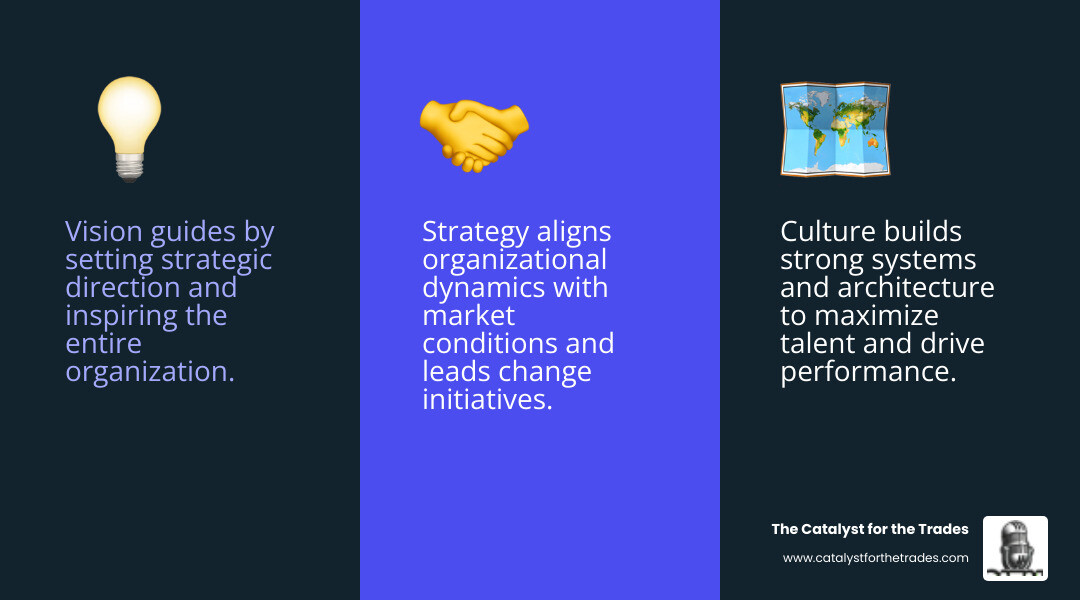
- Leader as Guide: Provide a clear, compelling vision that inspires everyone to follow a common direction. Communicate purpose so effectively that each team member understands how their role connects to the larger mission.
- Leader as Architect: Design the organizational structure and culture to maximize talent and drive performance. Create systems that empower teams and foster a positive, productive environment.
- Leader as Catalyst: Enable change and innovation. Anticipate threats, pursue opportunities, and foster problem-solving to ensure your business remains agile and competitive.
These roles are critical for protecting profit and leading with purpose in any home services business.
Why Strong Leadership is Your Business’s Ultimate Competitive Edge
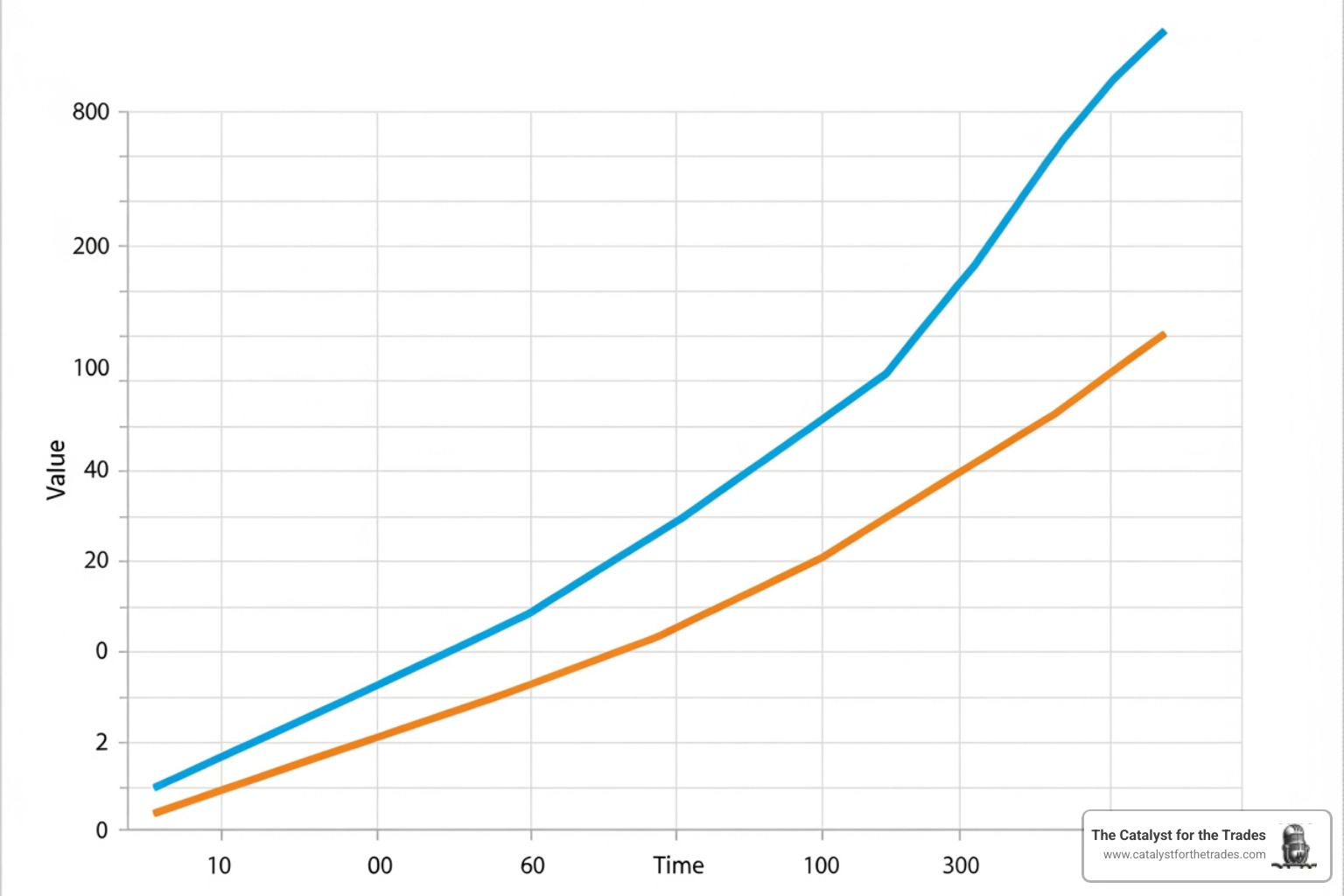
In home services, organizational leadership is the key difference between thriving and just surviving. It drives employee engagement, innovation, and a culture that retains top talent. The numbers prove it: companies with highly engaged employees are 21% more profitable, and 70% of team engagement is determined by the manager. Your leadership directly impacts your team’s energy and performance. When you lead well, your teams excel, take ownership, and represent your brand with pride.
The High Cost of a Leadership Vacuum
Conversely, when leadership falters, the damage is swift. A leadership vacuum leads to tanking productivity, high turnover, and low morale. The data is sobering: 51% of Millennials and Gen Z have quit jobs due to a bad manager. They leave because of who they work for, not the work itself. Each departure costs time, money, and irreplaceable knowledge. Poor leadership creates stress and project delays, making it nearly impossible to build a team that drives growth and scale your business.
The Rewards: Fostering Engagement, Innovation, and a Winning Culture
Investing in strong organizational leadership creates a powerful cycle of success.
- Increased profitability and productivity: Engaged teams are more productive. Research shows 69 percent of employees work harder when recognized—a direct result of good leadership.
- Talent retention: Employees who connect with the vision and feel supported in a positive culture are more likely to stay and invest in the company.
- Innovation and adaptability: Strong leaders champion change, creating environments where continuous improvement is the norm.
This all fosters a winning culture that attracts more great talent. Leaders like Trey McWilliams balance big growth with people-first leadership and Jazmin Ramirez demonstrates how real leadership powers change in the trades. Their stories are blueprints for building a dominant business.
How to Develop and Improve Your Leadership Capabilities

Becoming an exceptional organizational leader is a journey of continuous growth, not an innate trait. The best leaders constantly develop their skills to meet evolving business needs. Key development areas include:
- Continuous Learning: Stay curious and absorb new ideas through courses, conferences, and reading. The world is always changing, and so should your knowledge base.
- Mentorship: Find an experienced leader for guidance and perspective. As you grow, pay it forward by mentoring others in your organization.
- Seeking Feedback: Actively ask your team, peers, and customers for honest input to identify blind spots. Constructive criticism is a gift for growth.
- Implementing Systems: Build repeatable processes to create consistency and free up time for strategic thinking. Systems are essential for scaling without chaos, as shown in how systems create freedom. Frameworks like EOS can also help you move from chaos to clarity.
Essential Skills for the Modern Trades Leader
The modern trades leader needs a toolkit of both technical and interpersonal skills.
- Strategic Thinking: See beyond the daily schedule to envision the business’s future, spot trends, and develop long-term plans.
- Financial Acumen: Understand the numbers, manage budgets, and make profitable investment decisions.
- Communication: Listen actively and articulate the vision clearly to inspire your team and ensure everyone understands the ‘why’ behind their work.
- Emotional Intelligence: Recognize and manage your own emotions while understanding and responding to your team’s feelings to build strong relationships.
- Adaptability: Accept change in a dynamic industry; flexibility is essential for survival.
- Decision-Making: Make timely, informed choices, even with incomplete information.
- Team Building: Foster collaboration, trust, and a shared purpose, developing leadership potential in others.
These skills are crucial to lead, serve, and grow effectively.
Practical Examples of Leadership in the Trades
We can learn from incredible examples of organizational leadership in the trades:
- People-First Approach: Successful leaders know that engaged teams deliver exceptional service. They build positive cultures and invest in their people, leading to higher retention and performance.
- Scaling with Systems: Growth from a small operation to a large enterprise requires robust systems for operations, finance, and customer relations. Systemization creates predictable processes for sustainable growth, as detailed in building predictable freedom through systems and a founder’s mindset.
- Building Resilient Companies: Resilient leaders anticipate challenges, adapt quickly, and guide their teams through uncertainty by embracing innovation.
- Achieving Significant Growth: Strategic leadership can lead to massive growth, as seen in how George Donaldson scaled a home services company to $100 million. These stories are blueprints for building a lasting business.
The Evolving Role of Leadership in a High-Tech World

Today’s leadership landscape is defined by rapid change. We’re navigating a rapid digital transformation, the rise of AI, remote teams, and shifting workforce expectations. For home services leaders, this means our role must evolve. We’re no longer just managing daily operations; we’re navigating digital change and upskilling our teams to stay competitive. The old playbook is obsolete, and embracing change is crucial for the future of leadership. These shifts also bring incredible opportunities for leaders who adapt.
Leading Through Digital Change and AI
Digital change in the trades is about rethinking how we create value. Technology like predictive scheduling and AI diagnostics is changing the game, but technology alone isn’t enough—organizational leadership is what drives change. Successful leaders know how to lead digital transformation in home service marketing.
Effective leadership in this high-tech world involves:
- Championing new technologies: Test, learn, and adapt to find the right systems for your business.
- Embracing data-driven decisions: Use data to make smarter strategic choices, moving beyond gut instinct.
- Integrating AI thoughtfully: Use AI to make your team more effective, not replace them. It can streamline customer service, optimize routes, and predict equipment failures, as demonstrated by leaders showing how AI, bold leadership, and no-excuse execution are transforming home services.
- Upskilling your teams: Continuously identify skill gaps and provide learning opportunities to build confidence and adaptability.
Career Paths and Opportunities in the Trades
Strong organizational leadership skills create incredible career paths in the trades, where the demand for skilled leaders is exploding. While the median annual salary for management was $116,880 in 2023, the real opportunity is the impact you can make.
A typical career path might look like this:
- Team Lead/Supervisor: Guide a small crew and ensure quality work.
- General Manager: Take charge of broader operations and drive business performance.
- Operations Director: Oversee entire regions, focusing on scalability and efficiency.
The ultimate path for many is building a scalable business of their own, sometimes with a clear exit strategy, as seen in the journey of building a $100 million business.
These leadership skills are transferable, making you valuable in any industry. True organizational leadership is about mastering skills that open doors to new opportunities.
Frequently Asked Questions about Organizational Leadership
What is the single most important trait of an organizational leader?
While there’s no single magic ingredient, adaptability is arguably the most crucial trait. The home services industry is constantly changing—from supply chain issues to AI implementation. An adaptable leader can steer these shifts, acting as a guide to chart new courses, an architect to redesign systems, and a catalyst to turn challenges into opportunities. Adaptability is what makes other leadership qualities like vision and strategic thinking effective in the real world.
Can you be a leader without a formal title?
Absolutely. Organizational leadership is about influence, not a formal title. It’s a mindset demonstrated by actions. The technician who mentors a new hire, the dispatcher who improves a process, or the advisor who champions a customer-first approach are all acting as leaders. Fostering this informal leadership at all levels creates a resilient, innovative, and empowered culture where everyone is encouraged to step up.
How do you measure leadership effectiveness in a trades business?
Measuring organizational leadership effectiveness goes beyond just looking at the P&L statement. While profitability is important, a broader view includes several key metrics:
- Employee Engagement and Retention: Are your people motivated and loyal? Since 70% of team engagement is tied to the manager, this is a direct reflection of leadership. High turnover is a major red flag.
- Productivity and Efficiency: Are teams meeting goals consistently without burnout? Effective leaders create productive environments.
- Innovation and Adaptability: Is the business evolving and improving? Strong leaders drive continuous improvement and accept new technologies.
- Customer Satisfaction: Happy employees lead to happy customers. Strong reviews and repeat business are good indicators of a healthy culture.
- Talent Development: Are your leaders mentoring the next generation and multiplying their impact? This is key to building a sustainable business.
Looking at these factors together provides a complete picture of leadership effectiveness.
Conclusion
Leadership is a journey, not a destination. As we’ve explored, the difference between a surviving business and a thriving one is effective organizational leadership. We’ve defined what it is, contrasted it with management, and seen its impact in the trades—from profitability boosts to the high costs of a leadership vacuum.
The good news is that leadership is a skill you can develop. Through continuous learning, feedback, system-building, and honing your skills, you can become the leader your business deserves. The core principles of leadership remain constant, even as you steer digital change and AI.
The home services industry is evolving rapidly. Success requires leaders who can adapt, inspire, and guide their teams with confidence through uncertainty. Start by reflecting on your own journey: Are you the guide, architect, and catalyst your business needs?
Leadership doesn’t require a title, but it does demand courage, humility, and a people-first commitment. This is how you build a business that makes a difference.
Ready to take your leadership to the next level? Empower your leadership journey with more insights from The Catalyst for the Trades podcast, where we share strategies to help you build something legendary.


