Learn · March 26, 2026
Ultimate Guide to Continuing Education for Contractors
Master continuing education for contractors: Navigate state requirements, earn credits, and boost your business without hassle.
By The Catalyst Editorial Team Operator education · 10 min read · Updated July 24, 2026

Why Continuing Education for Contractors Matters for Your Home Project

Continuing education for contractors is the ongoing commitment to excellence that ensures your home project meets the highest standards of safety and code compliance. When you hire a professional who stays current, you are ensuring that your project is handled with the most up-to-date expertise. Here is why it matters for your home:
- Safety: Knowledge of the latest safety standards to protect your property and family.
- Compliance: Up-to-date understanding of building codes and local regulations to ensure your project passes inspection.
- Quality: Mastery of modern building techniques and materials for a superior result.
- Reliability: A valid, active license that protects you from the risks of unauthorized contracting.
Choosing a professional who prioritizes their education is one of the most important steps in planning a successful project. It gives you peace of mind knowing that the team working on your home is dedicated to the highest professional standards.
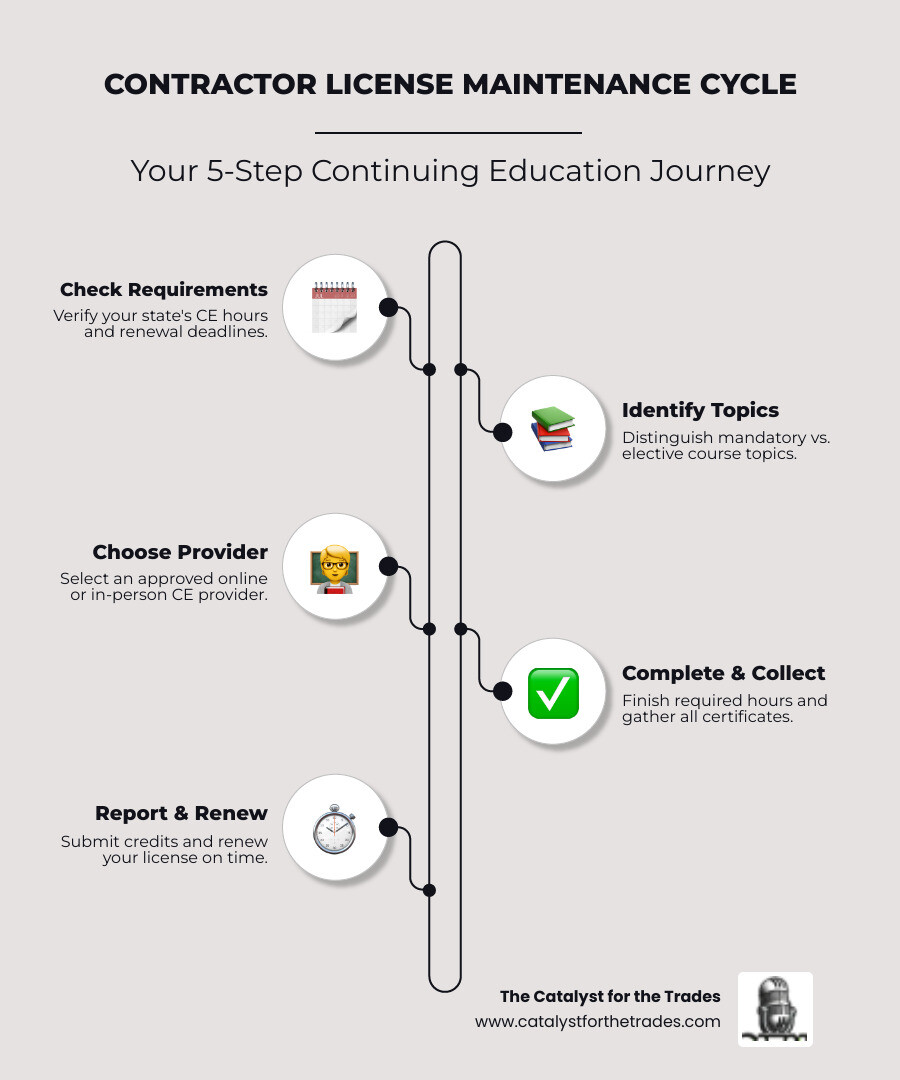
Why Continuing Education for Contractors is a Strategic Advantage for Homeowners
We often see that continuing education for contractors becomes a real advantage for homeowners because it reduces uncertainty on complex home projects. Think of it as “sharpening the saw.” When a contractor invests in staying current, they are not only meeting an administrative requirement. They are improving how they plan work, manage risk, and deliver consistent workmanship.
One of the most practical benefits is fewer preventable issues during the build. Teams that commit to continuous learning are more likely to recognize code-sensitive details early, coordinate trades cleanly, and use updated installation methods that align with manufacturer instructions. That translates into fewer surprises, smoother inspections, and a safer jobsite.
Continuing education also supports better decision-making when conditions change. Renovations and repairs often reveal hidden problems (older wiring methods, outdated materials, past DIY work, water intrusion, or structural movement). Contractors who train regularly tend to have stronger diagnostic habits and a wider set of proven solutions, which helps them respond without improvising.
Ongoing training can also improve communication and documentation. Coursework frequently covers supervision, project documentation, and contract administration practices. When these processes are strong, homeowners typically experience:
- Clearer scopes of work and fewer misunderstandings about what is included
- More consistent scheduling updates and coordination across subcontractors
- Better change documentation when conditions require adjustments
- Cleaner closeout packages (warranties, manuals, and maintenance guidance)
Finally, keeping up with professional development can help a contractor stay aligned with current safety expectations, labor rules, and jobsite standards that influence how work is performed in occupied homes. For homeowners, that means better protection for people and property, fewer compliance-related delays, and a stronger likelihood that the project will be completed to modern standards.
When you choose a contractor who treats education as part of the job, you are choosing a team that is building your project around today’s requirements, not yesterday’s habits.
Navigating Standards for Continuing Education for Contractors
Continuing education requirements vary widely by state, license type, and sometimes even by role (for example, a qualifying individual versus other key personnel). For homeowners, this matters because state rules are designed to ensure contractors keep pace with code changes, safety practices, and consumer protection requirements that affect your project.
In practical terms, state standards influence how often a contractor must renew, what topics are mandatory, and which course providers are accepted. A contractor who follows these rules is more likely to be ready for the specific requirements in your area, from energy efficiency updates to jobsite safety expectations.
A few common themes you will see across many states include:
- Renewal cycles that require proof of completion before a license can remain active
- Mandatory “core” topics (often safety, business practices, and laws/rules)
- Elective hours that allow a contractor to focus on their type of work
- Approved provider lists to prevent unverified or low-quality instruction
This dedication to skill development is not abstract. It affects how confidently a contractor can interpret new code language, apply updated manufacturer requirements, and coordinate work so it passes inspection.
For example, California updates its building energy efficiency standards regularly. Professionals who keep up with these Title 24 updates help ensure that installations related to lighting, insulation, HVAC interfaces, and other energy-related components are handled with current expectations in mind. The outcome for homeowners is fewer compliance issues and a smoother path through permitting and inspection.
If you are comparing contractors, it is reasonable to ask:
- What state license is being used for this project, and is it active?
- When was the license last renewed?
- Were there any required continuing education topics for that renewal?
- Which approved providers were used, and can completion be documented?
Education requirements will never replace good craftsmanship, but they do provide an important baseline. Contractors who treat continuing education as ongoing maintenance for their license and their skills are generally better positioned to deliver a code-aligned, safety-conscious project.
For homeowners, the takeaway is simple: state-specific continuing education is part of the system that helps protect you, and a contractor who takes it seriously is signaling professionalism before the first day on site.
Essential Topics in Modern Contractor Education
When a contractor pursues ongoing education, the most valuable courses are the ones that directly reduce risk and improve jobsite outcomes. For homeowners, these topics matter because they influence how safely work is performed, how reliably it passes inspection, and how well the finished result holds up over time.
While exact requirements differ by state and license type, modern training commonly concentrates on:
- Building codes and standards: Updates to residential code provisions, local amendments, and best practices for documentation so work can be verified during inspections.
- Safety protocols: Fall protection, ladder/scaffold safety, hazard communication, PPE practices, and jobsite planning that reduces incidents in and around occupied homes.
- Environmental and health considerations: Lead-safe awareness where applicable, dust control, ventilation practices, and moisture management to protect indoor air quality.
- Business and project management fundamentals: Scheduling discipline, subcontractor coordination, change documentation, and communication routines that prevent scope confusion.
- Legal and regulatory compliance: Consumer protection rules, contract requirements, and permit/inspection processes that keep projects on the right side of local regulations.
This is where career development for contractors connects directly to homeowner experience. Training is not just about technical knowledge. It also strengthens planning, supervision, and quality control. A contractor with structured quality checks and updated technical references is less likely to miss details that create expensive delays, failed inspections, or rework.
Modern education also helps contractors evaluate new materials and methods responsibly. Products, fasteners, sealants, and assemblies change over time, and manufacturers update installation requirements. A well-educated crew is more likely to follow current instructions, use compatible materials, and document critical steps (for example, water-resistive layers, flashing details, and penetration sealing).
For homeowners, a simple way to apply this information is to ask what training the contractor prioritizes for the type of work you are hiring them to perform. A confident professional should be able to explain which topics they keep current and why those topics matter to the durability and safety of your project.
Verifying Professional Credentials
Verifying that a contractor is current with licensing and education requirements is one of the simplest ways for a homeowner to reduce risk before signing a contract. Most states provide online lookup tools that let you confirm whether a license is active, whether it is in good standing, and whether there are any disciplinary notes posted publicly.
This step matters because continuing education is often tied to license renewal. If a license is expired or not in good standing, your project can face avoidable disruptions such as permit delays, inspection complications, or an inability to legally contract for certain scopes of work.
A reliable verification routine for homeowners typically includes:
- Searching the contractor in the official state licensing portal (not a third-party directory)
- Confirming the license classification matches the work being proposed
- Checking expiration dates and renewal status
- Reviewing any posted enforcement actions or limitations
- Asking the contractor to share completion certificates if your state requires continuing education for renewal
This transparency supports employee growth because it encourages contractors to maintain organized records and professional systems across the whole team, not just at the ownership level.
A professional contractor will generally be comfortable walking you through their credentials, including who the qualifying individual is (if your state uses that structure) and how the company maintains compliance over time. If the contractor hesitates to provide a license number, discourages you from checking official records, or cannot explain their renewal status clearly, that is a practical sign to pause and verify further.
Always use official state resources when verifying credentials. This quick check helps you choose a partner you can trust and supports a smoother permitting, inspection, and closeout process for your home project.
A Culture of Excellence and Continuous Improvement
A company-wide culture of learning ensures that every member of the crew is prepared for the job. From leadership development programs to management development, ongoing education turns a standard crew into a highly efficient team. This trades leadership development is what ensures your project is managed efficiently and safely from start to finish.
When a company prioritizes education, it shows in the quality of their work and their attention to detail. By staying on top of industry trends and attending safety conferences, a professional firm maintains a reputation for excellence. This commitment to growth is what allows a business to provide the best possible service to its customers.
Frequently Asked Questions about Contractor Education
Why should I care if my contractor stays current with their education?
A contractor who stays current is less likely to run into compliance problems that can slow a project down. Continuing education helps ensure they are working from the latest safety expectations and building code updates that apply to your location. For homeowners, that means fewer avoidable inspection issues and a higher likelihood that work is completed according to modern standards.
It is also a signal of professionalism. When a contractor treats education as part of routine operations, it typically shows up in better planning, clearer communication, and stronger quality control.
How can I tell if a contractor is truly committed to ongoing learning?
Legitimate professionals are usually willing to discuss how they stay current. Practical ways to verify commitment include:
- Asking for their license number and confirming status through the state licensing board portal
- Asking which topics they completed for the most recent renewal (especially any mandatory core courses)
- Requesting documentation such as certificates of completion if applicable in your state
- Looking for evidence of structured internal training (safety meetings, documented procedures, or regular code-update reviews)
You can also pay attention to how they answer technical and compliance questions during the bidding process. Contractors who keep learning tend to explain the “why” behind requirements (permits, inspections, safety steps, and documentation) rather than treating them as inconveniences.
What should I ask during a pre-hire meeting?
To connect education to your specific home project, consider asking:
- What recent code or safety updates have affected how you perform this type of work?
- Who supervises the work on site, and how is quality checked before inspection?
- How do you document changes if conditions differ from what was expected?
These questions help you understand whether the contractor is operating with current knowledge and a repeatable process that protects your home.
Conclusion
At The Catalyst for the Trades, we believe the most successful home projects are built on a foundation of knowledge, accountability, and strong field execution. Continuing education for contractors is not just a box to check. It is part of a compliance mindset that helps future-proof projects against changing codes, evolving safety standards, and new building practices.
For homeowners, the takeaway is straightforward: hiring a contractor who stays current can reduce risk, improve coordination, and increase the likelihood of smooth permitting and inspection outcomes. It also supports better long-term durability because modern materials and methods require up-to-date installation knowledge.
If you are planning a renovation or repair, make continuing education part of your contractor screening process. Verify the license through your state portal, ask what education is required for renewal, and look for teams that can explain how recent updates shape their approach on the job.
To learn more about our mission and how we support better leadership and operational excellence across the trades, visit: Learn more about our mission to empower the trades.


