Learn · April 2, 2026
Ultimate 5-Step Onboarding Systems for Service Businesses
Discover onboarding systems for service businesses: Streamline onboarding, boost retention, and scale with our 5-step blueprint.
By The Catalyst Editorial Team Operator education · 8 min read · Updated July 24, 2026

Understanding Onboarding Systems for Service Businesses
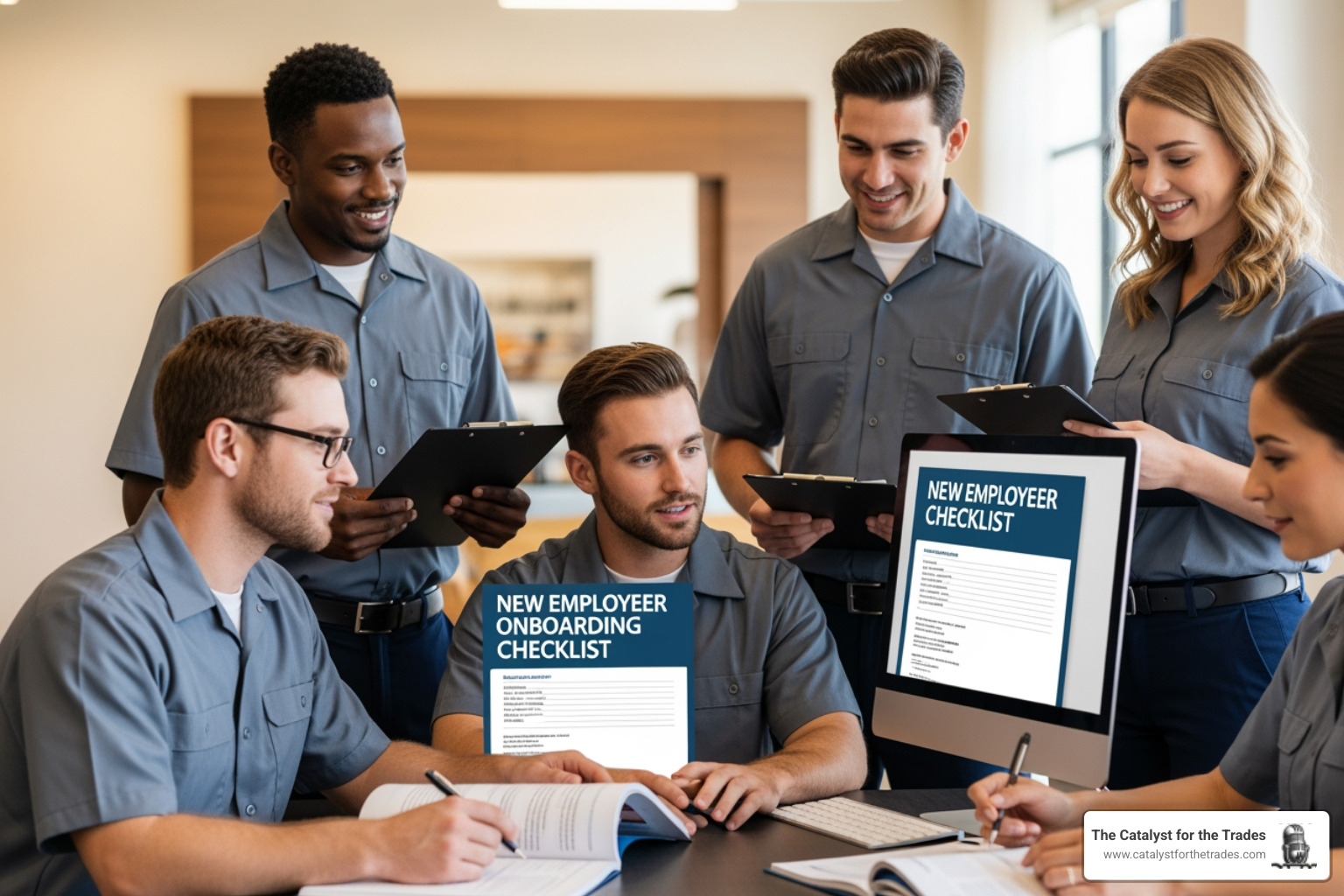
When we talk about onboarding systems for service businesses, we aren’t just talking about a stack of tax forms and a handshake. We are talking about a digital backbone that manages the transition from “stranger” to “productive team member.” In the high-stakes world of home services—where a technician is often the sole face of your brand in a customer’s living room—this transition is everything.
At its core, an onboarding system is a combination of software and Process Improvement designed to automate the boring stuff so you can focus on the human stuff. By using a centralized platform, you move away from the “folder full of papers” method and toward a system where documentation is stored securely in the cloud.
This shift creates massive gains in Operational Efficiency. Instead of a manager spending four hours chasing down a signed employee handbook or a copy of a driver’s license, the system sends automated reminders to the new hire. This reduces the “time-to-productivity”—the gap between hiring someone and them actually generating revenue for the business. For a plumbing or HVAC company, shortening that gap by even three days can result in thousands of dollars in additional completed service calls.
The Difference Between Preboarding and Onboarding
It is a common mistake to think onboarding starts on Monday morning at 8:00 AM. In reality, the most successful companies utilize “preboarding.”
- Preboarding: This is the phase between the signed offer letter and the first day on the job. It involves Talent Acquisition tasks like background checks, drug screenings, and equipment provisioning. Does the technician have their van stocked? Do they have their login for the field service software? Is their uniform ready?
- Onboarding: This is the post-Day 1 journey. It’s about cultural integration, job shadowing, and the technical ramp-up phases.
By separating these two, you ensure that when a new hire walks in on their first day, they aren’t sitting in a back office filling out forms for six hours. They are meeting the team, learning the culture, and feeling like they made the right career move.
Why Small Service Teams Need Dedicated Systems
You might think, “We only hire two people a year; we don’t need a system.” We respectfully disagree. Small teams actually need these systems more because they lack a dedicated HR department to catch mistakes.
Implementing a structured system provides:
- Consistency: Every hire gets the same high-quality introduction to your brand.
- Scalability: You can’t grow if the owner has to personally oversee every minute of a new hire’s first week. This is How EOS Helps You Scale Without the Chaos—by building a “machine” that functions without you.
- Professional First Impressions: A sleek, mobile-friendly onboarding portal tells a high-quality technician that you run a high-quality shop.
- Legal Protection: Systems ensure that safety training, certifications, and compliance documents are never “forgotten” in a desk drawer.
Essential Features for Field Service Operations
Field service is unique. Your “office” is a fleet of trucks spread across the city. Therefore, onboarding systems for service businesses must be built for the road, not just the desk.

The most critical feature for our industry is mobile accessibility. If a technician has to drive to the office just to sign a document, you’ve already lost billable time. A modern system allows for e-signature integration, meaning they can sign their safety waivers and tool agreements from their tablet while parked between jobs.
Other essential features include:
- System Integration: Your onboarding tool should “talk” to your dispatch software and your payroll provider.
- Automated Task Management: A checklist that automatically assigns tasks to different people (e.g., “Shop Manager: Prepare Van #4” or “Office Admin: Set up Email”).
- Self-Service Portals: New hires should be able to upload their own certifications and update their direct deposit info without calling the office.
- Real-Time Visibility: A dashboard that lets you see exactly how far along a new hire is in their training.
Streamlining Administrative Tasks with Onboarding Systems for Service Businesses
The “administrative drag” of hiring is a silent profit killer. By moving to paperless document management, you eliminate the risk of lost files and manual data entry errors.
Hiring Process Optimization means that once a candidate is marked as “hired” in your tracking system, the onboarding system automatically triggers the next steps. It can sync with payroll to ensure the new hire is paid correctly from week one and integrate with background check services to flag any issues before the technician ever gets behind the wheel of your company vehicle.
Enhancing Compliance and Record-Keeping
In the trades, compliance isn’t optional—it’s a legal requirement. An automated system creates an ironclad audit trail. If an inspector or a lawyer ever asks for proof of safety training, you don’t want to be digging through a filing cabinet.
With automated reporting and certification tracking, the system can even alert you when a technician’s license is about to expire. This proactive approach is a cornerstone of a solid Employee Retention Strategies Guide 2026, as it shows your team that you are invested in their professional standing and safety.
A 5-Step Blueprint for Successful Implementation
Ready to build your system? Don’t try to do it all in one afternoon. Follow this blueprint to ensure it actually sticks.
- Discovery Session: Map out your current “messy” process. Who does what? Where do things get lost?
- Tool Selection & Design: Choose a platform that fits your size. Look for features like automated reminders and mobile portals.
- Sandbox Testing: Before rolling it out to a real hire, run a “fake” hire through the system. Does the email trigger work? Can you read the e-signature?
- Data Migration: Upload your existing templates, handbooks, and training videos.
- Pilot Group: Use the system for your next 1-2 hires and ask them for honest feedback. Was it easy to use? Did they feel prepared?
| Manual Onboarding Step | Automated System Equivalent | Time Saved (Est.) |
|---|---|---|
| Hand-delivering paper forms | Digital portal with e-signatures | 2-4 Hours |
| Manual data entry into payroll | Direct HRIS/Payroll sync | 1 Hour |
| Chasing down missing info | Automated email/text reminders | 3+ Hours |
| In-person policy reading | Video-based training & digital quiz | 4 Hours |
Integrating Onboarding Systems for Service Businesses with Existing Tools
A system that lives on an island is a system that fails. The goal is System Integration. You want your onboarding platform to connect with:
- HRIS & Payroll: To eliminate double-entry of names and social security numbers.
- CRM/Dispatch Software: To automatically create a “Technician” profile so they can start receiving jobs.
- Communication Tools: To automatically add the new hire to the company Slack or group chat.
Setting Success Metrics and KPIs
How do you know if your new system is working? You have to track the data. Look at your completion rates—are people finishing their paperwork before Day 1? Monitor your time-to-productivity—are technicians getting into their own trucks faster than they used to?
The goal is Operational Efficiency. If your retention benchmarks improve and your “new hire churn” (people leaving in the first 90 days) drops, your system is paying for itself.
Overcoming Common Implementation Challenges
Change is hard, especially in a busy service shop. You might face user adoption resistance from managers who “prefer the old way” or technical friction if the software is too complex.
The key is change management. Explain why the change is happening—not to add more work, but to remove the headache of paperwork. Maintain personalization; don’t let the software replace the “welcome lunch” or the face-to-face mentorship. The system handles the logic so you can handle the heart.
Frequently Asked Questions about Onboarding Systems
How long does effective onboarding typically take for service employees?
While paperwork might take a day, a truly effective onboarding process lasts 90 days. Preboarding usually takes 1-2 weeks. The first 30 days are for intensive training, 60 days for supervised independence, and by 90 days, the employee should be fully integrated into the company culture and hitting their KPIs.
What role does mobile accessibility play for field technicians?
It is the difference between a system that is used and a system that is ignored. Field technicians spend their lives on mobile devices. If they can’t complete their onboarding tasks on their phone, they will view the process as a burden. Mobile accessibility ensures they can stay compliant and informed without being tethered to an office desk.
How do these systems improve long-term employee retention?
First impressions matter. When a new hire sees a professional, organized system, they feel they have joined a stable company that cares about their success. By removing the “chaos” of a disorganized first week, you reduce the anxiety and frustration that often lead to early turnover.
Conclusion
At the end of the day, onboarding systems for service businesses are about more than just software—they are about freedom. As we often discuss on our podcast, How Systems Create Freedom: Mike Abramowitz’s Blueprint for Trades Success, having a documented, automated way of doing things is what allows an owner to step back and a business to step up.
We believe that every home service company, regardless of size, deserves a professional team. That starts with Hiring Process Optimization and ends with a culture where every technician feels supported from the moment they say “yes” to the job.
If you are ready to stop the chaos and start scaling with confidence, we are here to help. Learn more about our mission at The Catalyst for the Trades and discover how we can help you turn your service business into a well-oiled machine.


