Learn · April 7, 2026
People-First Leadership in Construction: 90-Day Guide
Discover how people-first leadership in construction boosts retention, profitability & growth. Strategies, best practices & 90-day transition plan.
By The Catalyst Editorial Team Operator education · 10 min read · Updated July 24, 2026

Why People-First Leadership in Construction Changes Everything

People-first leadership in construction means prioritizing the well-being, growth, and empowerment of your workforce — and it’s one of the most powerful competitive advantages a trades business owner can build right now.
Here’s what it looks like in practice:
- Put people before process – Lead with trust, not just task lists
- Invest in growth – Mentorship, career paths, and regular check-ins
- Create psychological safety – Workers speak up, problems surface faster
- Recognize contributions – Consistent, genuine appreciation reduces turnover
- Treat well-being as a business priority – Not a nice-to-have, but a strategic asset
The construction industry is facing a breaking point. There are over 500,000 unfilled jobs across the sector, a looming wave of retirements, and a workforce that is quietly burning out. The old command-and-control playbook — bark orders, push deadlines, replace whoever leaves — is not just outdated. It is actively costing you money, bids, and your best people.
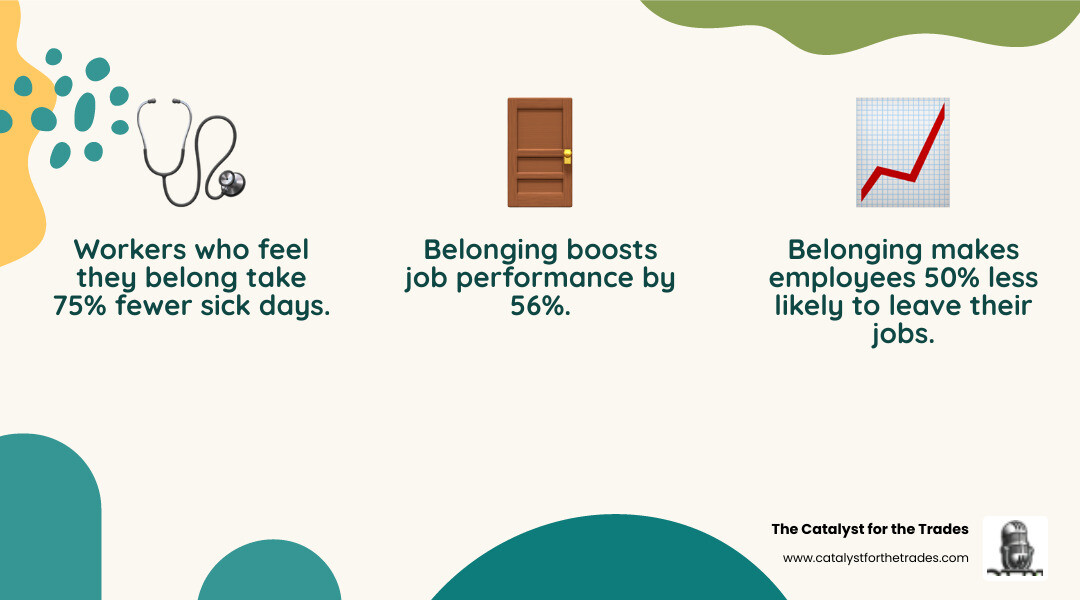
The data tells a clear story. When workers feel like they genuinely belong, they take 75% fewer sick days, are 50% less likely to leave, and perform 56% better on the job. And when employees feel their employer truly cares about them, 69% are less likely to even look for another job.
This is not soft leadership. This is smart business.
The Evolution of People-First Leadership in Construction
For decades, the construction site was governed by a “command-and-control” philosophy. The foreman’s word was law, and if a worker didn’t like the conditions or the tone, they were told there was a line of people at the gate waiting for their boots. But the landscape has shifted beneath our feet.
We are currently facing a “gray tsunami” of retirements. As seasoned pros hang up their hard hats, the industry is left with over 500,000 unfilled jobs. The incoming generation of talent isn’t looking for a boss who barks; they are looking for a mentor who listens. This shift toward servant leadership—where the leader’s primary goal is to support and empower the team—is no longer a luxury. It is the only way to survive.
At the heart of this evolution is psychological safety. This isn’t just a HR buzzword; it’s the belief that a team member can speak up about a mistake, a safety hazard, or a better way of doing things without fear of humiliation. When we foster this environment, we stop losing money to “heroics” and start making money through collective intelligence. To understand how this fits into the broader industry landscape, check out The Future of Leadership: How to Build a Team That Drives Growth.
Shifting from Command-and-Control to Empowerment
The traditional hierarchy in construction often stifles innovation. In a people-first model, we replace rigid vertical silos with mentorship and an open-door policy. When an intern feels comfortable shaking hands with a Senior VP and that VP actually remembers their name, the “family feeling” of a small firm can be maintained even as you scale to thousands of employees.
Empowerment means giving your team the tools to succeed and then getting out of their way. It’s about moving from “I tell you what to do” to “How can I help you do your best work?” This transition is the foundation of long-term Employee Loyalty, ensuring your best talent stays with you through the busiest seasons.
Addressing the Mental Health Crisis in the Trades
We have to talk about the “silent crisis.” The construction industry has long struggled with high rates of suicide and substance misuse. A people-first leadership in construction approach treats mental health as a project risk, just like a structural flaw or a budget overrun.
Leading firms are now integrating well-being into their formal risk registers. This includes training mental health first-aiders on every site—often for a small investment that yields massive returns in human life and stability. When we prioritize whole-person well-being, we see a direct correlation with Workplace Satisfaction and overall team resilience.
Why People-First Leadership in Construction is a Strategic Advantage
If you’re wondering if this approach hits the bottom line, the answer is a resounding yes. Investing in human capital isn’t just “nice”—it’s a form of risk management. When people feel supported, 36% report that their personal and family lives improve, which means they show up to the job site focused, energized, and ready to work.
From a recruitment standpoint, a reputation for being people-first is your best tool for Talent Acquisition. In a market where everyone is hiring, the company that offers a sense of belonging wins the best candidates every time.
Driving Profitability Through People-First Leadership in Construction
Let’s talk numbers. One firm in the Midlands saw their bid hit-rates jump from 30% to 55% in just one year. How? They stopped trying to be everything to everyone and focused on a people-first niche—refurbishing occupied schools. By focusing on the “human” pain points of their clients (like noise and safety for students), they energized their staff and won more work.
Quality also skyrockets when people care. GPRS, a national utility locating firm, reported an error rate near 0.1% on approximately 120,000 jobs. That level of precision is only possible through rigorous, people-first training systems and high levels of accountability. For a deeper dive into these mechanics, see our Talent Management Complete Guide.
Building Resilience Through Employee Engagement
Resilient companies aren’t built on iron-clad contracts; they are built on engaged people. This means moving beyond the annual holiday party and into real engagement surveys. When leaders take the results of these surveys and form cross-level teams to fix problems, trust is built.
This “family feeling” is what allows a company to scale from a few dozen people to thousands while maintaining the same spirit. We’ve discussed this extensively in our episode 40 Years in the Trades: Raul Rodriguez on Building People-Centered Resilient Service Companies, where we explore how people-centricity creates companies that can weather any economic storm.
Lessons from the Field: Implementing People-First Leadership in Construction at Scale
Look at Bird Construction. They manage over 6,000 employees and generate $3.4 billion in annual revenue. Despite their size, they’ve managed to stay on the TSX30 for consecutive years by fostering an environment of teamwork and trust. They don’t just talk about growth; they implement it through career check-ins and listening executives who actually spend time in hard hats on-site.
This approach is echoed by industry veterans who believe that leading is serving. You can hear more about this philosophy in How to Lead, Serve, and Grow in the Trades with Raul Rodriguez.
Mentorship and Professional Growth Paths
A key pillar of people-first leadership in construction is the one-year mentorship program. This isn’t just a “buddy system”; it’s a structured path with monthly meetings and access to online webinars and courses. When an intern sees a clear path to becoming a director—and has a mentor helping them navigate that path—they aren’t just an employee; they are a future leader. This focus on Employee Growth is what turns a job into a career.
Fostering Trust and Psychological Safety with People-First Leadership in Construction
How do we move from task-driven work to meaningful collaboration? It starts with a curiosity mindset. Instead of asking “Why did you mess this up?”, try “Tell me more about what happened here.” This shift from blame to curiosity builds trust.
Explicit agreements are another tool. When expectations are unclear, teams derail. By creating clear, written agreements on how we work together, we prevent conflict before it starts. For more on this “unfiltered” approach to leading with intention, check out Unfiltered Leadership: Lessons from Kathryn Elizabeth and Laura Kelly.
Proven Best Practices for a People-First Culture
Building this culture requires daily discipline. It starts with safety training that feels like “we care about you” rather than “we want to avoid a fine.” When safety is presented as a way to ensure everyone gets home to their families, the buy-in is immediate.
Recognition programs also play a huge role. Whether it’s a shout-out in a huddle or a formal bonus for hitting a milestone, consistent recognition reinforces excellence. These Team Building Strategies are essential for creating a unified front.
Leveraging Technology and Incentive Models
Technology can actually support a people-first approach. Pay-for-performance models and bonus management software provide transparency. When a worker can see exactly how their efficiency leads to a higher paycheck, they feel like a partner in the business, not just a cog in the machine.
Implementing systems like the Entrepreneurial Operating System (EOS) can also provide the structure needed for people to thrive. It replaces chaos with predictability. To see how this looks in a fast-growing environment, read How Trey McWilliams Balances Big Growth with People-First Leadership.
Creating a Capability Pipeline for Future Leaders
The best companies don’t just hire leaders; they grow them. This involves:
- Shadowing: Letting supervisors shadow project managers to learn the commercial side of the business.
- Leadership Labs: Quarterly sessions where potential leaders can practice soft skills.
- Internal Training: Creating facilities like “The Forge” where top performers become full-time coaches.
By investing in Trades Leadership Development, you ensure your leadership capacity grows faster than your workload.
The 90-Day Sprint: Transitioning Your SME to a People-First Model
Transitioning a small-to-medium enterprise (SME) doesn’t happen overnight, but you can make massive strides in 90 days.
| Phase | Focus | Key Actions |
|---|---|---|
| Weeks 1-4 | Foundation | Conduct “Three Blunt Questions” meeting; Launch pulse survey. |
| Weeks 5-8 | Accountability | Implement weekly scorecards; Set financial guardrails. |
| Weeks 9-12 | Scaling | Start profit-sharing pool; Launch mentorship pairings. |
Week 1-4: Establishing the Foundation
Start by asking your senior team three blunt questions: What project type do we deliver without drama? Which client values that reliability? What pain point keeps that client awake? Answering these helps you find your “home-turf advantage.”
Simultaneously, get feedback from the field. A simple pulse survey can identify the blockers that make your team’s life difficult. This is the first step toward better Talent Retention. Learn more about this transition in our guide on Contractor Leadership.
Week 5-12: Scaling Culture and Accountability
Once the foundation is set, establish a weekly rhythm. Performance visibility—through simple “scoreboards” on-site—allows teams to see if they are winning or losing in real-time. Link this performance to a profit-share pool. When the team sees that safety and efficiency result in a bonus for everyone, the culture of ownership takes root. This is the hallmark of effective Leadership Development Programs.
Frequently Asked Questions about People-First Leadership in Construction
How does people-first leadership differ from traditional construction management?
Traditional management is often top-down, focused on “compliance and control.” People-first leadership in construction is built on “trust and empowerment.” It prioritizes the growth of the individual, believing that a better person makes a better builder.
Can a people-first approach actually improve project profitability?
Absolutely. Companies with high belonging report a 56% increase in job performance. Furthermore, by reducing turnover (which can cost 1.5x to 2x a worker’s salary to replace), you keep more money in the business.
What role does safety play in a people-first culture?
In a people-first culture, safety is a moral obligation, not just a regulatory requirement. It involves open discussions about risks and a “stop work” authority for every person on site, regardless of their rank.
Conclusion
At the end of the day, we aren’t just building structures; we are building legacies. By adopting people-first leadership in construction, you aren’t just making your job sites safer and more profitable—you are creating a place where people actually want to work. This is the path to operational excellence and long-term success in the trades.
At The Catalyst for the Trades, we are dedicated to helping you bridge the gap between traditional hard work and modern leadership strategy. Learn more about our mission and join us in reshaping the future of the industry.


