Learn · February 16, 2026
Team Building Strategies: Top Tips 2026
Unlock success with top team building strategies. Boost engagement, productivity & growth. Learn to build high-performing teams today!
By The Catalyst Editorial Team Operator education · 9 min read · Updated July 24, 2026

Why Team Building Strategies Matter for Home Services Success

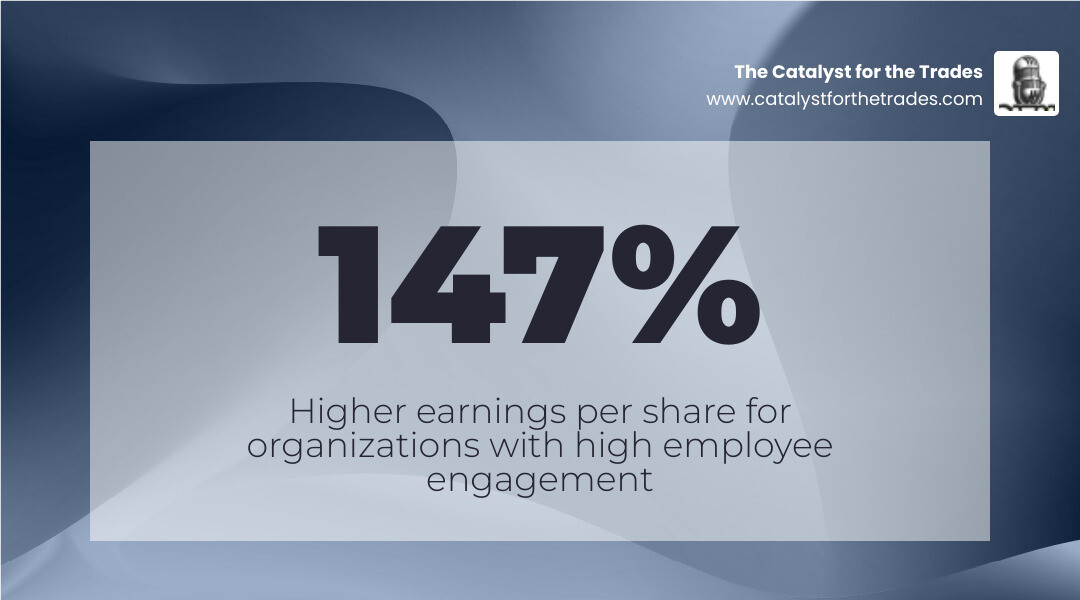
Team building strategies are the structured approaches that transform individual workers into cohesive, high-performing units. In the home services industry—where field technicians, office staff, and leadership must coordinate seamlessly—effective team building directly impacts customer satisfaction, operational efficiency, and your bottom line. Organizations with high employee engagement outperform their peers by 147% in earnings per share, yet 2 in 10 employees remain actively disengaged, leaving others to pick up the slack.
Key team building strategies include:
- Define clear roles and responsibilities – Ensure every team member knows their specific duties and how they contribute to company goals
- Foster open communication – Create regular touchpoints through team meetings, one-on-ones, and accessible channels like Slack or Microsoft Teams
- Cultivate a positive work environment – Recognize achievements, promote work-life balance, and make employees feel valued
- Encourage collaboration – Organize team activities and use project management tools to facilitate cooperation
- Invest in professional development – Offer training programs and support career growth
- Lead by example – Demonstrate the behaviors and values you expect from your team
- Implement team-building activities – Use exercises that build trust and improve problem-solving skills
- Monitor and adjust – Regularly assess team performance and adapt strategies as needed
Whether you’re managing HVAC technicians, plumbing crews, or a mixed team of field and office staff, these strategies help you build the foundation for sustainable growth and profitability.
Looking to develop stronger leadership across your organization? Learn more about organizational leadership or schedule a consultation to explore customized team development solutions.
Core Principles of Effective Team Building Strategies
Building a powerhouse team isn’t about a single “trust fall” exercise or a one-off pizza party. It is a continuous process rooted in The Science of High-Performing Teams. At the heart of this science is psychological safety—the belief that one can speak up with ideas, questions, or mistakes without being punished or humiliated. When your plumbers or HVAC techs feel safe, they share better solutions from the field, leading to fewer callbacks and happier customers.
Effective team building strategies rely on trust. Without trust, a team is just a group of individuals working in the same building (or out of the same dispatch software). By focusing on organizational leadership, we can move beyond mere management and start inspiring our people to own their results.
Defining Clear Roles and Responsibilities
One of the quickest ways to create friction in a home service business is to have “too many cooks in the kitchen”—or worse, no one knowing who is responsible for the kitchen at all. We must ensure that every team member understands their role and responsibilities. This clarity prevents overlaps, reduces internal conflict, and improves individual accountability.
In the trades, this starts at the very beginning with hiring process optimization. If we hire the right person but fail to give them a clear job description, we’re setting them up for failure. A well-defined role allows a technician to focus on their specific tasks, which leads to higher efficiency and better job satisfaction.
Fostering Open and Transparent Communication
Communication is the glue that binds a team together. It’s not just about talking; it’s about active listening and creating feedback loops. When communication is transparent, misunderstandings are minimized, and conflicts are resolved swiftly.
As part of our management development efforts, we recommend five strategies to improve communication:
- Implement regular “stand-up” meetings to sync on the day’s calls.
- Use tools like Slack or Microsoft Teams for real-time updates from the field.
- Encourage an “open-door” policy where even the newest apprentice feels heard.
- Provide anonymous feedback channels to bridge the gap for those hesitant to speak up.
- Act on the feedback you receive to show that your team’s voice matters.
Actionable Steps for Cultivating a Positive Work Environment
A positive work environment is essential for motivating team members and fostering a sense of belonging. It’s about making your team feel safe, respected, and valued for their hard work. In the trades, where days can be long and physically demanding, a supportive culture is your best tool for company culture development.
One of the most effective team building strategies is to recognize and celebrate achievements. Whether it’s a technician hitting a sales goal or a dispatcher handling a difficult customer with grace, acknowledging these wins—big or small—boosts morale.
Implementing Team Building Strategies Through Professional Development
Investing in your people is the most important investment you can make. By making professional development an integral part of our company ethos, we cultivate a motivated and adaptable workforce.
When we focus on employee growth, we aren’t just improving their skills; we are showing them that we value their future. This could involve:
- Offering training on new high-efficiency HVAC systems.
- Providing workshops on customer service and soft skills.
- Creating a mentorship program where senior techs guide apprentices.
- Allocating time for “Lunch and Learns” to share industry updates.
Leading by Example to Set the Tone
As leaders, we set the thermostat for the entire office. If we want a culture of integrity, accountability, and respect, we must demonstrate those behaviors ourselves. Understanding different leadership styles allows us to adapt our approach to the unique needs of our team.
For instance, a “Servant Leadership” approach focuses on the well-being of the team, putting their needs first to empower them. We can also learn from unfiltered leadership lessons from Kathryn Elizabeth and Laura Kelly about the importance of honesty and resilience. When we practice what we preach, we build a foundation of trust that makes all other team building strategies more effective.
Practical Exercises and Activities to Strengthen Your Team
To move from theory to practice, we need to organize team-building activities that actually work. These exercises should be fun, but they must also serve a purpose—whether that’s improving communication, problem-solving, or just getting to know each other.
Integrating these into leadership development programs ensures that your managers know how to facilitate growth. Here are some practical ideas:
- The Human Knot: A classic for problem-solving and physical cooperation.
- Office Trivia: Focus on company history or industry facts to build camaraderie.
- Scavenger Hunts: Great for encouraging teamwork and creative thinking.
- Volunteer Days: Building bonds while giving back to the community.
Adapting Team Building Strategies for Remote and Hybrid Work
Not every team member is in the office. Dispatchers and admin staff might work from home, and technicians are always in the field. This makes activities for remote teams vital.
Utilizing technology is key. We can see how women leading the AI revolution in home services are using automation and digital tools to keep teams connected. Virtual coffee breaks, online escape rooms, or even just sharing “wins” in a group chat can bridge the physical distance.
Utilizing Proven Team Building Strategies for Conflict Resolution
Conflict is inevitable when you have a group of passionate people working toward a goal. The key is to manage it constructively. Team-building strategies: building a winning team often involves teaching your team how to engage in healthy debate rather than destructive arguments.
Effective change management requires leaders to act as mediators. Encourage your team to focus on solutions rather than blame. Using structured guidelines for brainstorming can ensure everyone feels heard, which naturally lowers the temperature of any disagreement.
Identifying Signs Your Team Needs Strengthening
How do you know when your team building strategies need a tune-up? Just like a furnace that starts making a strange rattling noise, a team will give off warning signs before it breaks down.
Common indicators that you need to focus on talent retention include:
- Freeloading: A few people are doing all the heavy lifting while others coast.
- Disengagement: Team members are doing the bare minimum and lack enthusiasm.
- Undefined Goals: No one is quite sure what “success” looks like this month.
- Lack of Accountability: Mistakes are hidden or blamed on others.
| High-Performing Team Traits | Low-Performing Team Traits |
|---|---|
| Open, honest communication | Fear of feedback and secrecy |
| Clear roles and SMART goals | Confusion and overlapping duties |
| Focus on solutions and innovation | Focus on blame and “the way it’s always been” |
| High psychological safety | High anxiety and “walking on eggshells” |
| Celebration of team wins | Individual competition and jealousy |
Characteristics of a High-Performing Team
When your team building strategies are clicking, you’ll see specific traits emerge. High-performing teams are solution-focused and innovative. According to research on 8 traits high-performing teams have in common, these groups share a common purpose and a deep sense of mutual respect.
By understanding the future of leadership: how to build a team that drives growth, you can move your organization toward a state where the team manages itself, innovates on the fly, and takes pride in every service call.
Frequently Asked Questions about Team Building
How does team building contribute to improved problem-solving and innovation?
Team building breaks down silos and encourages the sharing of diverse perspectives. When technicians feel like they are part of a supportive unit, they are more likely to suggest creative “hacks” or better ways to handle complex installations. This collaborative spirit is the engine of innovation in the trades.
What role does psychological safety play in effective team building?
Psychological safety is the foundation. If a team member is afraid to admit they don’t know how to use a new piece of equipment, they will likely make a mistake that costs the company money. In a safe environment, they ask for help, the team supports them, and the job gets done right the first time.
What are the long-term benefits of consistent team building efforts?
Consistency leads to lower turnover, higher productivity, and a much stronger brand reputation. When your employees are happy and work well together, your customers feel it. This leads to better reviews, more referrals, and sustainable growth that doesn’t rely solely on expensive marketing.
Conclusion
Investing in team building strategies is not a luxury; it is a strategic imperative for any home service business that wants to scale. By defining roles, fostering communication, and leading with integrity, we create an environment where people actually want to work. This leads to the kind of sustainable growth that allows you to scale without the chaos.
At The Catalyst for the Trades, we believe that your people are your greatest asset. By applying these principles, you aren’t just building a better business; you’re building a legacy. Check out our employee retention strategies guide 2026 for more insights on keeping your top talent for the long haul.
Ready to transform your team? Reach out to us today and let’s build something great together.


