Learn · May 25, 2026
2026 Ultimate Guide: Evaluating SaaS Tools for Contractors
Discover expert tips for evaluating SaaS tools for contractors: combat sprawl, boost efficiency, and scale your construction business.
By The Catalyst Editorial Team Operator education · 10 min read · Updated July 24, 2026

Why Evaluating SaaS Tools for Contractors Is the Most Important Tech Decision You’ll Make
Evaluating SaaS tools for contractors is the process of vetting software subscriptions against real business needs — checking for must-have features, integration fit, compliance support, and total cost — before committing to a tool that may quietly drain your budget or create security gaps.
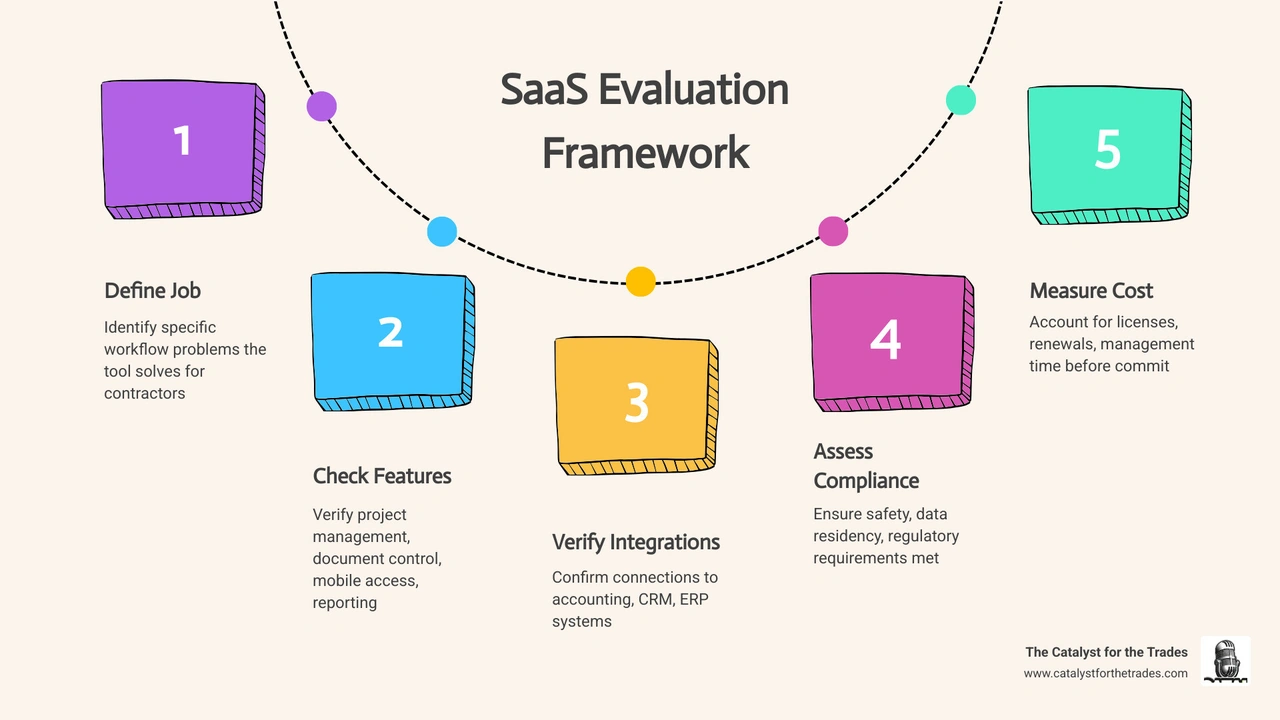
Here is a quick framework to guide your evaluation:
- Define the job – What specific problem does this tool solve in your workflow?
- Check core features – Does it support project management, document control, mobile access, and reporting?
- Verify integrations – Does it connect with your accounting, CRM, or ERP systems?
- Assess compliance fit – Does it meet safety, data residency, and regulatory requirements?
- Measure real cost – Include unused licenses, renewal fees, and time spent managing the tool
- Review peer ratings – Look at verified reviews from other contractors, not just vendor marketing
- Test before committing – Run a structured 30-day trial with defined success metrics
If you run a construction or home services business, you have probably signed up for more software than you actually use. A scheduling tool here, a document platform there, a compliance app someone on your team downloaded without asking. Before long, you are paying for a dozen subscriptions and getting clear value from maybe three of them.
This is not a small problem. Research shows organizations waste between 9% and 30% of their software spending through redundant tools, unused licenses, and contracts that renew automatically without anyone reviewing them. For a trades business trying to protect margins and scale efficiently, that kind of quiet drain adds up fast.
The good news is that a structured approach to evaluating software — one built around your actual workflows, not just feature lists — puts you back in control.
Quick look at evaluating saas tools for contractors:
Core Capabilities for Evaluating SaaS Tools for Contractors
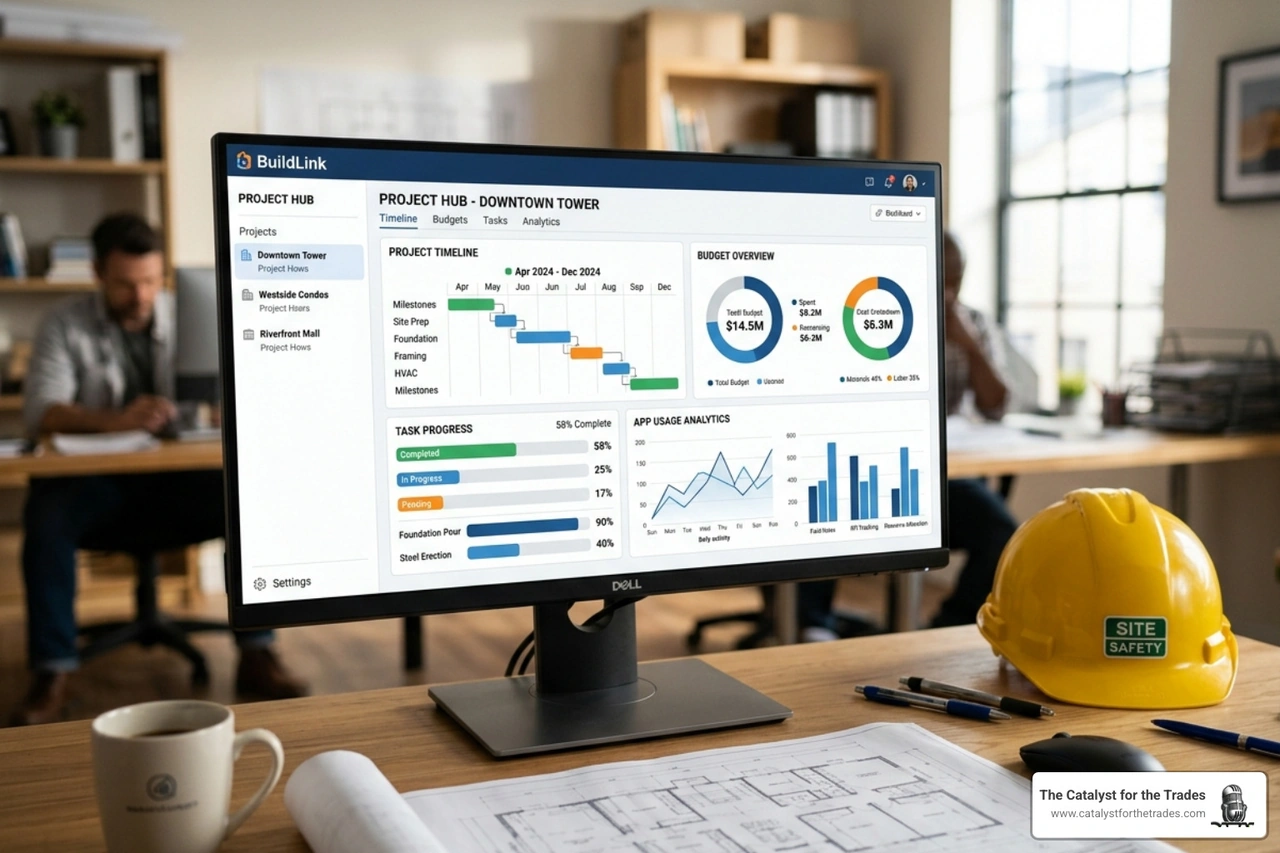
When we look at the tech landscape in 2026, the sheer volume of applications can be overwhelming. For a contractor, “SaaS Management” isn’t just a corporate buzzword; it’s about knowing exactly what is running your business and why. The core of any evaluation starts with visibility. You cannot manage what you cannot see.
A robust evaluation platform or process should offer several discovery methods. This includes direct API integrations with your primary tools, browser extensions that track what your team is actually logging into, and single sign-on (SSO) connections. These methods help you identify “Shadow IT”—those apps your field technicians might have downloaded to solve a quick problem but that now pose a security or financial risk.
Once you have a clear picture, the focus shifts to application tracking and license optimization. Are you paying for 50 seats when only 30 people are logging in? In a high-volume tool environment, System Integration is the glue that prevents data silos. Usage analytics allow us to see if a tool is actually being used or if it’s just “shelfware” collecting digital dust. Finally, spend forecasting is vital for contractors with variable project budgets. You need to know exactly when a major renewal is coming so it doesn’t hit your cash flow at the wrong time. Successful Technology Implementation requires this level of foresight.
Essential Features for Project and Document Management
In the construction world, document management is the backbone of every project. When evaluating saas tools for contractors, we look for features that handle the heavy lifting of blueprints, contracts, and change orders.
Version control is non-negotiable. There is nothing more expensive than a crew building off an outdated set of plans. Your SaaS tools must offer cloud access with PDF markup capabilities, allowing project managers to make notes in the field that sync instantly with the office. Real-time collaboration ensures that everyone from the architect to the subcontractor is on the same page.
For trade-specific needs, Field Service Management Software should integrate these document features with bidding tools and resource allocation. You need to know which technician is available and whether they have the right certifications and documents on their mobile device before they arrive at the job site.
Evaluating SaaS Tools for Contractors for Mobile Workflows
Construction doesn’t happen behind a desk. If a tool doesn’t work on a tablet in the rain or a smartphone in a crawlspace, it doesn’t work for us. Mobile accessibility is the “make or break” factor in our industry.
We look for offline functionality—the ability to input data when there’s no cell service and have it sync once the technician is back in range. Real-time reporting and AI Scheduling Software allow for dynamic adjustments throughout the day. If a morning job runs long, the AI should be able to update the afternoon schedule and notify the next customer automatically.
Furthermore, mobile messaging and activity feeds keep the team connected without cluttering up personal text threads. Photo documentation is another must-have; being able to snap a “before and after” photo and attach it directly to a work order provides the transparency that modern customers demand.
Combating Shadow IT and SaaS Sprawl in Construction
| Feature | Manual Tracking | Automated SaaS Management |
|---|---|---|
| Visibility | Limited to known invoices | Full discovery (SSO, API, Browser) |
| Security | High risk of unmanaged access | Automated offboarding & risk detection |
| Cost Control | Reactive (checking bank statements) | Proactive (spend forecasting & alerts) |
| License Usage | Estimated/Assumed | Real-time usage analytics |
| Renewal Management | Spreadsheets (often missed) | Automated renewal calendar |
SaaS sprawl happens when we add tools faster than we retire them. In the trades, this often looks like three different departments using three different project management tools because they “liked the interface better.” This creates unauthorized applications and security vulnerabilities.
Using platforms like Cortex Pulse Analytics helps us gain visibility into this sprawl. By identifying redundant tools, we can consolidate our “tech stack” and reallocate licenses to the people who actually need them. Perhaps the most critical security feature is automated offboarding. When a technician leaves the company, you need to be 100% sure their access to company data and client information is revoked across every single app instantly.
Managing Renewals and Contract Lifecycles
Did you know that nearly 29% of SaaS contracts increase fees at renewal? Without proactive renewal governance, you are at the mercy of the vendor’s auto-renewal clause. These clauses are often designed to work against you, locking you into another year at a higher price before you’ve even realized the window to cancel has closed.
We recommend setting up automated alerts for notice windows. This gives you at least 30 to 60 days to review the tool’s performance before the contract renews. Use this time for negotiation discipline. If your usage data shows you only used half your seats, use that as leverage to negotiate a better deal.
Following an AI Technology Implementation Keywords Guide can help you understand the terminology needed to centralize your contracts. By having all your vendor compliance and contract details in one searchable repository, you ensure that you never lose 10-30% of your software value to poor oversight.
Evaluating SaaS Tools for Contractors for Compliance and Risk
Compliance in construction isn’t just about taxes; it’s about safety and legal protection. When evaluating saas tools for contractors, we must look at how they handle sensitive data. Where is your data stored? Does the vendor comply with SOC 2 standards?
For many trades, regulatory reporting and safety protocols are daily requirements. Your software should act as a digital safety checklist, ensuring that no job starts without the proper risk assessments being completed. AI Chatbots for Contractors can even be used to help field staff quickly find safety manuals or report incidents in real-time.
Audit trails are another essential feature. If a dispute arises over a contract or a site incident, you need a timestamped history of every document version and every communication. Check your SaaS agreements for “Data Ownership” clauses—you must ensure that if you ever leave the platform, your data stays with you.
Leveraging AI and Automation for Operational Scaling
AI is no longer a futuristic concept; it’s a practical tool for scaling a home service business. AI-powered features like risk detection can flag unusual spending patterns or unauthorized access before they become major problems.
Automated workflows can handle repetitive tasks, such as AI CSR Implementation, which can manage customer inquiries and booking without human intervention. Predictive analytics can even help you forecast which months will be your busiest based on historical data, allowing you to staff up appropriately.
Employee self-service portals, backed by AI Chat Systems, allow your team to find their own answers regarding schedules or benefits, reducing the administrative load on your office staff. These workflow triggers ensure that as soon as a job is marked “complete” in the field, an invoice is generated and a follow-up email is sent to the customer.
Best Practices for Onboarding and Scaling Tech Stacks
Choosing the right tool is only half the battle; getting your team to use it is the other half. Stakeholder buy-in is crucial. If your lead foremen hate the new software, it will fail, no matter how much it cost.
We suggest creating a clear deployment roadmap that includes user training and scalability testing. Don’t try to roll out five new tools at once. Start with one, get it right, and then move to the next. How to Get Your CRM Right and Why It Matters More Than You Think is a great resource for understanding why the data you put into a system at the start determines the growth you get out of it later.
Always look at peer review insights. Platforms like Gartner Peer Insights provide ratings from other business leaders who have actually used these tools in the real world. This helps you move beyond the marketing hype. Customer Relationship Management is about more than just software; it’s about the processes that support your team and your clients.
Frequently Asked Questions about Contractor SaaS
What is the biggest risk of unmanaged SaaS for contractors?
The biggest risk is a combination of Shadow IT and security breaches. When employees use unapproved apps, company data is spread across platforms that IT cannot secure. This leads to data fragmentation, where you have three different versions of a client’s contact info, and wasted budget on unused licenses that quietly renew every month.
How do SaaS management platforms improve project ROI?
SaaS management platforms improve ROI by identifying waste. By recovering costs from unused seats and automating renewals to avoid price hikes, you can save 10-30% on software spend. Tools like Searchlight Digital Analytics provide the data needed to optimize seat counts and ensure you are only paying for what you actually use.
Which integrations are most critical for construction software?
Accounting sync is the number one priority. Your field software must “talk” to QuickBooks, Sage, or whatever you use for your books. CRM connectivity ensures your sales and service teams are aligned, while Best CRM for HVAC Companies helps you manage the customer lifecycle. For larger firms, ERP data flow and BIM tool compatibility are also essential for keeping project data consistent from design to completion.
Conclusion
At The Catalyst for the Trades, we believe that technology should be a lever for growth, not a source of frustration. Operational scaling requires more than just hard work; it requires the right systems working in harmony. By being intentional about evaluating saas tools for contractors, you protect your margins and empower your team to focus on what they do best: the craft.
Innovation leadership means staying ahead of the curve, utilizing tools like the Cortex Business Platform to streamline your operations and drive predictable growth. Whether you are a solo operator or managing a fleet of technicians, your growth strategies must include a lean, efficient tech stack.
Learn more about our mission to empower the trades and join us as we continue to explore the intersection of tradition and technology in the home services industry. Your business deserves software that works as hard as you do.


