Learn · May 18, 2026
Top Service Call Conversion Tips 2026
Boost service call conversion tips: Master inbound calls, AI analytics, objection handling & CRM to hit 43-46% benchmarks & skyrocket revenue.
By The Catalyst Editorial Team Operator education · 10 min read · Updated July 24, 2026

Why Most Service Calls Never Turn Into Booked Jobs
Service call conversion tips are exactly what your business needs if your phones are ringing but your booking rate isn’t growing.
Here are the top ways to improve your inbound call conversion rate:
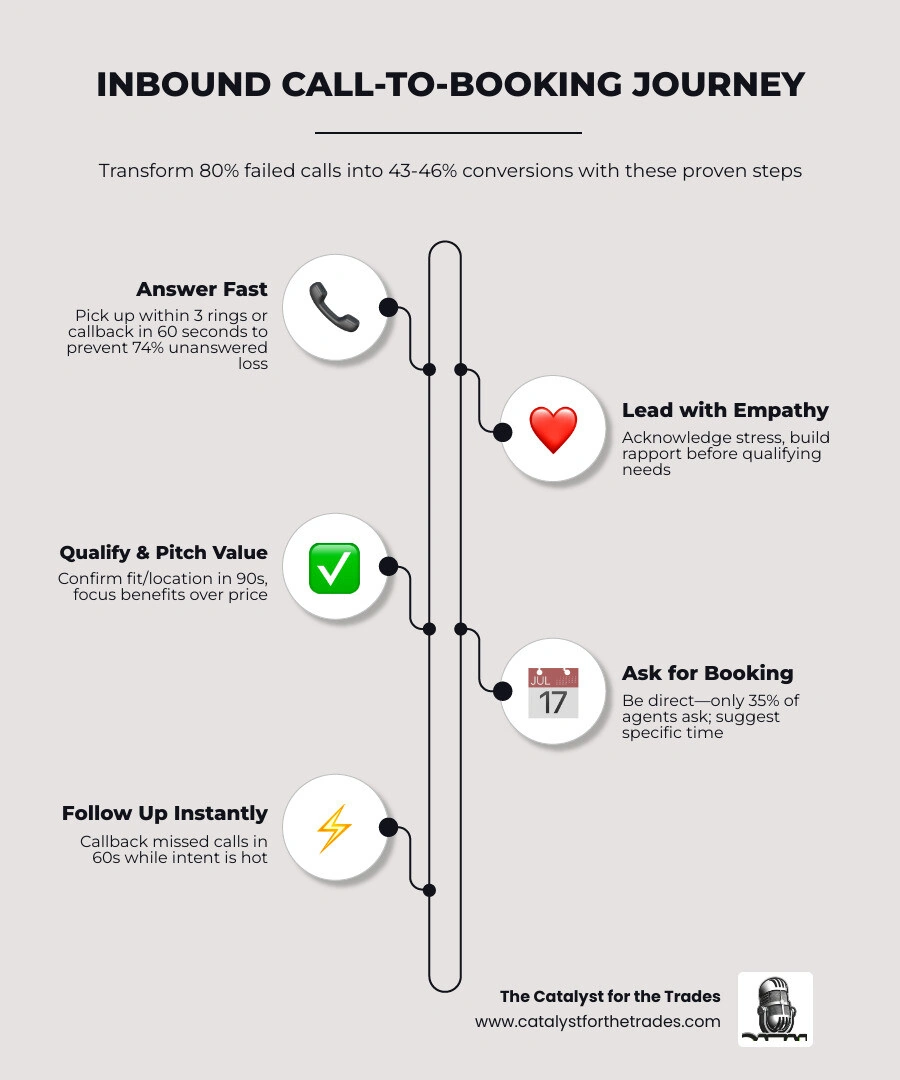
- Answer every call fast – Pick up within 3 rings or call back within 60 seconds
- Lead with empathy – Callers are often stressed; acknowledge their situation first
- Qualify early – Confirm service fit, location, and decision authority within the first 90 seconds
- Ask for the booking – Only 35% of agents actually ask; be direct and suggest a specific time
- Handle objections with value – Counter price concerns before mentioning cost
- Log every call – Use call tracking and CRM data to spot drop-off points
- Follow up missed calls immediately – Call back within 60 seconds while intent is still hot
- Use local numbers – They build trust faster than toll-free lines
- Train your team consistently – Scripts, role-play, and regular coaching make a measurable difference
- Turn service calls into sales opportunities – Use CRM screen pops to prompt upsells and cross-sells
Here’s the reality: your phone is one of the most powerful revenue tools you own — and most businesses are leaving serious money on the table every single day.
Consider this. Research shows that 80% of inbound calls fail to convert. In home services, that’s not a small problem. If you’re running Google Ads and pulling in 100 calls a month, that stat means you could be booking fewer than 20 of them.
And it gets worse. Data from real home service call analysis shows that 74% of calls go unanswered entirely. Not because businesses don’t care — but because phones ring during peak hours, staff get pulled in different directions, and no one has a system in place to catch every opportunity.
The good news? Phone leads in home services convert at 43 to 46% when calls are handled well. That’s not a ceiling — it’s a target. And the gap between where most businesses are and where they could be is almost entirely a systems and skills problem, not a lead volume problem.
This guide breaks down the proven strategies, tools, and habits that high-performing service businesses use to turn more of their inbound calls into booked appointments and real revenue.
Service call conversion tips terms explained:
- Closing Techniques for HVAC Sales
- Objection Handling in Home Services
- Sales Process Optimization Complete Guide
Why Call Conversion is Critical for Growth in 2026
In April 2026, the digital landscape is more crowded than ever, yet one thing remains constant: 92% of all customer interactions still happen over the phone. For home service businesses like HVAC and plumbing, the phone is the lifeline of the company. However, with an industry-wide failure rate of 80% for inbound calls, most businesses are essentially pouring their marketing budget down the drain.
Revenue leakage occurs when a “hot” lead—someone experiencing a home emergency or a critical need—reaches out and meets a wall of friction. Whether it’s a long hold time, a confusing automated menu, or an agent who fails to ask for the appointment, these moments are where profit disappears.
The benchmark for success in home services is a conversion rate between 43% and 46%. If you are currently sitting at the industry average of 35% booking, moving the needle to 50% can result in tens of thousands of dollars in additional monthly revenue without spending an extra cent on advertising. This is the essence of Lead Conversion Optimization.
| Metric | Web Leads | Phone Leads |
|---|---|---|
| Conversion Rate | 2% – 5% | 30% – 50% |
| Revenue Potential | 1x | 10x – 15x |
| Speed to Lead Importance | High | Critical |
| Trust Factor | Low (Digital) | High (Human) |
Understanding Inbound Call Types
Not all calls are created equal, and treating them as a monolith is a major mistake. To optimize your Sales Methodology, you must categorize calls:
- Service Calls: These are often reactive. A water heater has burst, or the AC is out. These callers have high urgency and need empathy.
- Sales Calls: These are proactive. A homeowner is looking for a system replacement or a major upgrade. These require deeper qualification and a consultative approach.
- Emergency Requests: These are “now” calls. Speed is the only metric that matters here.
- Warranty/Maintenance Inquiries: These are opportunities for long-term retention and upselling.
The Impact of Answer Rates on Revenue
The single biggest “hack” for service call conversion tips isn’t a fancy script—it’s picking up the phone. Statistics show that 50% of potential customers are lost when a call isn’t answered promptly. We recommend a 3-ring SLA (Service Level Agreement). If a phone rings more than three times (roughly 20-25 seconds), the likelihood of the caller hanging up and calling your competitor increases exponentially.
If you miss a call, the clock starts ticking. Contacting a lead within 60 seconds of their interaction can increase conversions by nearly 400%. As we often say, you should Stop Chasing New Leads Start Closing The Ones You Already Have.
Top Service Call Conversion Tips for Inbound Success
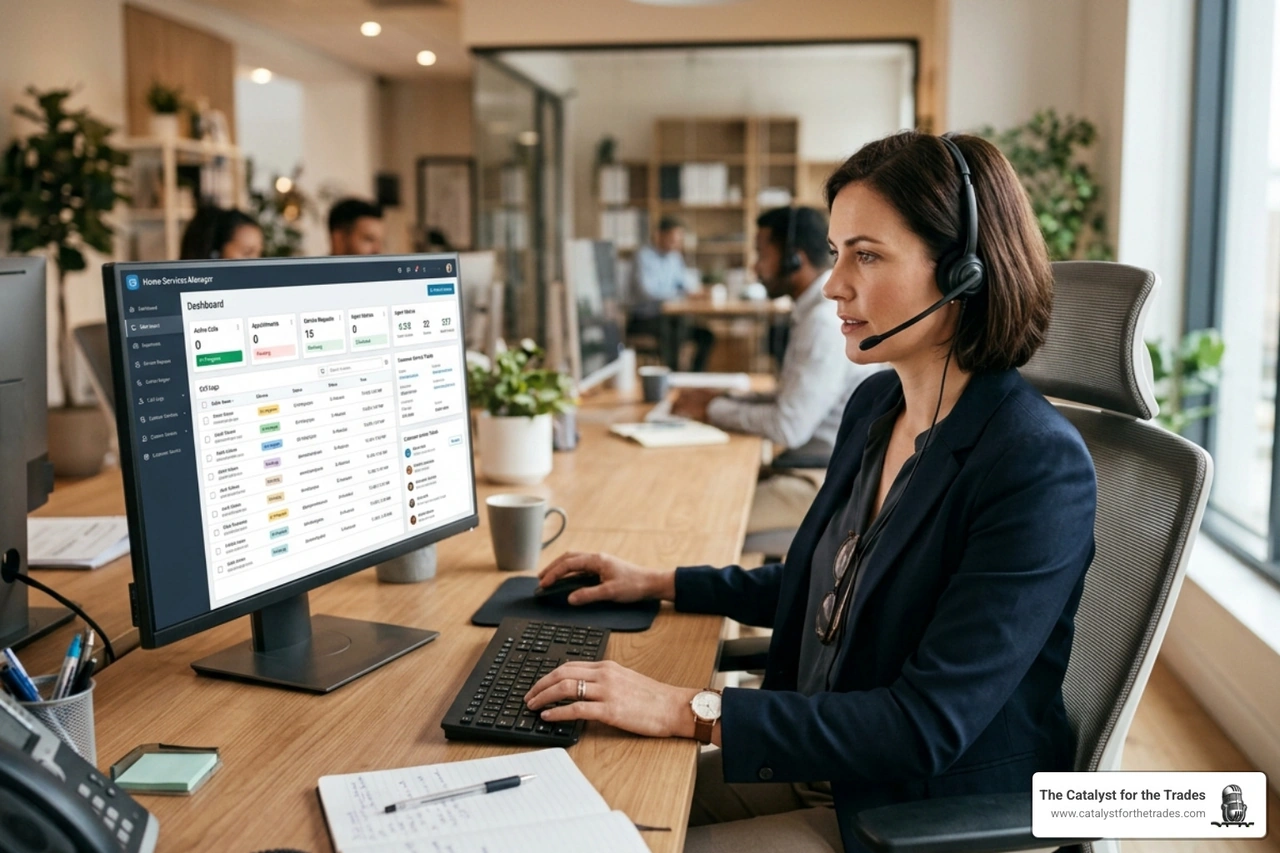
To turn a dial into a deal, your team needs to master the art of the conversation. This starts with active listening. Too many agents are waiting for their turn to speak rather than listening for “buying signals” or pain points.
Rapport building isn’t about small talk; it’s about establishing trust. In home services, you are being invited into someone’s sanctuary. If the agent sounds robotic or rushed, that trust is broken before the technician even arrives. Use the caller’s name, mirror their tone, and show genuine concern for their problem. For more on this, check out our guide on Closing Techniques For Hvac Sales.
Proven Service Call Conversion Tips for Handling Objections
Objections are not rejections; they are requests for more information. Most objections in our industry boil down to price or scheduling.
- Price Objections: Never lead with cost. Establish the value of your expertise, your warranty, and your reliability first. If the caller says, “That sounds expensive,” counter with the value of a permanent fix versus a temporary patch.
- Scheduling Objections: Use persistence. If a caller says they aren’t sure of their schedule, offer a “placeholder” appointment. Say, “Let’s get you on the books for Thursday morning to ensure you’re a priority, and if you need to move it, just give us a call.”
- The Assumptive Close: Instead of asking, “Would you like to book?” ask, “I have an opening at 2:00 PM today or 9:00 AM tomorrow; which of those works better for you?”
Mastering Objection Handling In Home Services is the difference between a busy schedule and an empty one.
Structuring the Perfect Sales Call
A high-converting call follows a predictable path. We teach a 4-step structure to ensure consistency:
- Warm Introduction: A professional greeting that includes the company name and the agent’s name. “Thank you for calling [Company Name], this is Jennifer, how can I make your day better?”
- Needs Appraisal: Ask open-ended questions. “Tell me more about what’s happening with your unit.” This allows the caller to feel heard and gives you the data you need to qualify them.
- Benefit-Focused Pitch: Don’t just list features. Instead of saying “We have 24/7 service,” say “We can have a technician at your door tonight so your family can sleep comfortably in the cool air.”
- Clear Next Steps: Never end a call without a defined action. Whether it’s a booked appointment or a scheduled follow-up, the agent must own the next step.
For a deeper dive, read our Sales Process Optimization Complete Guide.
Advanced Technology and Analytics for Sales Teams
In 2026, relying on “gut feeling” to manage your sales team is a recipe for stagnation. Businesses that invest in analytics and sales enablement can see conversion improvements of up to 300%. Call tracking is the foundation of this. By using unique phone numbers for different marketing channels, you can see exactly which ads are driving high-intent callers and which ones are just making the phone ring with “tire kickers.”
Technology like intent detection can flag calls where a customer used words like “emergency,” “leaking,” or “quote,” allowing managers to prioritize those leads for immediate follow-up. This level of Sales Coaching allows you to train your team based on real data, not just anecdotes.
Using AI and CRM for Service Call Conversion Tips
Integrating your phone system with your CRM is no longer optional. Screen pops—where the customer’s entire history, property details, and past issues appear the moment they call—allow for instant personalization.
- Predictive Dialers: These help your team manage outbound follow-ups efficiently, ensuring no lead is left untouched.
- Real-Time Coaching: AI tools can now provide “whisper” prompts to agents during a call, suggesting ways to handle an objection or reminding them to ask for the booking.
- Automated Follow-Ups: If a call doesn’t result in a booking, an automated SMS or email should be triggered immediately. 80% of sales require five follow-up calls. Use Follow Up Strategies For Contractors to stay top-of-mind.
Essential Metrics to Track
You cannot improve what you do not measure. To maximize your service call conversion tips, track these KPIs:
- Answer Rate: The percentage of inbound calls picked up by a human (aim for 95%+).
- Booking Rate: The percentage of answered calls that result in an appointment.
- Average Revenue Per Call (ARPC): This helps you identify which agents are best at upselling.
- Qualification Rate: Are you talking to the right people (homeowners in your service area)?
Check out our Sales Team Development Complete Guide for more on building a data-driven culture.
Optimizing the Customer Journey for High-Quality Calls
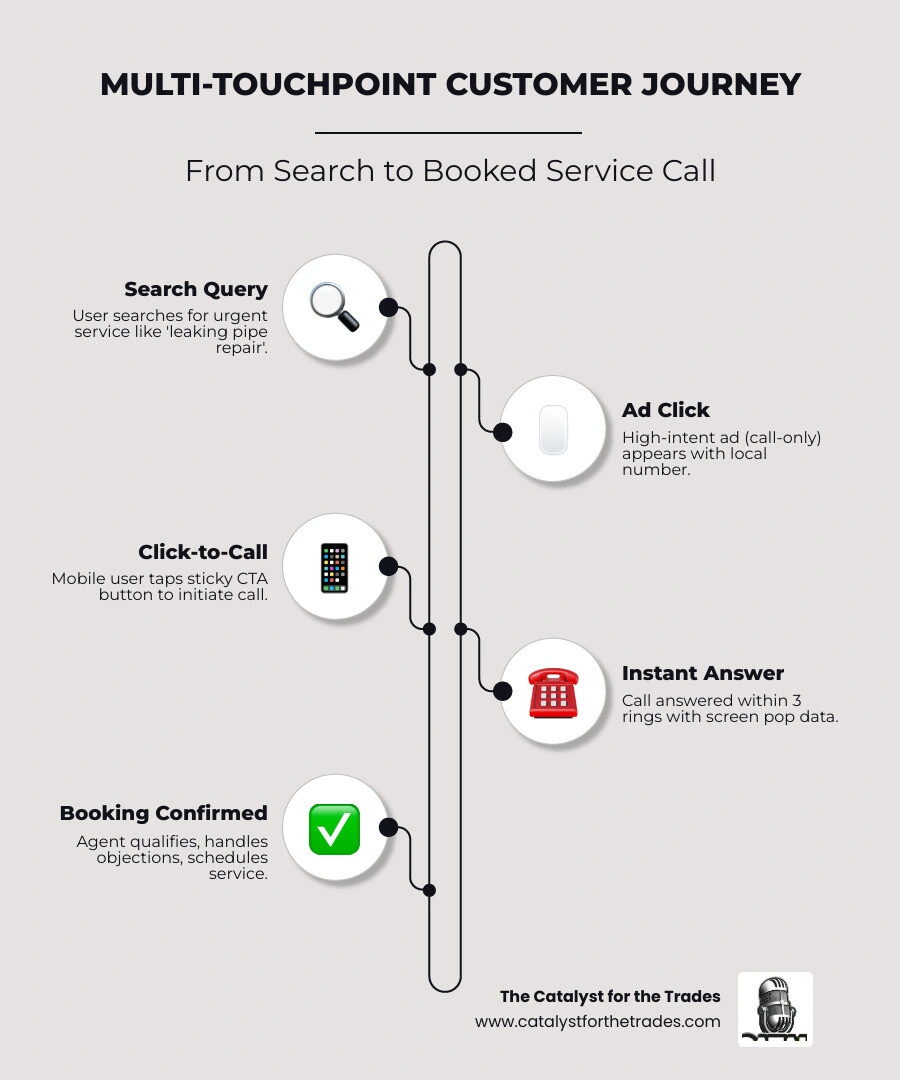
Your website and ads should be “call-first” environments. For mobile users, the primary Call to Action (CTA) should always be a click-to-call button.
- Local Numbers: Research shows people are more likely to answer and trust a local area code over a 1-800 number.
- Sticky Headers: Keep your phone number visible at all times as the user scrolls.
- Call-Only Ads: On platforms like Google and Facebook, these ads skip the landing page and initiate a call immediately, capturing high-intent leads at the moment of search.
Website Optimizations for More Calls
Small design changes can lead to big conversion gains.
- CTA Design: Use contrasting colors for your “Call Now” buttons.
- Availability Display: Showing “Technicians available in your area now” creates urgency.
- Callback Options: For those who can’t talk immediately, a “Request a Call” form that triggers an instant dialer response is highly effective.
- Mobile Segmentation: Ensure your mobile site is stripped of clutter, making the phone icon the easiest thing to tap.
Turning Service Calls into Revenue Opportunities
A “customer service” call is often a sales call in disguise. When a customer calls for a routine repair, it’s the perfect time to offer a maintenance agreement or a seasonal tune-up.
- Upselling: “While we’re out there fixing the leak, would you like us to do a full plumbing inspection for a small additional fee?”
- Cross-selling: An HVAC call is a great time to mention indoor air quality (IAQ) solutions.
- Maintenance Tips: Educating the customer builds authority. “To keep this from happening again, I recommend changing these filters every 90 days.”
Training your team to see these opportunities is key. See our Sales Training Contractors page for specialized modules.
Frequently Asked Questions about Service Calls
Why do most inbound service calls fail to convert?
The primary reason is simply not answering the phone. Beyond that, many calls fail due to poor qualification (spending too much time with people who aren’t your target customer), rigid scripts that sound robotic, or agents who don’t have the authority to make scheduling decisions. Friction points like long hold times or “I’ll have someone call you back” are conversion killers.
What are the best follow-up strategies for missed conversions?
We recommend the “Rule of 3.” Call back within 60 seconds of a missed call or form submission. If they don’t answer, call again 2 hours later during a peak window. The third attempt should happen in the early evening (after 7 PM). Complement these calls with SMS, as many homeowners prefer text for quick coordination.
How can I train agents to be effective without being pushy?
Shift the mindset from “selling” to “problem-solving.” When an agent focuses on helping the homeowner restore comfort or safety to their home, the “sales” part happens naturally. Use role-playing to practice consultative transitions and ensure your incentive structures reward both customer satisfaction (CSAT) and booking rates.
Conclusion
At The Catalyst for the Trades, we know that high-converting sales calls are the engine of operational scaling. By combining cutting-edge technology like AI and CRM integration with the fundamental human skills of empathy and active listening, you can transform your dispatch center from a cost center into a massive revenue driver.
Don’t let another high-intent lead slip through the cracks. Implement these service call conversion tips today and start closing the leads you already have. Learn more about our mission to empower the trades with the strategies and leadership needed for 2026 and beyond.


